



EU firms in China accelerating supply chain diversification, report finds
One in three member companies looking to shift sourcing away from China
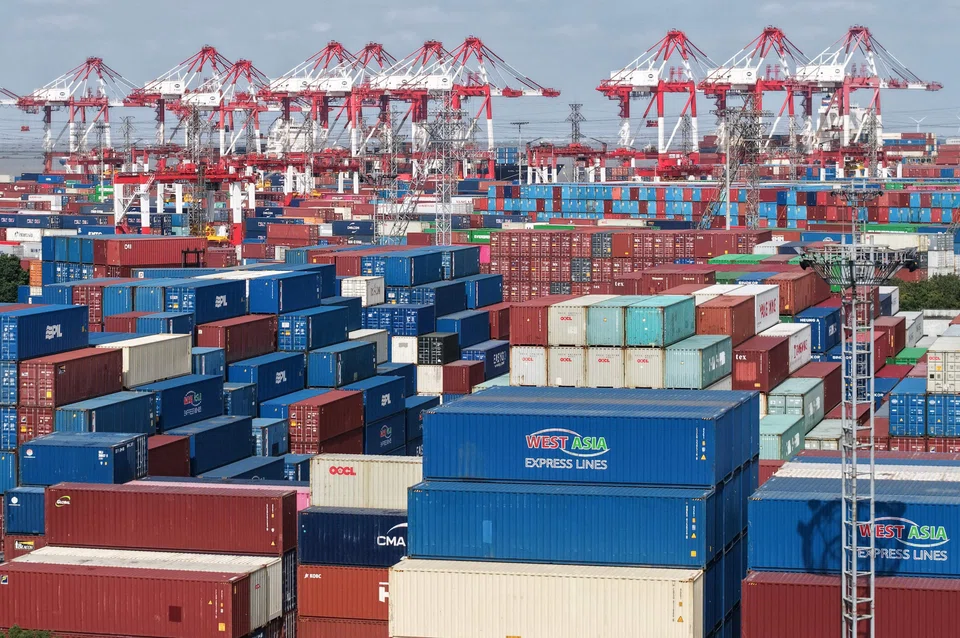
[BEIJING] European firms are accelerating efforts to diversify away from Chinese supply chains as Beijing’s self-reliance drive and export controls deepen global trade uncertainty, the European Union Chamber of Commerce in China said on Wednesday.
China’s trade surplus topped US$1 trillion for the first time in November, as exports to Europe, Australia and South-east Asia surged in the wake of US tariffs, fuelling diplomatic tensions over unsustainable trade imbalances.
Chinese shipments to the United States dropped 29 per cent year-on-year in November, while exports to the EU grew an annual 14.8 per cent.
The EU’s trade imbalance with China widened to 1:4 in container terms, compared with 1:2.7 in 2019, the lobby group said in a report. Persistent deflation and the ongoing depreciation of the yuan against the euro have exacerbated European firms’ trade woes.
“Probably the biggest problem we’ve seen in the Chinese economy is that there have been 37 consecutive months of factory gate deflation,” Jens Eskelund, the chamber’s president, told reporters at a briefing.
“When we have this gap between deflation in China and inflation in Europe, that adds to the imbalance in currency.”
Beijing’s expansive export controls on rare earths and critical materials have “sent European businesses into crisis mode,” with some firms reporting production stoppages and millions of euros in losses, the report said.
As a result, more than 70 per cent of European firms in China have reviewed their supply chain strategies over the past two years, the report said.
Of these, over a quarter are onshoring further into China, while 10 per cent are building alternative supply chains outside the country.

Sectoral disparities are stark: 80 per cent of pharmaceutical firms and 46 per cent of machinery makers are increasing localisation, while 33 per cent of IT and telecom firms and 25 per cent of retailers are diversifying away from China, according to the report.
However, 22 per cent of European firms still import critical components from China with no viable alternatives, the report said, highlighting persistent supply chain vulnerabilities.
“When we look at the rare earth magnets in terms of dependencies, it’s barely the tip of the tip of the iceberg,” said Eskelund.
The group said last week that one in three member companies was looking to shift sourcing away from China due to Beijing’s export control regime.
French President Emmanuel Macron called China’s ballooning trade deficit with Europe “a matter of life or death for European industry” in an interview last week, saying he had threatened Beijing with tariffs.
The report said China’s willingness to use its supply chain dominance to exert pressure on trade partners is being met with increasing pushback from affected countries, such as a more “offensive” China policy from the EU.
The European Commission will make proposals next month to bolster EU industry, with requirements to prioritise locally manufactured goods that would reduce its reliance on imports from China. REUTERS
Decoding Asia newsletter: your guide to navigating Asia in a new global order. Sign up here to get Decoding Asia newsletter. Delivered to your inbox. Free.
Share with us your feedback on BT's products and services
TRENDING NOW

The only common thing in S-E Asia is that we all eat rice: Cisco’s Asean president

Philippine power giant First Gen rebuffs foreign offers, plans up to US$2.6 billion in expansion

Singapore to use ‘every legal and regulatory lever’ against companies linked to haze: Shanmugam

Once staunchly pro-China, Malaysian Chinese businesses are now distancing themselves from Beijing

