



European businesses in China fight post-Covid blues
 Add BT as a preferred source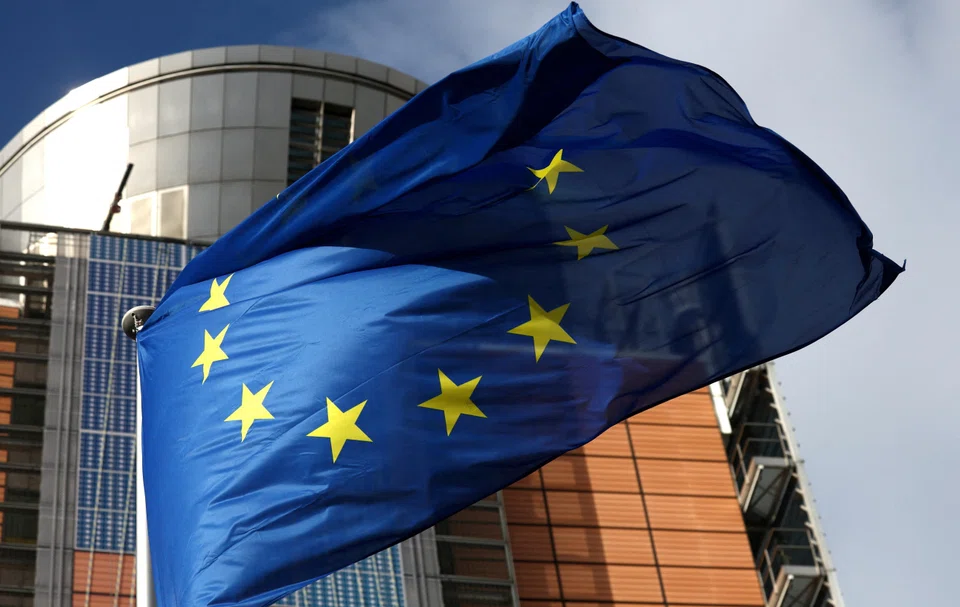
DeeperDive is a beta AI feature. Refer to full articles for the facts.
A FALTERING recovery, regulatory headaches and an increasingly politicised business climate are hammering European business confidence in China despite the country reopening its doors, according to a survey published on Wednesday (Jun 21).
Two thirds of European companies operating in China say it has become more difficult to do business in the country, according to an annual survey of 570 companies by the European Union Chamber of Commerce in China.
One in 10 are either planning to move their Asia headquarters out of the country or have already done so, said Jens Eskelund, president of the Chamber, with many choosing Singapore.
“Eleven per cent of our members have already shifted investments out of China,” he added in a briefing to journalists.
For nearly three years, the world’s second-largest economy cut itself off with harsh lockdowns and travel restrictions intended to keep the Covid-19 pandemic at bay but which also disrupted factories and supply chains.
Chinese authorities abruptly announced the end of zero-Covid policies last December, raising hopes of an economic recovery after a rapid, massive wave of infections.
Navigate Asia in
a new global order
Get the insights delivered to your inbox.
But six months on, the post-Covid economic rebound has faded and problems are mounting for foreign firms in China.
‘Government interference’
Of the companies surveyed, 60 per cent said China’s increasingly politicised business environment was an issue.
A vague anti-espionage law due to take effect in July, as well as the threat of war with Taiwan, which China considers a part of its territory, are among the top concerns.

There is “more and more government interference in business” since the end of Covid curbs, the manager of a French industrial group operating in east China’s Shandong province told AFP.
Officials often target foreign firms with stricter regulatory enforcement while giving Chinese companies more lenient treatment, he said.
“Port charges are up 300 per cent” from 2019, while local authorities have “signed favourable agreements with two Chinese groups that are setting up their factories next door”, the manager said, asking to remain anonymous for fear of repercussions.
His company would keep their operations in China for now, as “the investment is too big”.
But the uncertainty of working in China “undermines the confidence of customers, investors, and the board of directors”, he told AFP.
Tightening rules
The sudden about-turn on Covid also rattled the foreign business community.
China has created the impression that it is a country where things are “ultimately uncontrollable, as it can decide to close down overnight”, a Beijing-based executive at a European company told AFP, also requesting anonymity.
Since the reopening, he has observed a “tightening of the rules” for foreign companies.
“They asked us to put people from the Party in our company, but we refused,” he said, referring to China’s ruling Communist Party.
More than half of the companies surveyed by the chamber of commerce said they did not expect any expansion of their activities in China this year.
No new small and medium-sized enterprises from Europe have set up shop in the country since 2019, according to the chamber.
But “despite the challenges, China is too big to be ignored”, said Klaus Zenkel, the chamber’s representative in southern China.
“China is still the world’s factory and will remain so,” the Beijing-based executive told AFP.
“The conditions for entering the Chinese market are becoming increasingly difficult.” AFP
Decoding Asia newsletter: your guide to navigating Asia in a new global order. Sign up here to get Decoding Asia newsletter. Delivered to your inbox. Free.
Share with us your feedback on BT's products and services
TRENDING NOW

China pips the US if Asean is forced to choose, but analysts warn against reading it like a sports result

Beijing’s calculated silence on the Iran war

Shelving S$5 billion office redevelopment plan proved ‘wise’ as geopolitical risks mount: OCBC chairman
Vietnam formalises new state leadership, redefining ‘four pillars’ power balance

