



How Venezuelan oil factored in US seizure of Maduro
What role does the country’s oil play in global markets, and what is China’s role in its oil industry?
 Add BT as a preferred source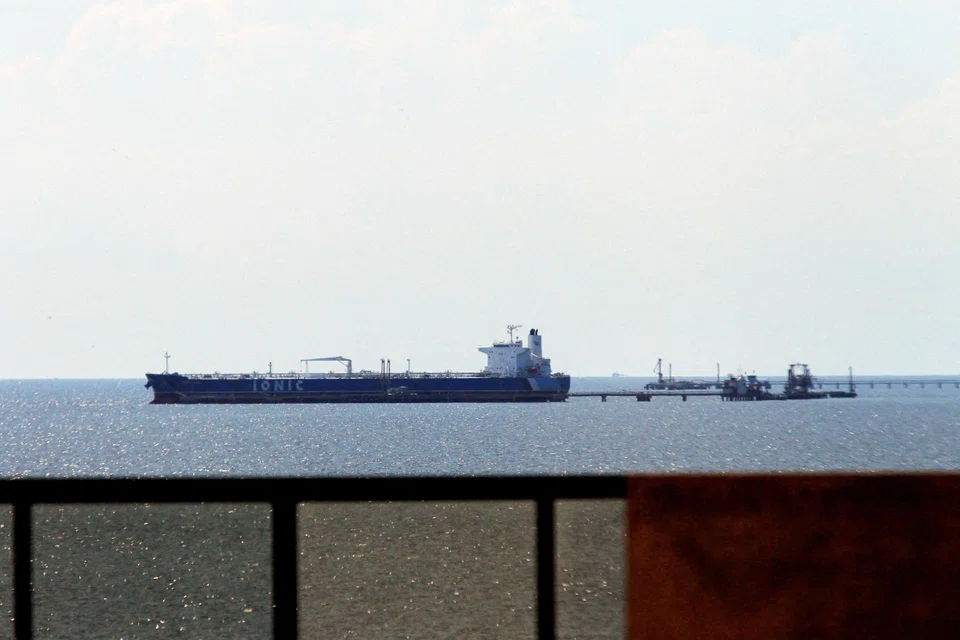
DeeperDive is a beta AI feature. Refer to full articles for the facts.
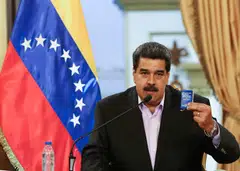
VENEZUELA’S oil has been a core dimension of the years-long US campaign against strongman Nicolas Maduro.
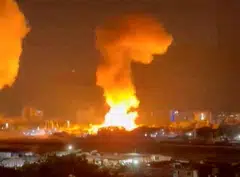
Successive administrations used the country’s vital export as a wedge to pressure Caracas, first through oil sanctions in 2019 and more recently through a partial blockade of oil tankers in the run-up to US airstrikes and the capturing of Maduro.
Venezuela is not the powerhouse oil producer it used to be. But the country’s abundant oil reserves would be critical to rebuilding its shattered economy.
After the US seized the Venezuelan leader and his wife Cilia Flores in the early hours of Saturday (Jan 3), US President Donald Trump asserted that the US would “run” the country until a transition could take place, though it was not clear how the US would assume control.

The president also said the US would “rebuild” Venezuela’s oil industry.
Here’s what’s important to know about Venezuela’s oil industry as the US operation plays out.
Navigate Asia in
a new global order
Get the insights delivered to your inbox.
What role does Venezuela’s oil play in the world market?
While Venezuela has some of the world’s largest oil reserves, its role as a player in global markets has significantly declined since 2015. It currently produces around a million barrels a day, about one-third of its 1990s peak and less than 1 per cent of global output. Most of Venezuela’s oil goes to China.
The US airstrikes did not affect Venezuela’s main oil terminal at Jose, the Amuay refinery and the Orinoco heavy oil belt where most of the country’s production comes from, according to people with knowledge of the matter.
A US blockade on sanctioned oil tankers in recent weeks did not significantly affect world oil prices, though several tankers veered away from Venezuela to avoid the risk of seizure. The blockade also impeded the arrival of naphtha, a blend stock that Venezuela needs to pump and transport its sludge-like oil.
In the days before the US attack and capture of Maduro, most crude loadings and naphtha imports had stalled. As storage tanks filled up with stranded oil, Venezuela had started suspending production at oil wells.
Venezuela’s oil exports have become much harder to track in recent years, with many of the tankers loading there resorting to tactics similar to those used in Iran – giving false or no position signals while in Venezuelan waters and using clandestine ship-to-ship cargo transfers.
Nevertheless, Venezuela was believed to be exporting between 500,000 and 800,000 barrels a day.
Global oil prices have been weighed down by a hefty surplus that is set to continue into the early part of this year, leaving room for the market to cope with any disruption to Venezuela’s output.
The recovery of the country’s oil industry would eventually pour much more oil onto the market, but it would take years and billions of dollars in investment to reach that point.
The extra supply would be a boon for some US refiners that favour Venezuela’s heavy grades to produce asphalt and other products.
Is the US likely to seize Venezuelan oil assets?
At a news conference following Maduro’s seizure, Trump said the US administration of Venezuela would include deploying US oil companies to the country.
“We’re going to have our very large United States oil companies, the biggest anywhere in the world, go in, spend billions of dollars, fix the badly broken infrastructure… and start making money for the country,” Trump said.
The US president emphasised that his decision to depose Maduro was driven by his conviction that Venezuelan leaders had “stolen” US investment in the country’s energy sector.
“We built Venezuela’s oil industry with American talent, drive and skill, and the socialist regime stole it from us during those previous administrations, and they stole it through force. This constituted one of the largest thefts of American property in the history of our country,” Trump said.
Previously, US officials had maintained that the military campaign it had been waging in the Caribbean was aimed at disrupting narcotics trafficking in the region. The administration said that seizing sanctioned tankers and penalising oil shippers cuts off revenue streams that fund drug-trafficking groups.
What has been the role of US oil companies in Venezuela?
US oil companies were the main architects of Venezuela’s oil industry starting a century ago, building the country into a leading US supplier. Venezuela became a founding member of Organization of the Petroleum Exporting Countries (Opec) in 1960.
The industry was nationalised in the mid-1970s and reopened to foreign investment in the 1990s. Maduro’s influential predecessor Hugo Chavez expropriated major US oil projects in 2007. ExxonMobil and ConocoPhillips pulled out and later won sweeping international arbitration awards for the seizure of their assets.
Chevron was the only US oil company to remain in Venezuela. The Houston-based company currently has a restricted licence from the US Treasury Department to operate in four joint ventures with state-owned Petroleos de Venezuela. Chevron accounts for about a quarter of Venezuelan production.
As the US military operation unfolded, Chevron said it “remains focused on the safety and well-being of our employees, as well as the integrity of our assets” and continues “to operate in full compliance with all relevant laws and regulations”.
What is China’s role in Venezuela’s oil industry?
China’s state-owned CNPC produces Venezuelan oil in a longstanding joint venture with PDVSA. Venezuela ships most of its oil to Chinese buyers, usually through intermediaries.
Most of this supply goes toward servicing billions of dollars in Chinese oil-backed loans to Venezuela, with barrels sold at steep discounts. The US recently moved to sanction Chinese firms and vessels for dealing with Venezuela’s oil industry, furthering the pressure on the country’s finances.
Chevron has long said that its presence in Venezuela is a bulwark against the influence of China and other US adversaries. But even when US oil operations in Venezuela were at a bare minimum during Trump’s first term, the Chinese have not markedly expanded their Venezuelan presence on the ground.
The US toppling of Maduro drew a sharp rebuke from Beijing. “Such hegemonic acts of the US seriously violate international law and Venezuela’s sovereignty, and threaten peace and security in Latin America and the Caribbean region. China firmly opposes it.”
Venezuela exports oil to China aboard so-called ghost ships that disguise the oil’s origins to avoid sanctions. China buys Venezuelan oil via independent refiners, known as teapots, mostly clustered in China’s Shandong province.
What other foreign oil companies are present in Venezuela?
Foreign oil companies that operate in Venezuela include Spain’s Repsol, Italy’s Eni and France’s Maurel et Prom. Others, including TotalEnergies, left the country voluntarily.
In recent years, Shell has been seeking to return to Venezuela to tap its vast gas resources.
Russian state oil producer Rosneft transferred its assets in the country to an alternate firm that was not under sanctions – a legal workaround.
India’s Reliance Industries had been a significant buyer of Venezuelan oil in the aftermath of US oil sanctions, but it has kept a distance in recent years because of the risk of US sanctions.
What condition is Venezuela’s oil industry in today?
Crude production in Venezuela has plunged more than 70 per cent since its peak in the late 1990s, when it pumped more than 3.2 million barrels a day.
Venezuela is now only in 21st place among world producers. Its production is poised to be overtaken in the coming years by neighboring Guyana, a rising star, as well as Argentina, a major player in shale oil.
Despite the sector’s decline, at least 95 per cent of Venezuela’s overseas revenue comes from oil sales.
What caused Venezuela’s oil industry to deteriorate so much?
Venezuela’s oil collapse traces back to the early 2000s, when Chavez’s socialist revolution brought the industry under tighter state control, driving out experienced managers at PDVSA and foreign investment.
Chavez dismantled PDVSA’s meritocratic system and packed the company with political loyalists.
A string of accidents plagued pipelines and oil facilities, including a deadly 2012 explosion at the Cardon refinery complex, one of the largest in the world, causing production to crater and forcing the Opec nation to import fuel for its needs.
Though crude oil prices soared to more than US$100 a barrel in the mid 2000s, the industry was further rocked by money-laundering cases and international indictments of senior officials.
PDVSA’s once-thriving overseas presence crumbled, and it eventually lost control of its crown jewel, US-based refiner Citgo, which operates three refineries. The company is currently undergoing an auction by a Delaware court to pay PDVSA creditors.
There is also the role of US pressure.
More than 100 years of US involvement in the country’s oil industry made Venezuela one of Washington’s strongest regional allies. As democratic backsliding and repression grew, the US imposed financial sanctions on PDVSA in 2017 and oil sanctions in 2019.
The sanctions bar most oil trade and financing with PDVSA while permitting a few licensed exceptions.
The restrictions led to the further deterioration of PDVSA’s facilities, which are highly dependent on US technology the company is banned from importing. BLOOMBERG
Decoding Asia newsletter: your guide to navigating Asia in a new global order. Sign up here to get Decoding Asia newsletter. Delivered to your inbox. Free.
Copyright SPH Media. All rights reserved.
TRENDING NOW

From 1MDB to ‘corporate mafia’: Is Malaysia facing a new governance test?

Middle East-linked energy supply shocks put Asean Power Grid back in focus

Beijing’s calculated silence on the Iran war
DPM Gan warns of 3 structural shifts to the global system that will bring greater challenges – and opportunities

