First tankers cross strait after Iran deal; Israeli strikes stir doubt in Lebanon
Israel’s attacks in Lebanon remain a sticking point

[BEIRUT/JERUSALEM/LONDON] Three Saudi-flagged supertankers carrying six million barrels of crude sailed through the Strait of Hormuz, hours after US President Donald Trump signed a deal with Iran to end the war, ship tracking data showed on Thursday (Jun 18).
Ships were broadcasting their positions as they sailed through the strait on Thursday, after weeks of concealing their voyages through the waterway by switching off their transponders.
The departures from Saudi ports were the most to go through the strait in weeks, according to Reuters analysis of shipping movements.
Opec’s largest producer has mainly used its Red Sea port terminal of Yanbu to ship out oil after the effective closure of the Strait of Hormuz during the conflict, preventing hundreds of millions of barrels of oil from leaving Gulf ports and hurting other producers in the area.
Saudi Arabian shipping group Bahri, which manages the three tankers, did not immediately respond to a request for comment.
In a further sign of traffic picking up, three separate crude tankers were loading oil around the United Arab Emirates port of Fujairah outside the strait, with two already heading to Europe with cargoes, Kpler ship tracking data showed on Thursday.
Fujairah had been among the terminals hit by Iran during the war, which started on Feb 28 when the US and Israel attacked it.
Trump put his signature on Wednesday on the “memorandum of understanding (MOU)” to end the war, as did Iran’s President Masoud Pezeshkian, bringing it into effect two days earlier than previously expected.
It calls for the immediate opening of the Strait of Hormuz and lifting of a US blockade of Iran’s ports.

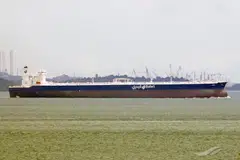
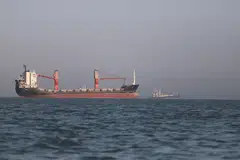

Though shippers say it will still take time for transit across the strait to reach pre-war levels, with a need yet to ensure safe access and clear mines, there were immediate signs of an impact.
Benchmark Brent crude futures prices fell by another 2 per cent to below US$78 a barrel, lowest since the shooting began.
The US-Iranian memorandum starts the clock on a 60-day negotiation period to reach a final settlement to the war.
However, shipping and insurance industry officials remained cautious on Thursday, seeking more assurances and details of the agreement.
The US will allow Iran to immediately begin selling oil and fuel under the MOU, a senior US official said on Tuesday.
Intertanko, which represents the world’s independent tanker owners, said the industry needed clarity on safety of navigation with mine clearance to start “at the earliest point”, adding that mine danger areas needed to be published.
It said “ships should be assured that they will no longer be subject to attack”.Apart from the threat of mines, clarity was needed “around sanctions, terrorism legislation and toll payments”, Sheila Cameron, CEO of the Lloyd’s Market Association, said separately on Thursday.
“The road to recovery in the Gulf will be a long and complicated one,” said Cameron, whose association represents the interests of all underwriting businesses in the Lloyd’s of London insurance market.
“It will take months for some sort of normality to return to international shipping with vessels in the wrong place and supply chains distorted.”
Memorandum explicitly calls for end of war in Lebanon
Israel, which was excluded from the negotiations, launched fresh airstrikes on Lebanon on Thursday morning, raising doubt about how far Trump will go to force his wartime allies to halt an offensive he has now pledged to end.
Iran has always said any peace deal must also cover Lebanon. In an apparent major concession to Iran, the memorandum signed by Trump explicitly calls for the “permanent termination” of the war in Lebanon and for its “territorial integrity and sovereignty” to be ensured.
With Lebanon among the peace effort’s most delicate issues, Trump in recent days has become openly critical of his ally’s operations there, accusing Israel of unnecessarily destroying entire buildings to hit Hizbollah fighters.
Two Israeli officials, including a senior official close to Prime Minister Benjamin Netanyahu, told Reuters on Thursday that Israel was holding negotiations with the US as it seeks to continue its deployment of troops in southern Lebanon.
While fighting in Lebanon tamped down at the start of this week when Trump first announced the deal had been reached, it has ticked up again over the past few days. Lebanese state media reported air strikes and artillery fire hitting towns in the south, killing at least one person in a car. Reuters reporters heard an Israeli drone flying low over Beirut and its southern suburbs.
The senior Israeli official, who spoke on condition of anonymity to discuss the sensitive talks, told Reuters that Israel was “conducting stubborn negotiations” with Washington over continuing its deployment of troops in southern Lebanon.
Israel would not back down on its position, including that it be permitted to keep troops deployed in what it describes as a buffer zone, south of the Litani River that runs across southern Lebanon.
The second Israeli official told Reuters that the outcome of the talks would ultimately depend on whether Trump “decides to force the issue” by threatening repercussions if Israel does not abide by the interim Iran pact’s terms.
Netanyahu’s office did not immediately respond to a request for comment.
But Trump’s apparent shift over Lebanon has suddenly given rise to one of the biggest rifts in US-Israeli relations in decades. The US MOU with Iran has largely been lamented in Israel across the political spectrum.
“Soon, Israel may be forced to choose: Either keep up the military pressure and lose Trump’s diplomatic support, or stay on his good side – but only by ending, or scaling back, the conflict that many see as the country’s most urgent fight,” the Times of Israel wrote on Thursday. REUTERS
Decoding Asia newsletter: your guide to navigating Asia in a new global order. Sign up here to get Decoding Asia newsletter. Delivered to your inbox. Free.
Share with us your feedback on BT's products and services