



Fresh Trump threat angers Teheran, as US-Iran peace talks open in Switzerland
The Iranian delegation halted talks over Trump’s latest threat and refused to return, reported Iranian media
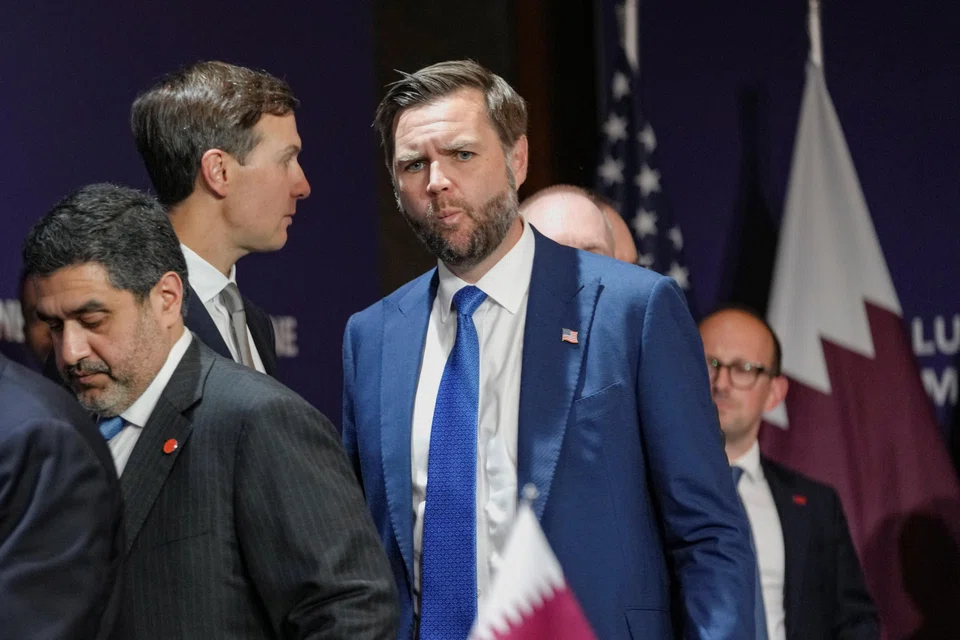
[BUERGENSTOCK/DUBAI] US President Donald Trump threatened to restart war with Iran on Sunday (Jun 21) even as Vice-President JD Vance met Iranian officials for the first talks under an interim peace deal that was overshadowed by Teheran’s announcement it had again closed the Strait of Hormuz.
Things got off to a confusing start on Sunday when Iranian media reported that Iran halted talks over Trump’s latest threat, but people familiar with the matter said the talks were continuing.
Iran’s Tasnim news agency, citing an informed source, said the Iranian delegation refused to return to the talks, but messages were exchanged through mediators Qatari and Pakistan.
The talks in the Qatari-owned Swiss mountaintop resort of Buergenstock were the first to be held under the terms of a memorandum of understanding (MOU) reached between the two enemies last week to end their war, extending a tenuous ceasefire from April for at least another 60 days.
The agreement called for reopening the strait, a choke point for global energy shipments, and ending all hostilities, including in Lebanon, where Israel has continued to launch deadly strikes as Iranian ally Hizbollah fires at Israeli targets.
Iran, arguing that the US had failed to meet its commitment to halt fighting in Lebanon, said this weekend that it had again halted maritime traffic through the strait and that Sunday’s talks would not cover substantive issues such as Iran’s nuclear programme.
“Iran must immediately stop their highly paid PROXIES in Lebanon from causing trouble,” Trump wrote on social media, apparently referring to Iran’s Hizbollah allies in Lebanon. “If they don’t, we’ll hit Iran very hard again, just like we did last week, only harder!!!”
Fox News reported that Trump had gone further in an interview, saying he had told Iranian officials if they closed the strait, “you won’t have a country”, and threatening to take over the waterway.
At the talks, where US and Iranian officials met in the presence of Qatari mediators, Vance played down the impact of violence in Lebanon, saying that progress had been made towards ending hostilities there in recent days.
SEE ALSO
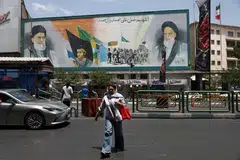
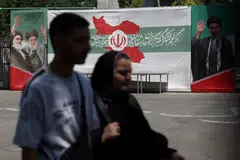
“These things are always a little bit messy,” he said.
Even as Trump was threatening Iran, Vance told reporters the US president had “asked us to turn over a new leaf to transform our relationship with the people of Iran.”
The warring sides did not pursue a joint photo opportunity at the talks. Before Vance’s remarks, Iran’s Foreign Minister Abbas Araqhchi briefly walked into the room and embraced Pakistani Prime Minister Shehbaz Sharif, a mediator. Araqhchi did not interact publicly with Vance, who was at the back of the room.
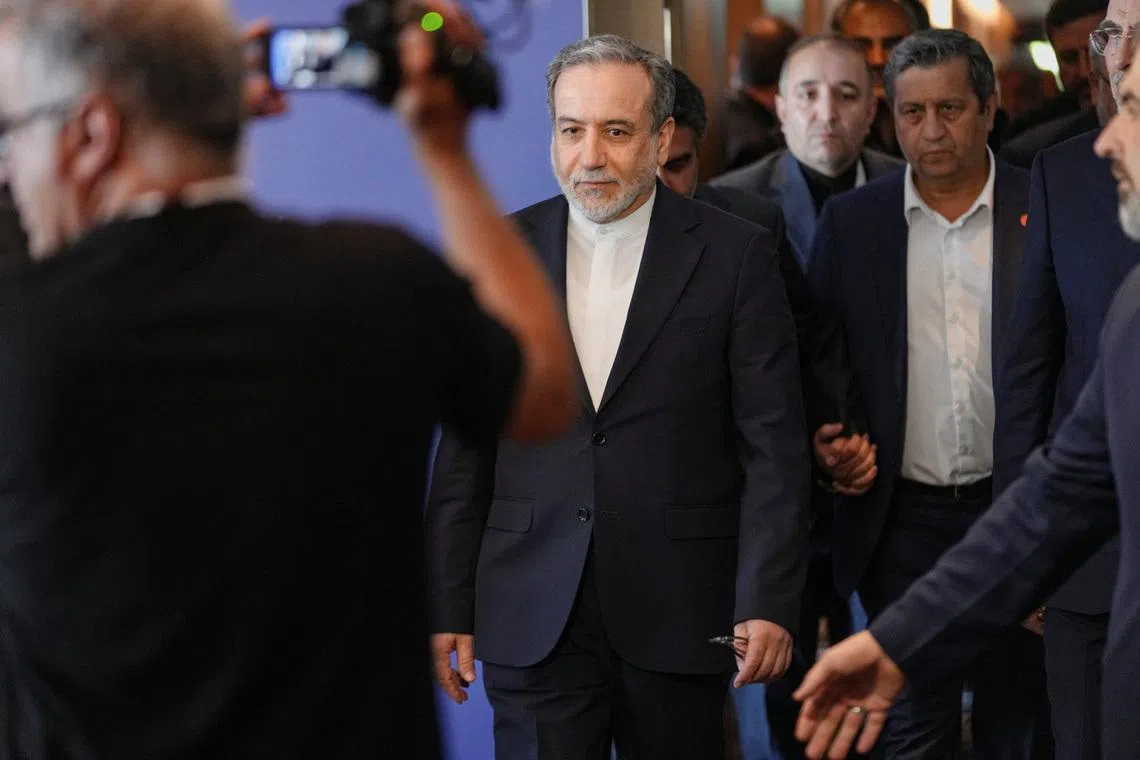
Late on Sunday, a US diplomat told US media outlet Axios that during the talks the parties had made good progress on keeping the Strait of Hormuz open. The talks also focused on enforcing the ceasefire in Lebanon as well as the nuclear deal, the US diplomat told Axios.
Iran cites Lebanon as reason to close strait
Despite the announcement of a new ceasefire in Lebanon on Friday, there has been scant sign of an end to fighting there.
Iran said on Saturday that as a result, it had again shut the strait, whose closure for nearly four months caused the biggest disruption of global energy supplies in history.
US officials disputed whether the strait was again shut, but commercially available shipping data showed an immediate impact. Only one small tanker crossed the strait with its location-signalling transponders on after Iran’s announcement, compared with dozens of ships in recent days.
Iran’s Fars news agency cited a military source as saying on Sunday that no new permits were being issued for ships to cross until further notice.
As has happened several times with major developments affecting the global economy during the war, Iran’s announcement that the Strait of Hormuz was again shut took place on the weekend with markets closed, delaying any impact on oil prices until Monday.
Trump said he agreed to the MOU to avert a global economic depression from high oil prices caused by shutting the strait. Oil prices had tumbled over the past week to levels unseen since the war started on Feb 28 with US-Israeli attacks on Iran.
Quieter day in Lebanon
The memorandum foresees 60 days of talks on issues such as curbing Iran’s nuclear programme in return for the lifting of international sanctions.
Before those issues are resolved, Iran expects to receive initial economic benefits, such as sanctions waivers and the unfreezing of blocked assets.
President Masoud Pezeshkian, quoted by Fars, expressed optimism that talks with the US could provide a strong basis for economic growth. The first goal of the negotiations was restoring access to some of Iran’s frozen assets, he said.
Earlier, Iran’s Foreign Ministry spokesperson Esmail Baghaei said that since Washington had failed to guarantee a ceasefire in Lebanon, the meeting would cover only the implementation of the memorandum itself and not the substantive issues foreseen for the next stage.
Sunday appeared to be the quietest day in Lebanon for some time, with no reports of major violence by nightfall, after two days of heavy Israeli strikes and fire from Hizbollah fighters on Israeli positions.
More than a million people have fled their homes in Lebanon since Israel invaded in March to pursue Hezbollah fighters who fired across the border in support of Tehran.
Reuters journalists in southern Lebanon saw some of the heaviest traffic since the memorandum was signed, with residents returning to their homes. Some stood beside cars backed up on the highway and waved Hezbollah flags. REUTERS, BLOOMBERG
Decoding Asia newsletter: your guide to navigating Asia in a new global order. Sign up here to get Decoding Asia newsletter. Delivered to your inbox. Free.
Share with us your feedback on BT's products and services






