Funding winter, higher costs complicate Bengaluru’s position as India’s Silicon Valley

Renald Yeo
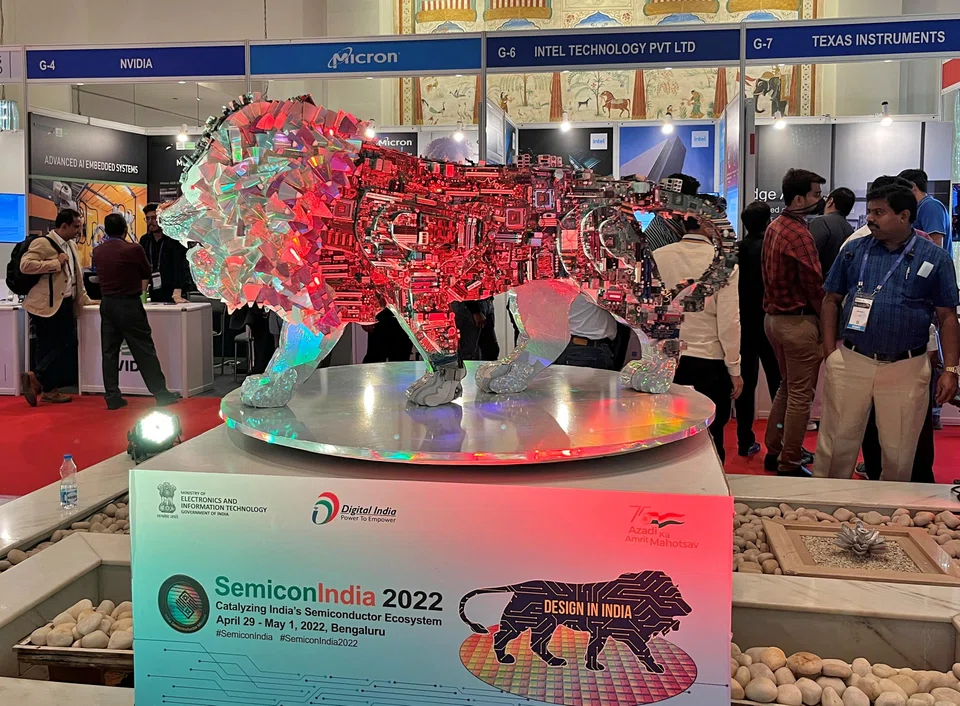
[BENGALURU] Venture funding in Bengaluru has plunged even as costs keep rising, putting pressure on companies that have set up in the tech hub widely known as the Silicon Valley of India.
Bengaluru’s attractiveness as a tech and engineering hub is precisely what drives the rising cost of doing business, which has outpaced that of other Indian cities, said NMP Jeyesh, regional director (southern region) of the Confederation of Indian Industry, a business advocacy group.
Competition for resources is also fierce. Manufacturers, which typically require larger land parcels, are particularly “feeling the heat”, he added. “I think (Bengaluru) is also going short on (available) land parcels.”
He cited the example of Bengaluru-headquartered ridesharing company Ola, which in February announced plans to invest some US$918 million in neighbouring Tamil Nadu for the manufacturing of battery cells and electric vehicles.
“They needed a few thousand acres of land; Ola did not get that,” he explained.
He added: “Because of so many Fortune 500 companies going there, the salaries are also quite high in the city. So, many companies have slowly started thinking: ‘Are we shooting too high?’”
At the same time, venture capital (VC) funding in Bengaluru fell by more than half to US$1.2 billion in the first half of 2023, compared with US$2.8 billion in H2 2022, according to a July report from PwC India.
While part of a wider trend, the fall is sharper than elsewhere. Across India, VC funding fell 36 per cent to US$3.8 billion in the same period, the report said.
“I think for rounds that are less than US$3 million, it is still okay – there is a lot of activity happening in the market, and people at the seed stages are still able to raise money,” said Rijul Jain, principal at India and South-east Asia-focused early-stage fund BAce Capital.

“But anything outside that, there is definitely a slowdown, and for startups, they need to talk to many more VCs than before, and they need a longer timeframe to close the round,” he added.
The decline in VC funding has meant that startups are “shuttling between (being) a cockroach and a unicorn”, said Sanath Kumar, chief executive officer of healthcare startup Smitch Care.
Down but not out
Yet, the qualities that make the city attractive to startups remain largely unchanged, said industry players.
Kumar still sees Bengaluru as critical to his startup’s success. The high concentration of VC firms makes it a natural base of operations for startups deciding which city to set up in, as they can stay close to their VCs, he said.
“As a founder, I can call up someone and say, ‘Hey, can we catch up for a coffee, I need some help’, and help comes immediately,” he added.
Compared with other cities in India, Bengaluru is also attractive for its moderate climate and deep pool of technical talent, said Gauri Shankar, chief executive officer of business parks, India, at CapitaLand Investment.
Situated at more than 900 metres above sea level, Bengaluru’s altitude generally translates to cooler temperatures than in other major cities such as Mumbai or New Delhi.
“When an expat comes in and visits all the cities (in India), (Bengaluru) is the city where he finds the weather to be pleasant pretty much throughout the year,” said Shankar.
The tech hub also possesses a larger pool of engineering talent than other cities in India, due in part to government policies from the 1980s, he added.
“Back in the 80s, if you wanted to get an engineering degree, you were pretty much restricted to a government college,” he said. When the state of Karnataka – of which Bengaluru is the capital and largest city – introduced privately-run institutions that offered engineering degrees during that time, Bengaluru was able to produce large numbers of engineers.
That has remained the case, Shankar said. “You (have) this huge set of IT, electronic engineering, and mechanical engineers who (are) available to recruit.”
Rahul Nambiar, chief executive officer and co-founder at Singapore-based robotics company Botsync, agreed on the attractiveness of Bengaluru’s availability of tech and engineering talent. He and his three co-founders are Nanyang Technological University graduates of Indian origin.
Explaining their decision to set up there, he said: “It was more of a tech hub, and we noticed there were more engineers. From a software development perspective, (Bengaluru) was also known for having more software developers than other cities in India.”
Time for discipline
Botsync, which entered India in 2019 and runs a 12,000-square-foot manufacturing facility in Bengaluru, views the ongoing “funding winter” as an exercise in financial discipline.
With the spigot of “easy access” to capital restricted, the company has had to re-evaluate its ongoing projects and cull those that would not generate good margins.
“We looked at our projects (to) see where we are making unnecessary expenses, along with prioritising the right product development initiatives,” Nambiar said.
And while Bengaluru may have higher labour costs than other Indian cities, it still represents cost savings for companies with operations in pricier markets.
What helps in managing costs is that manpower is cheaper in Bengaluru than in Singapore for the same roles, said Smitch Care’s Kumar.
Hiring a business development manager in Singapore, for instance, could cost a company some S$5,000 a month. The same role in Bengaluru would command a salary just a fraction of this, he added.
For Singapore companies with operations in Bengaluru, one way to reduce costs would therefore be to offshore certain functions to the latter, where feasible.
But the biggest takeaway for startups in the current macroeconomic environment is the importance of building a self-sustaining business, Nambiar said.
“The idea is to make sure the company gets more sustainable revenue, more cash, and extend the funding runway,” he added.
Decoding Asia newsletter: your guide to navigating Asia in a new global order. Sign up here to get Decoding Asia newsletter. Delivered to your inbox. Free.
Copyright SPH Media. All rights reserved.