Germany to work closer with Singapore on supply chain issues
Export-driven Germany is squeezed between Trump’s tariffs and China’s tightening export curbs
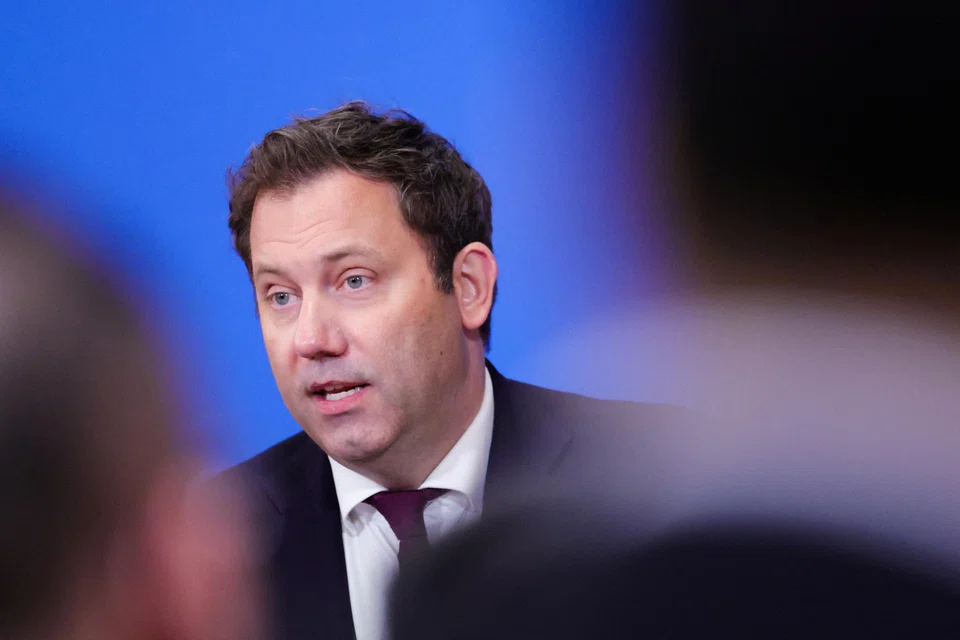
[SINGAPORE] Singapore is ready to work closer together with Germany to tackle the supply-chain challenges both face in a new global scenario, German Finance Minister Lars Klingbeil said on Thursday (Nov 20), after talks with officials in the Republic.
As the two nations mark 60 years of diplomatic ties, Klingbeil met President Tharman Shanmugaratnam, Prime Minister Lawrence Wong and Deputy Prime Minister Gan Kim Yong.
“They want to diversify their positioning, they want to diversify supply chains, they want to get out of dependencies that exist, and it became clear in the conversations that they are seeking close contact with Germany,” he told reporters.
An export-oriented nation, Germany has been caught between the swingeing tariffs with which US President Donald Trump has roiled global trade and China’s export curbs, as the latter flexes its own muscle.
“We simply have a world ... that is reorganising itself and where we are very well advised, also in the interest of our national interests, to consider with which states we can expand partnerships,” Klingbeil added.
Singapore, hit with a 10 per cent tariff by Washington, is also bracing for sectoral tariffs, including one on pharmaceutical exports that Trump announced in September, when its US exports dropped by an annual 9.9 per cent after August’s fall of 29.1 per cent.
Klingbeil, whose visit followed three days in China, also joined a gathering held by the German-Singaporean Chamber of Industry and Commerce, exchanging views with representatives of the financial sector and fintech companies.
From Singapore to South Africa for the G20
After the events in Singapore, Klingbeil heads on Thursday to Johannesburg to attend the Group of 20 summit.
No US government official will attend the G20, as Trump said there were “human rights abuses” in the country.
Klingbeil said he regretted the Americans would not attend.
“But I also tell you, there are many countries represented there that are interesting for us, with whom we should seek talks, especially when it comes to building new partnerships,” the minister added. REUTERS
Decoding Asia newsletter: your guide to navigating Asia in a new global order. Sign up here to get Decoding Asia newsletter. Delivered to your inbox. Free.
Share with us your feedback on BT's products and services