



Global brands see revival in China as retail nationalism cools
The global success of Chinese brands has further eased defensiveness towards foreign labels
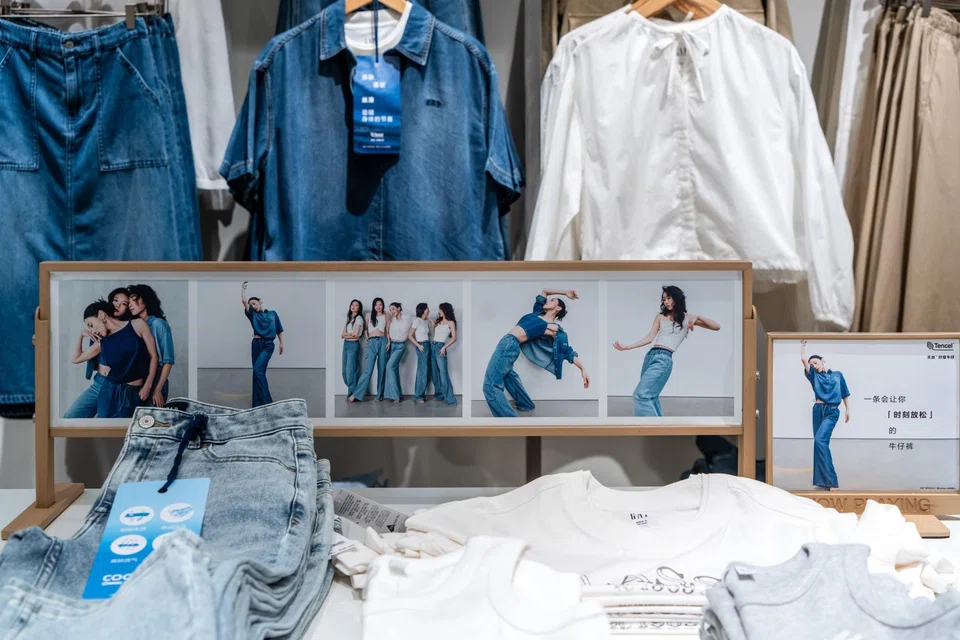
SHANGHAI finance worker Mina Meng once spent thousands of US dollars at global retailers such as Nike and Estee Lauder, drawn by their quality and popularity. But she stopped abruptly five years ago, caught up in a wave of nationalism that saw millions of Chinese boycott Western brands in favour of domestic names.
Now that the patriotic fervour has cooled, and with economic uncertainty prompting her to more closely scrutinise whether she’s getting value for her money, she’s once again opening her wallet to international brands.
Recent shopping trips have seen the 30-year-old buy from Fast Retailing’s Uniqlo and she just dropped US$150 at Gap, which she describes as “so chic now”.
She’s part of a nascent shift playing out across China, where some of the mid-market brands hit hardest by the buy-local trend, fuelled by geopolitics and backlash to some Western firms’ stance on using Xinjiang cotton, are now winning back customers.
Online sales data compiled by BigOne Lab and analysed by Bloomberg News showed Gap, Inditex’s Zara and Mango grew more than 30 per cent in 2025 across top e-commerce channels such as Alibaba Group Holding’s Tmall, reversing earlier declines.
Gap, whose China business was acquired in 2022 by local e-commerce firm Baozun, posted revenue growth of more than 20 per cent in the overall market last year and has returned to quarterly profitability.
“Chinese consumers have moved on from the blinkered Xinjiang-cotton anti-foreign-fashion era,” said Mark Tanner, managing director of consultancy China Skinny in Shanghai.
“They are getting more diverse in their choices, which opens up opportunities for foreign brands.”
Rebuilding connection
It’s also restoring some pricing power. Since late 2024, Gap, Zara, Uniqlo and Hennes & Mauritz (H&M) have trimmed discounts, while sales of items priced above 200 yuan (S$37) rose sharply on Tmall, according to e-commerce data provider Hangzhou Zhiyi Tech. As economic growth softened, shoppers became more pragmatic, choosing products based on design, quality and emotional connection rather than country of origin, Tanner said.
SEE ALSO

The global success of Chinese brands, such as Pop Mart International Group and BYD, has further eased defensiveness towards foreign labels.
Meanwhile, Gap’s comeback has been helped by melding its classic all-American branding with local know-how.
Under Baozun’s ownership, about 70 per cent of design and production is now handled in China and replenishment cycles have been cut to as little as two weeks.
A redesigned China-exclusive sweatshirt, with heavier fabric and a sharper silhouette, went viral after launching last fall, selling out online shopping festivals.
“We rebuilt the business from the ground up for Chinese consumers,” Gap China CEO Ken Huang said.
Global retailers have retooled product design, supply chains and marketing to fit China’s fast-moving, digital-first retail environment. Brands are also ramping up livestreaming on Douyin and Tmall, now with a daily sales channel for H&M and a showcase for Zara’s collections, while rethinking physical stores, with Gap revamping its Shanghai location and Zara planning a new flagship on the city’s famed Huaihai Road.
Uniqlo, Mango and H&M did not reply to requests for comment on their China sales. Inditex said that it does not disclose market-specific data.
Discerning consumption
Sales data suggested more discerning consumption is taking hold. While Anta has maintained steady growth, competitor Li Ning’s expansion has slowed to the low single digits from double digits a few years ago. Urban Revivo, a direct competitor to Zara and H&M, saw growth slow last year compared to 2021 to 2023, the height of the nationalist surge.
In beauty, Florasis – Tmall’s biggest colour cosmetics seller in 2021, has dropped from the top ranks, with foreign brands such as YSL, Chanel and Nars now leading.
Still, risks remain. China’s era of rapid growth has ended and, while local brands often remain faster to market, cheaper “pingti” – dupes of pricey brands – are gaining traction among more frugal shoppers. Nationalism may not be consumers’ biggest deciding factor right now, but it risks flaring up again as geopolitical tensions rise, including with the US and Japan.
When it comes to foreign labels, “I will buy them only if they are very competitive in both design and price and they can’t run into political issues”, said Meng, the Shanghai office worker.
The recovery is also uneven. Mid-market brands are rebounding and premium sportswear names such as Lululemon Athletica remain resilient. And while major luxury groups have faced subdued demand in recent years, LVMH reported in April that the region that includes China did surprisingly well in the latest quarter, with the country showing strength during the New Year shopping season.
“The sales improvements do not necessarily signal a full market recovery yet, but they do suggest that brands and consumers are rebuilding a connection,” said Echo Liu, a Beijing-based senior director at NielsenIQ.
For some consumers, disappointment with domestic brands has also driven reassessment. During the pandemic, 32-year-old Guangzhou musician Jelly Li bought mostly local apparel and beauty products through influencer livestreams, drawn by low prices and eye-catching designs. But declining quality pushed her back towards Gap and Uniqlo, she said.
“I want good prices and attractive packages, but I also need products that actually meet my needs,” Li said. “I’m open to all brands now, whoever does a better job.” BLOOMBERG
Decoding Asia newsletter: your guide to navigating Asia in a new global order. Sign up here to get Decoding Asia newsletter. Delivered to your inbox. Free.
Share with us your feedback on BT's products and services
TRENDING NOW

Once staunchly pro-China, Malaysian Chinese businesses are now distancing themselves from Beijing

Looking beyond looming CEO succession, should UOB potentially pursue a transformative merger?

Could stablecoins be the future of money?

Grab CEO’s wife Chloe Tong on life with Anthony Tan and finding her purpose

