
Grim year for China’s bankers and brokers as pay slashed
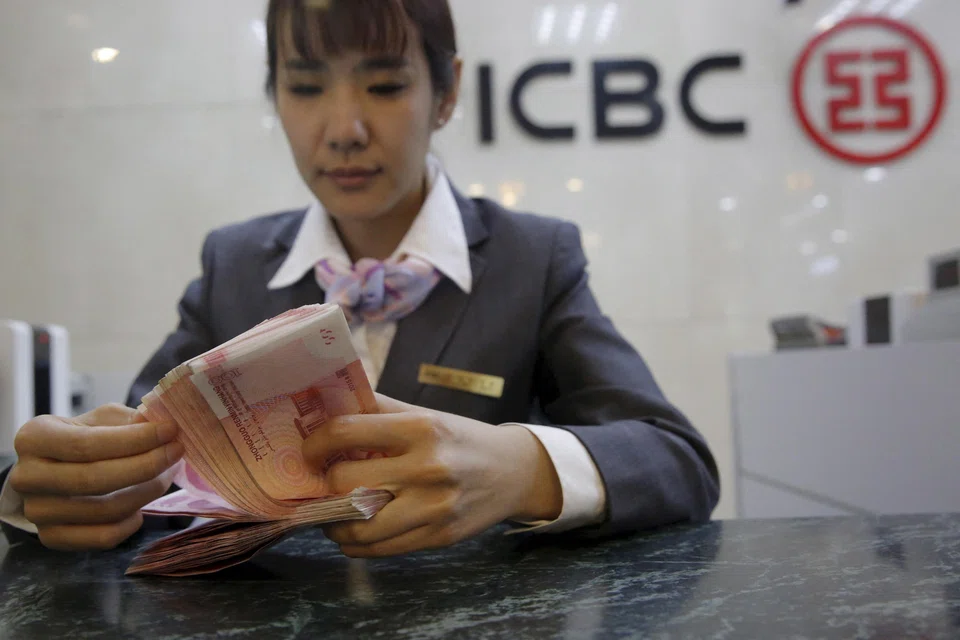
EMPLOYEES at some of China’s biggest financial institutions, including top executives, took big pay cuts last year as salaries and bonuses were hit by a drop in profits and the industry stepped into line with government demands to control excessive remuneration.
The annual reports of listed brokerages and banks reveal the hit executives in the financial sector took to their pay packets in 2022. Average compensation at many securities firms fell roughly 20 per cent, with some senior executives facing a bigger cut of more than 30 per cent. While overall pay levels among banks remained stable, some top management saw their remuneration squeezed.
The cuts partly reflect a poor year for the financial sector with sales, capital markets, and investment returns falling amid the economic slowdown triggered by Covid-19 lockdowns, while banks’ margins were squeezed as interest rates on loans fell.
The audited annual reports of 23 securities brokerages listed on the Chinese mainland show their total revenue and net profit fell 22 per cent and 29 per cent, respectively, in 2022, according to Caixin calculations.
The six biggest state lenders, including Industrial and Commercial Bank of China, saw growth in net profits slump to 6.7 per cent on average last year, about half the pace of 12.7 per cent in 2021, according to Caixin calculations based on their annual reports.
But the decline in compensation is also a sign that companies are paying attention to policymakers’ concerns that pay is excessive compared with other industries and that employees are being rewarded too handsomely for taking risks.
President Xi Jinping’s drive to ensure finance better serves the real economy and the campaign to reduce inequality through the common prosperity initiative is adding pressure on the sector to rein in salaries and bonuses.
Financial elitism
In February, China’s top anti-corruption watchdog vowed to eliminate “erroneous ideologies including ‘financial elitism’ and the belief in the supremacy of money”.
The commitment from the Central Commission for Discipline Inspection was made in an article titled “Resolutely win the tough and prolonged battle against corruption”, which also pledged to crack down on the “extravagant pursuit of a refined and luxurious lifestyle”.




Finance has long ranked as one of the highest-paying sectors in China. In both the private and non-private sectors, average salaries for financial industry employees in urban areas were the second highest last year, topped only by the information technology and computer software sector, according to data released on May 9 by the National Bureau of Statistics.
But high pay in the industry has become an increasingly controversial issue amid slowing economic growth, the impact of the Covid-19 pandemic on incomes and jobs, and poor returns in the stock and bond markets.
Those who support the industry’s salary levels argue that the financial sector is highly competitive and that pay is driven by market demand and supply. Opponents, however, maintain rewards paid to high earners in the sector are far greater than the value they create and the risks they undertake.
Cases of finance professionals bragging about their wealth on social media have fuelled a backlash.
The Internet erupted in anger in July 2022 when the wife of a young employee at China International Capital Corp (CICC), one of the country’s top investment banks, posted his proof of income on social media that showed he earned 82,500 yuan (S$15,870) a month. Rumours circulated later, however, that his salary had been inflated to help him secure a home loan.
“This episode just added fuel to the fire,” said a senior manager at a subsidiary of a securities firm. “China is pursuing ‘common prosperity’, but the pay gap between the finance sector and other industries has widened.”
‘Reasonable’ pay
The government has been trying for years to rein in salaries at financial institutions.
In 2009, the Ministry of Finance proposed a cap of 2.8 million yuan on pay for leaders at central government-administered state-owned financial institutions and promulgated rules to strengthen the link between pay and performance.
In addition, the “Guidelines for the Supervision of Prudent Remuneration for Commercial Banks” issued by China Banking Regulatory Commission released in 2010 state that base salaries paid by a commercial bank should be no more than 35 per cent of its total wage bill.
Also, at least 40 per cent of any performance-based pay should be deferred for a minimum of three years. For top executives, the percentage of deferred payment should be higher than 50 per cent, and ideally 60 per cent.
These guidelines were reiterated by the Ministry of Finance in July 2022 amid a fresh campaign to control salaries in the financial sector.
Its notice on “Further Strengthening the Financial Management of State-Owned Financial Institutions” stipulated that pay increases for middle-and-senior management positions should not exceed the average for all employees and that the pay gap must be kept at “reasonable” levels to motivate frontline workers.
In May 2022, the Securities Association of China told brokerages to structure their compensation systems to balance pay at different levels of the company and consider factors such as the long-term interests of shareholders, operational risks, and business development plans. They were also told to ensure that incentives were not excessive and not to directly link pay to underwriting deals.
That was followed in June by similar guidelines from the Asset Management Association of China, which urged fund management companies to follow a “reasonable” pay structure and avoid paying staff excessive bonuses.
But some in the industry are sceptical that these guidelines can be effective.
“The reason for high salaries in the financial industry lies in its high profits,” one market participant told Caixin. “It’s difficult to change the current income distribution pattern simply by forcibly lowering wages.”
Broker blues
Out of 43 listed securities firms, 23 had reported their 2022 results as at April. Their reports show that the average salary was around 529,000 yuan, a decline of around 17 per cent, or almost 110,000 yuan from 2021. The pay gap within the industry also narrowed, with the difference between the top 10 and bottom 10 companies by average salary falling to 230,000 yuan from 350,000 yuan in 2021.
The eight top brokerage firms — including CICC, Citic Securities and China Securities – saw average compensation drop 23 per cent. Pay at CICC fell by some 30 per cent to 819,600 yuan, dropping below Citic Securities, where the average salary dropped 11.7 per cent to 836,400 yuan.
But a source close to regulatory authorities told Caixin that the base salary and benefits for senior executives, excluding deferred payments, fell on average 31 per cent in 2022, and among the eight top brokerages, the drop was 35 per cent, larger than the average decline for ordinary staff.
Banks, in general, were less affected by pay cuts than other sectors of the financial industry in 2022, partly because the sector entered a “new normal” of low growth around 2016. As of April, 14 banks listed on the domestic A-share market had released their 2022 earnings reports. These show that overall, average salaries remained stable in 2022, and pay actually rose in more than 60 per cent of the banks.
Employees of national joint-stock banks enjoyed higher pay than those of the “Big Six” state-owned commercial banks.
China Merchants Bank (CMB) held the top position with the annual average salary exceeding 600,000 yuan for two years in a row, although in 2022 the average fell 1.82 per cent to 625,300 yuan. CMB was closely followed by China Citic Bank, where average salaries rose 7.35 per cent to 623,200 yuan. Average salaries at the six major state-owned banks, were far lower, ranging from just over 300,000 yuan to some 400,000 yuan.
But the remuneration of some senior executives at banks dropped significantly.
New normal
Annual reports of the 14 banks show that in 2021, seven top executives received annual pay before tax of over five million yuan, while the earnings of another 15 exceeded four million yuan. In 2022, however, only one senior executive was paid more than five million yuan and only another one received more than four million yuan. Leadership pay at half of the 14 banks fell, with China Zheshang Bank reporting the biggest cut of more than 20 per cent.
The days of outsized pay packets and bonuses for the financial sector, especially for brokerages, could be over as policymakers pursue common prosperity.
“If you follow market principles, pay should be higher for people who have skills that are in short supply,” said a senior auditor specialising in the financial industry. “In the past, high remuneration was used to attract and motivate talent, while controlling financial risks. But this approach alone doesn’t seem to work anymore.”
Securities companies need to find an appropriate medium and long-term remuneration mechanism that provides a balance between “responsibilities, rights and returns” and that aligns the interests of employees, executives and shareholders, he said. CAIXIN GLOBAL
Decoding Asia newsletter: your guide to navigating Asia in a new global order. Sign up here to get Decoding Asia newsletter. Delivered to your inbox. Free.
Share with us your feedback on BT's products and services