



Gucci can no longer treat China like a ‘trash bin’: Kering CEO
Chinese shoppers now favour quality and design over logos as the luxury market matures, says de Meo
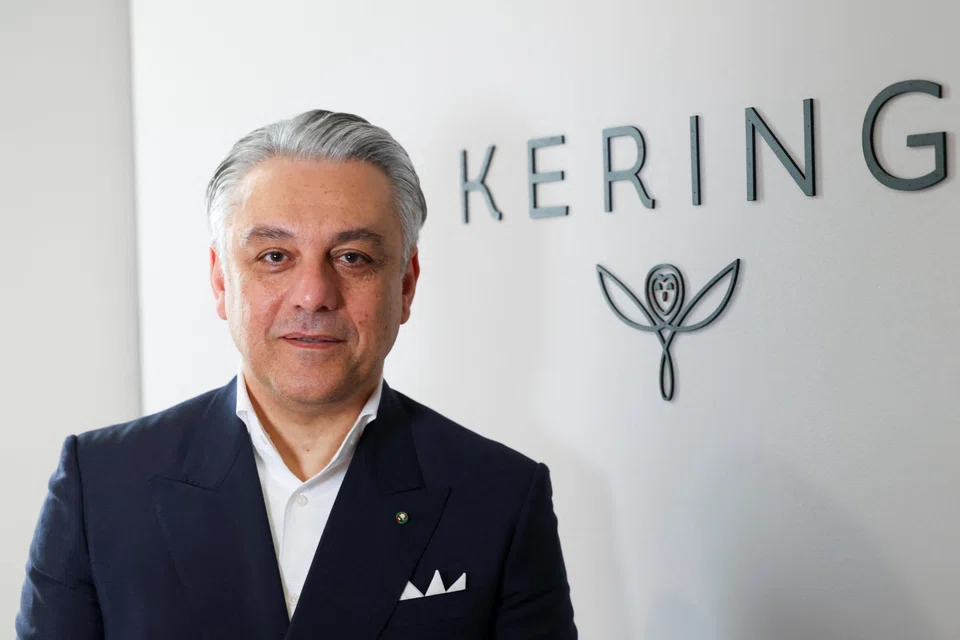
[FLORENCE, Italy] Kering’s biggest brand Gucci must rebuild its position in China after years of complacency when it treated the market as a place for easy growth, with poorly located stores and an outdated retail experience, Kering CEO Luca de Meo said on Thursday (Apr 16).
For over a decade, China was the biggest source of growth for the US$400 billion global luxury sector and Gucci was able to capitalise on that more than its peers. But it failed to seize on a brief post-pandemic shopping boom and never recovered when Chinese consumer spending subsequently slowed down.
Speaking on the sidelines of Kering’s first investor day since he took office in September to try to revamp the group, de Meo said Gucci needed to tailor its Chinese stores to discerning clientele and must stop relying on off-price outlets, where goods are sold at discounts.
“Gucci has to be back,” de Meo told reporters. “Gucci in China has been used as a – can I use a very strong expression – a bit of a trash bin, or a place where they were looking for easy growth.”
Chinese shoppers’ tastes have changed
China has evolved into a sophisticated luxury market, de Meo said, contrasting it with earlier years when demand was driven by logo-centric buying rather than quality, design and experience.
“People are very discerning for what is good, what is bad, the quality, demand...not just having a logo on something and buying,” he said, adding that the shift mirrors earlier changes in markets such as Japan, South Korea and Europe.
Reviving growth in China meant focusing on coherent messaging and in-store experience. Kering also announced it would acquire a minority stake in Shanghai-based Icicle Fashion Group.
In addition, de Meo, who joined Kering after a successful tenure as Renault CEO, cited lessons learnt from the car sector. Luxury brands must not underestimate domestic competition and specifically China’s skill for innovation, he said.
Some labels within Kering’s luxury portfolio, including Bottega Veneta and Saint Laurent, had already benefited from a sharper China strategy, de Meo said, but Gucci’s recovery would take longer.


“For Gucci, I would say the jury’s out. It’s not going to happen in weeks. But you can probably measure that in months, a year, something like this.” REUTERS
Decoding Asia newsletter: your guide to navigating Asia in a new global order. Sign up here to get Decoding Asia newsletter. Delivered to your inbox. Free.
Share with us your feedback on BT's products and services






