Has Trump achieved his goals in the war with Iran?
The US president has repeatedly said that his main goal is to prevent Teheran from developing a nuclear weapon
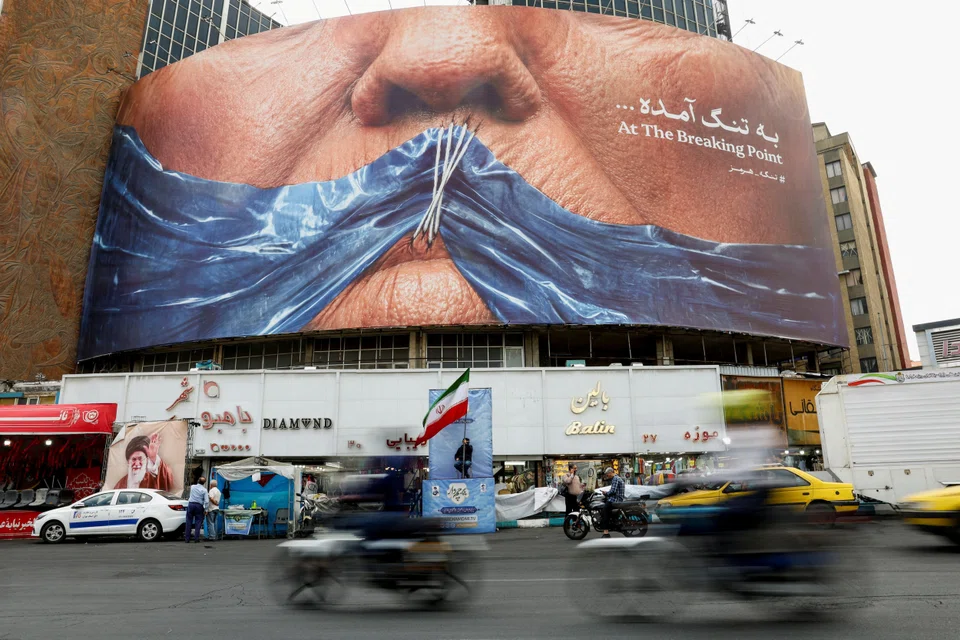
[WASHINGTON] Shortly after the US and Israel launched airstrikes on Iran on Feb 28, US President Donald Trump laid out a host of objectives, from destroying Iran’s ballistic missile capabilities to ensuring Teheran can never have a nuclear weapon.
More than three months later, with a preliminary peace deal in place, what has Trump achieved?
Missiles and drones
Before the war, Iran held the largest ballistic stockpile in the Middle East, with between 2,500 and 6,000 missiles of different types. Some were capable of reaching Israel, with ranges of up to 2,000 kilometres, and some carried cluster munition warheads that are harder to defend against.
Iran is also a major manufacturer of long-range drones, in particular, the one-way Shahed drone that has been used by Russia against Ukraine, as well as by Teheran.
Roughly one month into the war, US sources told Reuters that one-third of that arsenal was destroyed, with another third likely damaged, destroyed or buried.
US Admiral Brad Cooper told Congress on May 14 that Iran’s ability to build and stockpile missiles and long-range drones had been set back by years. He said that more than 1,500 missiles and 6,000 drones had been intercepted by the US and its allies during the conflict.
It is unclear how many missiles Iran has left, but the country still has the ability to reach US allies – most recently on Jun 6, when it launched salvos at Kuwait and Bahrain, and on Jun 7, when it fired missiles at Israel. Those countries said that the attacks did no significant damage.
Conventional military
The US military says it has degraded Iran’s conventional military ability to project power in the region or threaten US operations.
Cooper told Congress that the US military had destroyed 161 Iranian naval ships and knocked out 82 per cent of its air defence systems. He said that the Iranian air force, which flew up to 100 sorties daily before the war, now does not fly any missions at all.
SEE ALSO

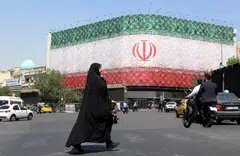
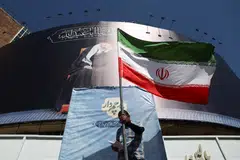

Despite this, Iran was still able to effectively shut the Strait of Hormuz throughout the duration of the conflict, bottling up merchant ships that transport one-fifth of the world’s oil and natural gas supply through the use of speedboats, mines, drones and missile boats.
Nuclear programme
Trump has repeatedly said that his main goal is to prevent Iran from developing a nuclear weapon. Teheran has consistently said that it has no intention of building a bomb and its programme is for peaceful purposes.
But the war has not significantly changed Iran’s nuclear capability. US intelligence last month estimated that Iran would need less than a year to produce a nuclear weapon, the same timeline it laid out following the June 2025 strikes on Iranian nuclear facilities.
Iran’s nuclear programme will be a central issue for negotiators once the framework deal is formally signed on Friday. Trump has said that Iran’s enriched uranium must be taken out of the country, while Iran’s Supreme Leader Ayatollah Mojtaba Khamenei says it must not be sent abroad, sources say.
Iranian proxies
Trump said on Mar 2 at the White House that Teheran cannot be allowed to continue to arm and fund the armed proxy groups in Iraq, Lebanon, Gaza and Yemen that Iran has relied on for decades to project power and harass enemies.
Iran has shown no willingness to halt its support for those groups since the start of the war, but US military and independent assessments have found that Iran’s proxy network is much less effective than it used to be.
Much of this was underway before the war began. Israel killed many of Hamas’ top leaders and thousands of its fighters in Gaza following the Oct 7, 2023, attack on its territory and killed many of the Hizbollah militia’s leadership in Lebanon as well.
Iran also lost an important conduit for resupplying Hizbollah with the collapse of former President Bashar al-Assad’s rule in Syria in 2024. Sanctions and Iran’s economic woes also undercut its ability to fund these groups.
The groups have not played a major role in the war. Hamas has not attacked Israel from its Gaza enclave, while the Houthis have not significantly disrupted Red Sea shipping from Yemen.
Hizbollah joined the war on Mar 2 when it launched missiles and drones into Israel, prompting Israel to respond with airstrikes and a ground invasion that have killed nearly 3,700 people and displaced 1.2 million in Lebanon. Some 28 Israeli soldiers and four civilians have died in the conflict so far.
Cooper told Congress in May that Iran no longer has the ability to reliably supply those groups with advanced weapons, though he did not specify what that meant.
Regime change
Trump encouraged Iranian protesters to overthrow their rulers before the war began and said that Supreme Leader Ayatollah Ali Khamenei’s death on Feb 28 was their “single greatest chance” to seize the government.
On Mar 6, he said that the war would only end with “UNCONDITIONAL SURRENDER” from Iran, paired with a new, “acceptable” leader.
Though the war has failed to dislodge Iran’s theocratic government, Trump has claimed that he has accomplished his goal because Khamenei has been replaced by his son, Ayatollah Mojtaba Khamenei. Trump characterised the new leadership as “a new, and more reasonable, regime” on Mar 29.
Trump, in recent weeks, has refrained from repeating his calls for the toppling of Iranian leaders. REUTERS
Decoding Asia newsletter: your guide to navigating Asia in a new global order. Sign up here to get Decoding Asia newsletter. Delivered to your inbox. Free.
Share with us your feedback on BT's products and services