



Hiroshi Okuda, Toyota chief who pushed for the Prius, dies at 93
He was the first person from outside the company’s founding family in a generation to take the top job
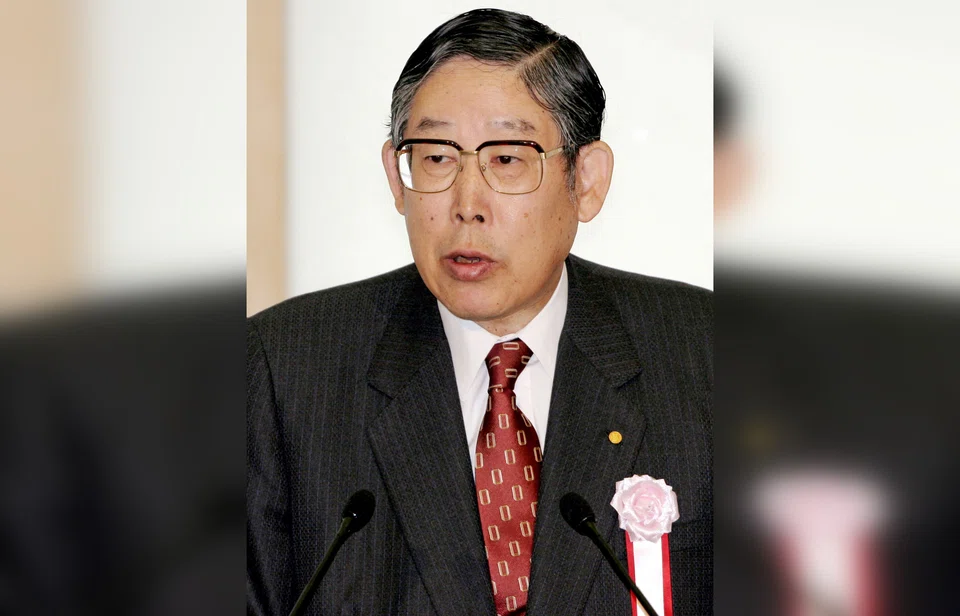
HIROSHI Okuda, who served as president and then chairman of Toyota Motor in the late 1990s and early 2000s, has died. He was 93.
A lifetime Toyota employee, Okuda joined just as it began establishing itself as a manufacturing powerhouse in the post-World War II era and rose through the ranks to become president in 1995 – the first person to do so from outside the company’s founding family in a generation.
He stood out from the crowd in Japan for being tall, outspoken and a risk-taker and from his peers globally by championing novel cars that became best-sellers, such as the Prius gas-electric hybrid and RAV4 SUV.
Internally, he won a reputation for cost-cutting prowess and quick decision-making to fend off what he saw as encroaching “big company disease” and complacency.
Okuda’s death was first reported on Tuesday (Aug 11) by Kyodo News. A spokesperson for Toyota said a funeral service will be held among immediate family.
The son of a small securities company manager, Okuda was born outside Nagoya on Dec 29, 1932. He graduated with a business degree in 1955 from the prestigious Hitotsubashi University in Tokyo, where he competed in tournaments as a black belt in judo. His first years at Toyota were spent in its accounting division and he later oversaw the company’s Asia and Oceania unit.
When Okuda took the top job, he succeeded the short-lived tenure of Tatsuro Toyoda, son of the carmaker’s founding father Kiichiro Toyoda, ending a nearly 30-year period during which the Toyoda family ran the company.
By the mid-1990s, Toyota was in a slump with profits down and declining domestic market share. To turn things around, he pushed for faster growth overseas and an overhaul of its stodgy image at home. During his leadership, Toyota moved to build a factory in France and expand US production, but also closed a plant in Japan for the first time.
Some critics saw Okuda’s cost cuts and rapid expansion abroad – part of a plan dubbed the “2005 Vision” – as too rushed, leading to quality issues and excess capacity a decade later.
SEE ALSO



Known for blunt talk, he once called his Detroit rivals “stupid” for trying to import bulky cars ill-suited to Japan’s narrow side streets. In 2010, the Wall Street Journal reported Okuda advocated unsuccessfully for the ouster of then-president Akio Toyoda to take responsibility for a series of recalls and other setbacks.
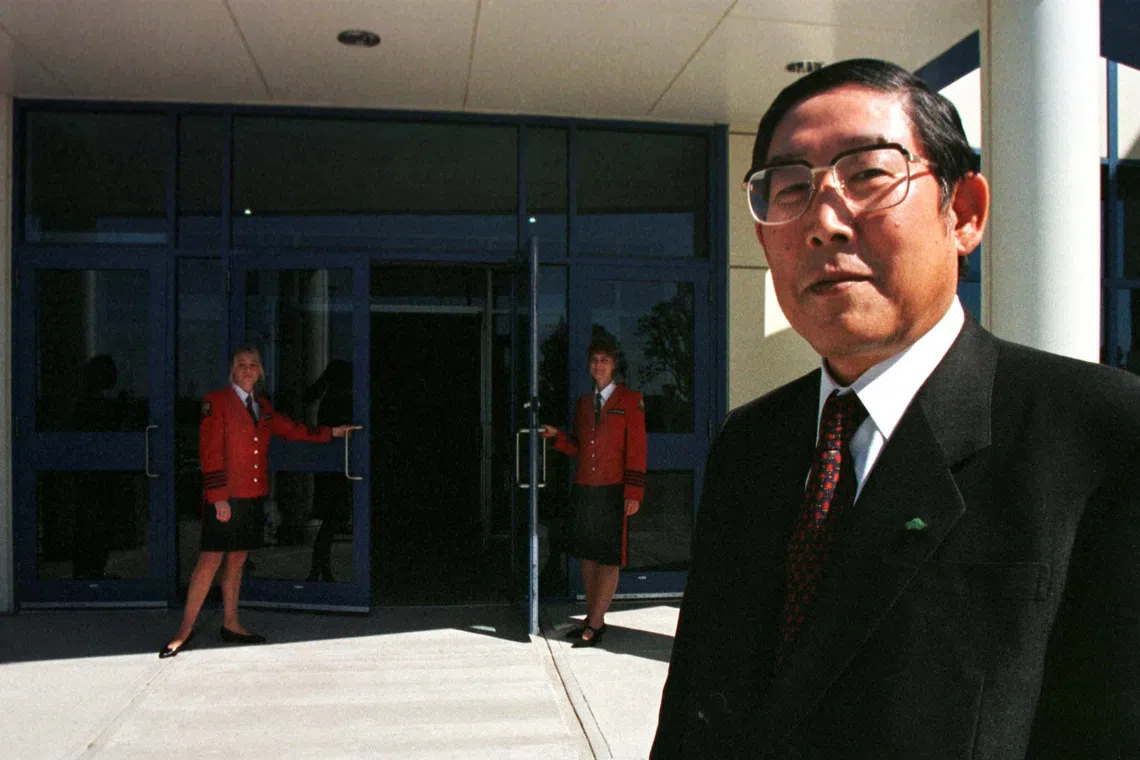
Perhaps his most enduring legacy is the push for the quirky Prius, which debuted in Japan in 1997 to much disdain from Detroit executives, and went on to develop a cult following. It also laid the foundation for a broader electrification drive that paid dividends. Toyota’s hybrids – now spread throughout its line-up – are enjoying a boom with US gas prices above US$4 a gallon.
Okuda was known for taking risks in other ways, too. He once crossed a jungle to meet with leftist guerrillas in the Philippines when he ran Toyota’s local operations there in the early 1970s. As president of the company two decades later, he played a big behind-the-scenes role in defusing US-Japan trade tensions, including threatened 100 per cent tariffs on Japanese luxury car exports.
In 1999, Okuda handed over day-to-day operations as president to Fujio Cho and became chairman, a role he held until 2006 when he was named a senior adviser and board member. He left the board in 2009 as part of a managerial revamp, but retained influence with Toyota’s management from outside the company. BLOOMBERG
Decoding Asia newsletter: your guide to navigating Asia in a new global order. Sign up here to get Decoding Asia newsletter. Delivered to your inbox. Free.
Share with us your feedback on BT's products and services
TRENDING NOW

MSCI proposes standalone status for Indonesia; Jakarta stocks plunge 8%

Palm oil stocks slide after Singapore begins looking into which firms responsible for haze
High Court rules against Julius Baer’s Singapore trust arm in US$50 million family trust dispute
Why is the haze so bad in South-east Asia this year?

