



HK’s current departures likened to 1997 handover exodus
But Crown Worldwide chief says migration not all East-to-West; many stay in Singapore, Australia and elsewhere in region
 Add BT as a preferred source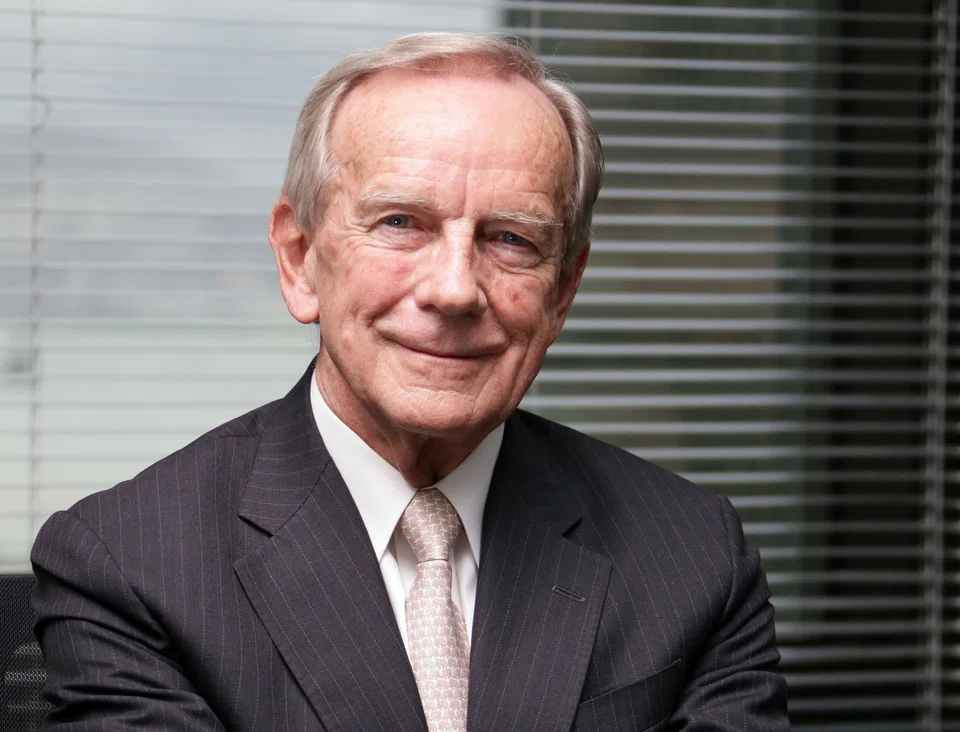
DeeperDive is a beta AI feature. Refer to full articles for the facts.
[HONG KONG] James Thompson has traced professional human flows in Asia for over 50 years, through the relocation company he founded in Japan back in 1965 that is now headquartered in Hong Kong. Now, the 82-year-old American is observing a peculiar historical aberration: a one-way emigration tide out of Hong Kong. “Normally, in the relocation business, people come and go, and it’s balanced. But in the last couple of years, there are more people going than coming, because no one wants to come to a closed environment,” he said in a recent interview with The Business Times. “While our business is extremely good because so many people are leaving, at the same time, it’s not balanced.” The trend, he noted, resembles the departures prior to 1997, the city’s handover year to Chinese rule. “This year is similar. It shows that a lot more people are moving around. Local movers are so busy they could not take any more business,” he says. Thompson serves as chairman of Crown Worldwide Group, the world’s largest private company in transportation and warehousing services, with 170 operations in 45 countries and annual revenue of nearly US$900 million. Its 3,500-strong workforce – augmented by a fleet of contractors, many founded by former employees – serves local and multinational clients that include royalty and movie stars. Crown reported a 38 per cent year-on-year increase globally in its relocation business in 2021, and 45 per cent for Hong Kong. In the year to August, the increase was 28 per cent globally and 31 per cent for Hong Kong. The numbers show a restless migration pattern throughout the pandemic, in stark contrast with the slowdown of daily activities in most places. “When the whole world was disrupted by the pandemic, people had been shifting,” he remarks. This hectic traffic persisted despite a massive disruption in global supply chains for more than two years, which pushed up relocation shipping rates by at least 20 per cent. At one point, a ship loaded with Crown’s goods took as long as eight weeks to sail from New York to Ireland, as it abandoned a scheduled stopover in London to reroute to Amsterdam. “That’s typical of the kind of problem (we had),” he says. “We had to explain to customers that we were just waiting for an empty container.” “The biggest disruption of the supply chain was a big shortage of containers. Also, the shipping rate was very high,” he says. “But that seems to be under control now. Shipping lines seem to be back to normal. There’s enough capacity, and enough supply of containers.” But the steady exodus out of Hong Kong, among both locals and foreigners, has not reversed.
“We don’t see them coming back,” he says. “I do feel some of them will come back because they just want to get a foreign passport, if they can, or residence. That’s exactly what happened in 1997. Within one or two years, they will come back once they get the documentation for residency.” Thompson expects expatriates will move back faster. “Hong Kong’s general position (and) its energy (are) still desirable for those people,” he says. He bases his expectations on Hong Kong moving decisively to lift all Covid-19 restrictions in the last quarter of the year. As things stand, the city’s chief executive John Lee has not yet outlined a road map for a full reopening, and has maintained that Hong Kong must exercise caution as it looks to gradually relax its curbs. Last month, the government scrapped a mandatory hotel quarantine for overseas arrivals.
“As bad as it got from the riots, everything has been temporarily damaged in Hong Kong. But Hong Kong still is a vibrant city; it has so many advantages,” he reflects. The migration is not all East-to-West traffic, however. “A lot of them stay in the region, in Singapore and Australia, or a little bit east to Malaysia, Philippines, and Indonesia,” he says. Whereas moving generates the most revenue for the company, it is the stationary stuff – 50 million boxes of records and documents, securely stashed in fully-owned warehouses globally – that yields the most profit. Among Crown Worldwide’s clients are Swiss company ABB and Singapore Insurance Company. Thompson bought one of his first buildings in Singapore in Jurong back in 1972. The company moves, relocates, and stores artworks for some 7,000 museums, galleries, collectors, and artists internationally, packing and delivering masterpieces such as the Mona Lisa and Vermeer’s Girl with a Pearl Earring. Some of the items entrusted to Crown to pack and deliver are extremely rare and valuable, including fossils that are over 300 million years old – the world’s largest blue whale skeleton that’s over 26 metres long; the king of Tonga’s throne; Steven Hawking’s wheelchair; and the first Apple Mac, which sold at an auction for US$393,000. With shipping gridlocks resolving, and an end to the pandemic in sight, Thompson believes that globalisation will continue and Asia-Pacific will remain the most promising region.
Decoding Asia newsletter: your guide to navigating Asia in a new global order. Sign up here to get Decoding Asia newsletter. Delivered to your inbox. Free.
Copyright SPH Media. All rights reserved.
TRENDING NOW
‘Boring’ is the new black: The stars are aligning for a Singapore stock market revival
Near sell-out launches in March boost developer sales to 1,300 units after four slow months

China pips the US if Asean is forced to choose, but analysts warn against reading it like a sports result

Genting Singapore’s Lim Kok Thay receives S$7.5 million pay package for FY2025

