



How Miniso taps into the business of joy and emotional connections
The company has its roots in China, but it has now accumulated the most extensive cross-cultural experience in Asia
SHOPPING around VivoCity or Changi Airport in Singapore, one cannot help but be drawn to the brightly coloured, neatly arranged displays of Miniso stores. Customers are not just choosing products there, they are somewhat experiencing what the brand calls their “joy philosophy”.
Globalised design with localised insight
This trendy toy giant is trying out their “joy philosophy” in Asia as a springboard to replicate it in the global market, combining it with a model of “affordable design” and “original IP (intellectual property)”. During Miniso’s international media open day recently in Guangzhou, China, I saw firsthand the efforts of the group’s original design team of more than a thousand people at its headquarters, and was immersed in that “joyful” energy.
Miniso’s chief marketing officer, Robin Liu, told Lianhe Zaobao, “Singapore is the core market for South-east Asia, and also an important sample for us to replicate our successful overseas experience.”
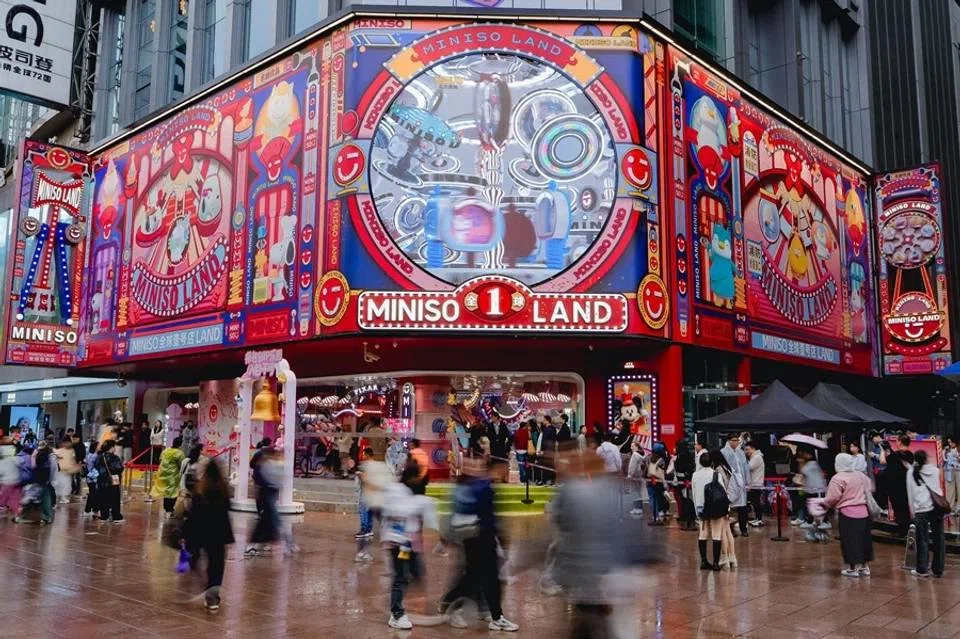
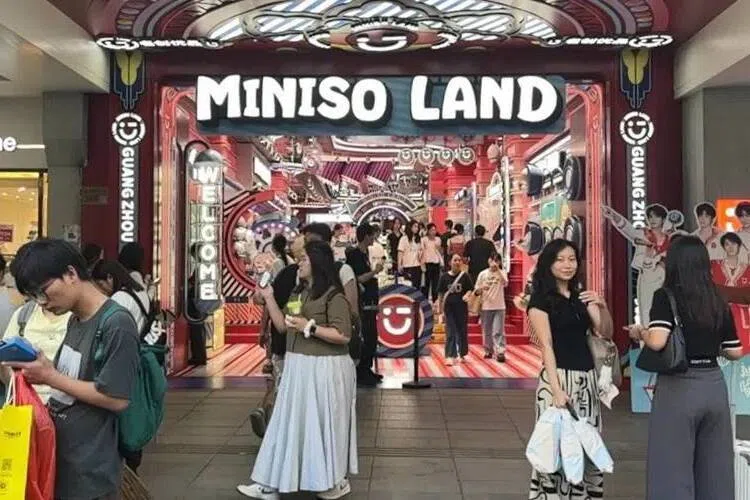
Liu stated: “Singapore is not only a sales endpoint – it is also a brand showcase window. We will roll out new concept stores there first, including the theme-park-styled Miniso Land and the innovative ‘Miniso Friends’. Over the next three years, we will continue to expand the number and types of stores, focusing on enhancing the consumer experience.”
As at the end of June 2025, Miniso has set up nearly 1,700 stores in Asia (excluding mainland China), including in Singapore.
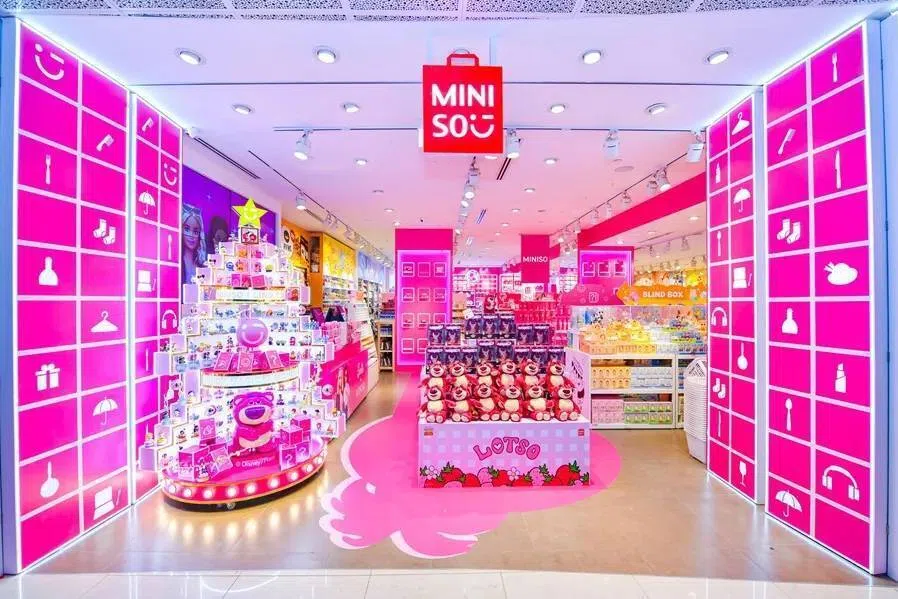
South-east Asia, Europe and Australia are all key regions, with the South-east Asian market growing rapidly. Singapore, Thailand and Malaysia have already become important growth drivers for Miniso. In these markets, the company implements a “glocal strategy” – a dual approach of globalised design and localised insight.
Liu explained: “We incorporate local cultural elements to develop customised products, such as launching the ‘Merlion Mickey Mouse’ in Singapore and the ‘Muay Thai Dundun Chicken’ in Thailand.” Products for different regions are localised in terms of colour, packaging, size, category, and even display methods, making the brand both global and authentically local.
Crafting a ‘cultural retail’ model
Miniso has its roots in China, but it has now accumulated the most extensive cross-cultural experience in Asia. Liu felt that the importance of the Asian market lies not only in its demographic dividend, but also in the fact that it is the vanguard of cultural fusion.
“South-east Asian consumers combine Eastern aesthetics with a sensitivity to international trends, which fits very well with the IP story we wish to tell,” he said.

This Asia-centric “cultural retail” experiment provided a template for Miniso’s international journey. In the first half of 2025, the proportion of Miniso’s revenue from overseas markets rose to 40.9 per cent, with Asia making a significant contribution.
The year 2025 is a turning point in Miniso’s development. Liu described this transformation as an “evolution from a retail company into a cultural and creative company”.
He added: “We are now moving from mainly IP licensing collaborations to developing original IP, building a world-leading IP operation platform. By strengthening the emotional connection with consumers, we look to grow long-term brand value instead of chasing one-hit wonders.”
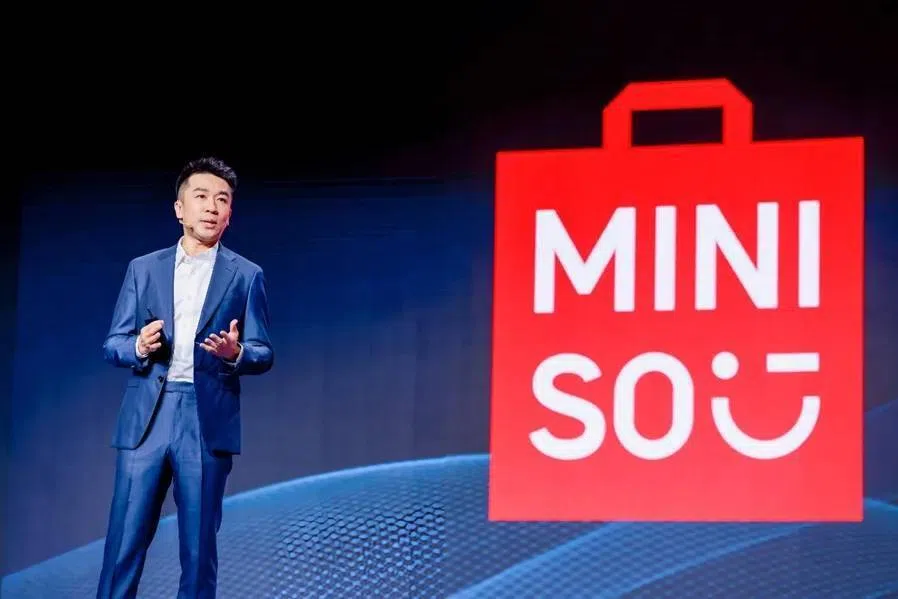
Liu felt that original IPs are an extension of Miniso’s “joy philosophy”, as they are able to provide a sense of companionship and emotional value, with stronger brand recognition and longer-lasting brand presence. “We hope that consumers will not only buy products they like, but also form an emotional connection with the products’ characters,” he shared.
Thus far, Miniso has collaborated with more than 150 global IPs, accounting for nearly half of the world’s top 20 IPs. Over the next five years, the company hopes that sales of IP-related products will continue to increase and account for more than 50 per cent of the group’s total sales by 2028. Original IPs are one of its most important strategies, and would be a key growth engine for Miniso.
Miniso’s original IPs currently include Dundun and Penpen. In addition, this year the company has also started to focus on signing with multiple artists to create IPs such as Youyou-chan and Kumaru the Forest Bear. In the long term, Liu hopes that in-house IPs would account for 50 per cent of all IP products, propelling the leap towards becoming a “world-leading IP operation platform”.
Efficiency, affordability and creative premium at its roots
However, this shift from affordable retail to original cultural and creative products and narratives implies higher design requirements and greater investment risk. How does Miniso balance efficiency and affordability with a creative premium?
Liu replied: “We have always stuck to our original intention of efficiency and affordability. But affordable prices does not mean cheap. Through large-scale procurement, global supply chain integration and original IP incubation, we allow design to drive value growth.”
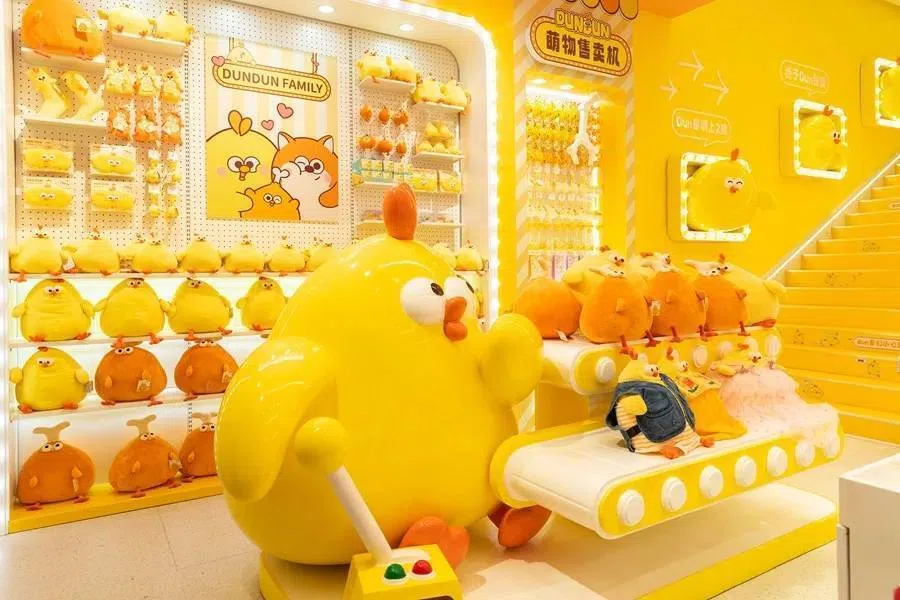
He explained that Miniso is able to mass produce original products more quickly and at a lower cost due to its four major design centres and global supply chain, ensuring the quality of its original IPs while keeping prices accessible.
To turn its own IPs into symbols of popular culture, products alone are not enough. The company has therefore introduced a “Super IP + Super Store” strategy, creating immersive spaces such as Miniso Land in prime commercial districts worldwide to strengthen the display of its brand culture.
Miniso also brings its IPs beyond the shelves and into consumers’ daily lives through pop-ups, cross-brand collaborations and character interactions, allowing consumers to not only see the characters but also connect with them. It has also expanded its IP product lines across all categories, including household goods, toys, beauty, homeware and pet products.
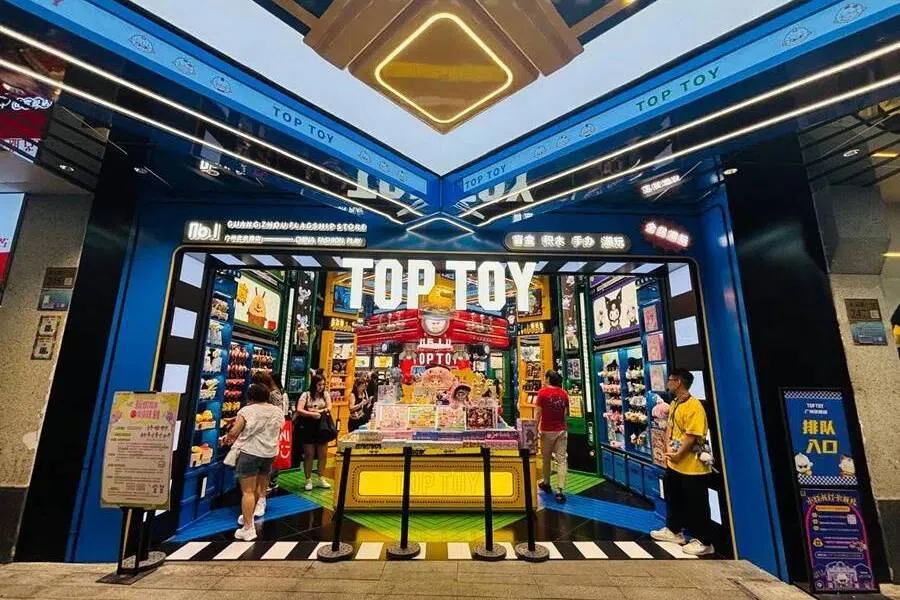
According to Miniso’s interim report released in August, the group’s total revenue for the first half of the year, up to Jun 30, reached 9.4 billion yuan, a year-on-year increase of 21.1 per cent. Of this, the Miniso brand generated 8.6 billion yuan, while its subsidiary Top Toy recorded 742 million yuan in revenue, soaring 73 per cent year on year.
The interim report also showed that in the second quarter ending June, Miniso’s revenue reached 4.97 billion yuan, a year-on-year increase of 23.1 per cent, surpassing the high end of the guidance range of 18 to 21 per cent. Although its gross margin was 44.3 per cent, this was only an increase of 40 basis points compared with the same period last year. The group’s adjusted net profit was 690 million yuan, up 10.6 per cent year-on-year.
Despite the strong revenue growth in the first half of 2025, profitability (excluding expenses related to the Yonghui Superstores acquisition) did not increase at the same pace. Liu admitted: “Our operating margin is affected by our business structure. Our directly operated overseas business is still in its investment phase. But in the long run, what we are doing now will strengthen both our brand and our profitability. As scale expands and amortisation begins to take effect, the group’s operating margin will gradually improve.”
He added that the company is currently making structural adjustments, including optimising its store formats, increasing the share of higher-margin product categories, strengthening its digital membership system and improving overall operational efficiency. These adjustments are aimed at ensuring that revenue growth can effectively drive profit growth.
The brand’s future
Top Toy, a trendy collectible toy brand under Miniso, is also an important component of the company’s IP ecosystem. In the second quarter of 2025, Top Toy’s revenue grew by nearly 90 per cent year on year. Liu noted that Top Toy has an inherent advantage within youth culture circles and will serve as a testing ground for Miniso’s IP strategy.
There have also been various market rumours recently suggesting that Miniso is considering spinning off Top Toy for a separate listing in Hong Kong, with talk that the company has even held preliminary discussions with institutions such as JP Morgan and UBS. Liu did not directly address these claims, but stressed: “Top Toy will play an increasingly important role in the group’s overall strategy.”
Beyond Asia, the US remains Miniso’s most important overseas market. Liu said: “The US is not only our largest single overseas market in terms of revenue, with the strongest spending power, but also the centre of our brand influence.”
In the US, Miniso is positioned not merely as a retailer but as a lifestyle experience that combines affordability with rich IP content. “In the US, we create ‘super stores’, build IP-themed settings, and emphasise check-in-worthy moments and offline immersive experiences. For example, our flagship store in Times Square, New York, has become a hotspot on social media,” Liu noted.
In terms of supply chain, about 40 per cent of Miniso’s products sold in the US are sourced locally. Coupled with global supply chain optimisation and early stocking, the company has largely offset the tariff pressures arising from China-US trade tensions.
From Singapore to New York, from efficiency and affordability to creating its own IP, Miniso is moving forward on an entirely new second growth curve. Five years from now, Miniso may indeed become what Liu envisions – a “happy” brand that creates culture and delivers emotional value.
This article, translated by James Loo and Grace Chong, was first published on ThinkChina.sg, an English-language digital magazine under Lianhe Zaobao.
Decoding Asia newsletter: your guide to navigating Asia in a new global order. Sign up here to get Decoding Asia newsletter. Delivered to your inbox. Free.
Share with us your feedback on BT's products and services
TRENDING NOW
8 public officers referred to police over property buys near unannounced MRT stations: Chan Chun Sing
Retrenched PMETs who return on lower pay see median 25% wage cut

Grab CEO’s wife Chloe Tong on life with Anthony Tan and finding her purpose

Vietnam’s northern provinces, not Hanoi or Ho Chi Minh City, are powering near 10% GDP growth

