


How smart cars are upending China’s auto supply chain
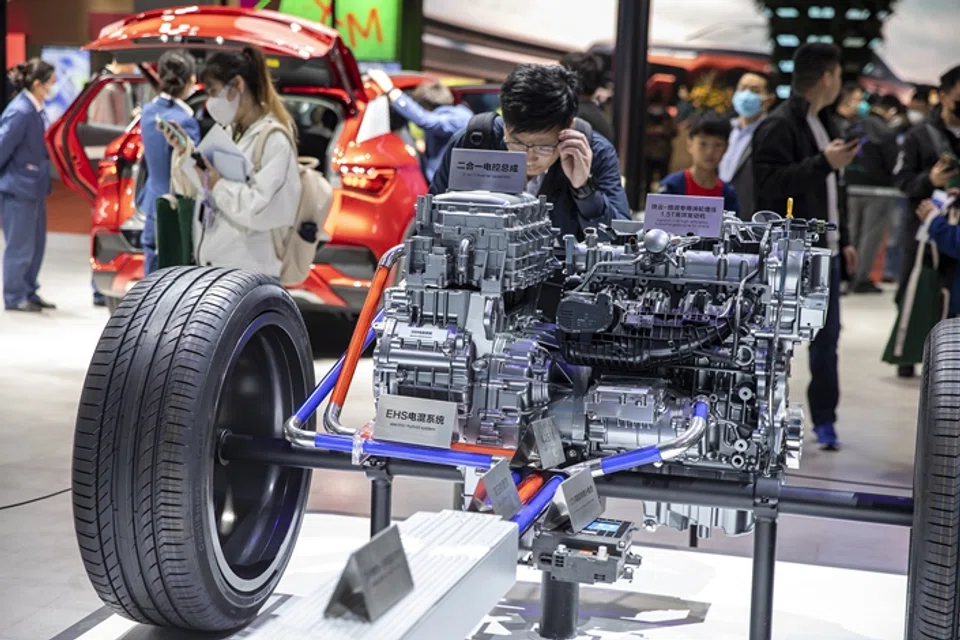
CHINA’S auto industry supply chain faces profound changes as the electric and smart-car transition accelerates, breaking up the old supply system and bringing in new competitors.
“China’s electric vehicle (EV) penetration rate is already the highest in the world, and the entire automotive supply chain is undergoing an overhaul,” a state-owned investment company executive said. “Challenges and opportunities are both ahead.”
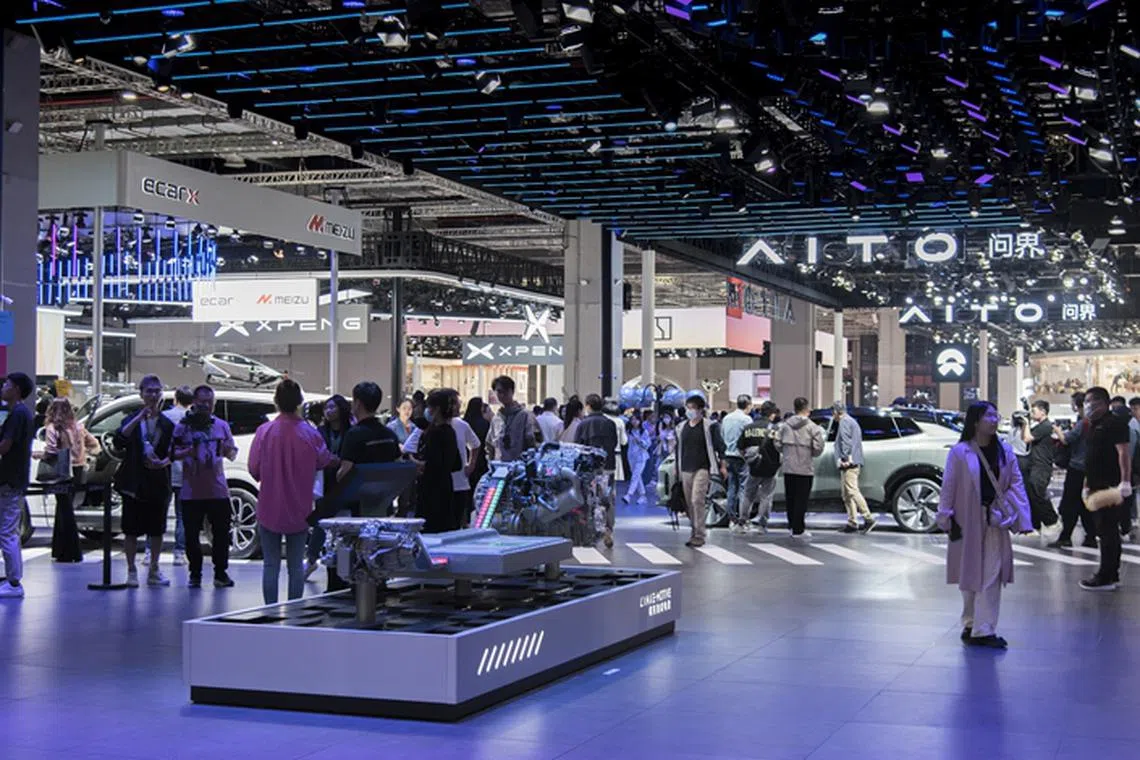
China accounted for 30 per cent of global new EV sales, followed by Europe with more than 20 per cent, while the share of the US was 8per cent in 2022, according to the International Energy Agency. At last month’s Shanghai international auto show, more than a third of the 1,400 cars showcased were EVs.
A smart car may be equipped with dozens or even hundreds of integrated circuits, each responsible for a different function such as driving, in-car entertainment and tire-pressure monitoring.
The chips are specialised. In the international market, companies like Nvidia, Qualcomm and Mobileye dominate the high-end car market.
In China, companies such as Huizhou Desay Sv Automotive, Thunder Software Technology and iMotion Automotive Technology (Suzhou), rose quickly by providing localised services as partners to those three major chip providers. For example, Desay is a major integrator for Nvidia in China.

The smart-driving supply chain, divided by computing power, algorithms and data, is completely different from the pyramid structure of a traditional automotive supply chain. The old system ranks suppliers by tiers from providers of finished components such as braking systems or seating down to companies making basic nuts and bolts that go into the component systems.
“The automotive supply chain has become a mesh, which relies on cross-collaboration,” said David Li, founder of Chinese lidar maker Hesai Group.
In the smart-car era, automakers need to jointly develop systems with chip and software suppliers, said Horizon Robotics president Chen Liming. “Such collaborations will give carmakers more autonomy, shortening the entire development cycle,” he said.

Emerging Chinese chipmakers are trying to seize the opportunity to cut into the automotive supply chain. Chinese carmakers, especially those that are state-owned, are more inclined to use domestic semiconductors.
There are US export restrictions on Chinese chips, and concerns of future decoupling are mounting, automotive chip suppliers told Caixin. The global chip shortage that started in 2020 accelerated the adoption of domestic products by Chinese automakers.
As competition intensifies, cost control will be the make or break element for suppliers. Automakers prefer cost-effective intelligent driving solutions. Horizon Robotics’ Chen said the company needs to use hardware computing power to provide higher performance and better cost savings for automakers.
Smart-car makers have a simple and straightforward request these days: “good quality, low price, easy-to-use”, according to an executive at a smart-car supplier.
Foreign suppliers, which dominated the fossil fuel car era, will not sit back and watch their Chinese counterparts capture the smart-car market.
Global Tier 1 suppliers Bosch and ZF Friedrichshafen are doubling down on their investments in China. Bosch said last November that it will invest in 150 million yuan (S$28.8 million) to build a new R&D centre in for smart-driving platforms.
ZF plans to invest in an automotive electronics plant in Guangzhou, with mass production expected in 2025. It also recently entered strategic partnerships with Horizon and automotive software company Neusoft Reach.
Fading in-house development
Chinese smart-car makers often see Tesla, which leads in autonomous driving systems developed in-house, as a role model.
Nio’s first-generation vehicle platform models used Mobileye’s autonomous driving chip and perception algorithm, while its second-generation systems started the development of homegrown autonomous driving systems.
Li Auto, which started investing in autonomous vehicle development in 2020, also had Mobileye supply its first automotive driver assistance system. But it turned to Horizon and Nvidia in 2021. Its urban driving assistance system is set to cover 100 cities by the end of this year.
XPeng, known as the most Tesla-like company in China, released its self-driving system in Sep 2022, covering highways and parking lots as well as much more complex city driving scenarios.
“A real smart-car company can’t just outsource the digital framework, software, hardware and data completely to its partners,” XPeng chairman He Xiaopeng said on Apr 16. XPeng will continue with self-developed cars, its core competency, and cannot entirely rely on suppliers in the smart-car era, He said.
However, traditional carmakers would rather wait for supply chains to be fully developed for smart cars or EVs, according to a researcher at a conventional vehicle manufacturer.
“No leaders at the traditional car companies would say, ‘Let’s just build a smart car by ourselves,’” the person said. Research and development costs for “a new car model could be as high as 2 billion yuan. They can’t afford to bet on this”.
In April this year, Chinese tech giant Baidu announced the launch of its intelligent driving system, which it hailed as one of China’s first systems capable of guiding a car on urban roads, mostly depending on visual perception and laser-based sensor technologies.
“Some companies that tried self-developing smart cars gradually realised that such attempts require huge investment,” said Chu Ruisong, general manager of Baidu’s smart-car unit. “The math just does not add up, and the industry’s ‘self-research fever’ is on the ebb.”
The cost of homegrown autonomous driving systems is too high for mass-market vehicles, according to Zhang Lin, president of smart-car supplier Freetech. “I believe Nio will have to find third-party cooperation when it makes cars capped at 300,000 yuan,” he said.
Nio is exploring cooperation opportunities with DJI Automotive, a subsidiary of Shenzhen-based drone maker SZ DJI Technology, which provides integrated solutions for autonomous driving, Caixin learned. The products might be used in Nio’s new models in 2024.
Rise of China-made chips
Chips are what’s behind the supply chain and production model changes of the car industry.
The Chinese auto industry realised that it couldn’t “overly rely on foreign chips”, as early as 2019 when the US-sanctioned Huawei Technologies. A number of Chinese chipmakers are seizing the opportunity gain a foothold in the automotive industry amid the U.S. sanctions and the global chip shortage.
State-owned car companies are the first batch of clients of these Chinese chip developers.
Founded in 2015, Horizon found its first customer in state-owned China Changan Automobile Group in 2020, then started to work with state-owned SAIC Motor, China FAW Group and Guangzhou Automobile Group. Nanjing SemiDrive Technology develops chips for FAW’s Hongqi SUV models.
“In early 2020, carmakers only knew their Tier 1 suppliers, but they have gotten to know their chip suppliers much better over the past two years,” said Nio president Qin Lihong, citing the global chip shortage.
Foreign automakers have also chosen to work more with Chinese chip developers to ensure supply chain stability. Volkswagen AG said last October that it will invest 2.4 billion euros (S$3.5 billion) in a venture with Horizon Robotics to accelerate the development of automated driving solutions in China.
In the mid- to lower-end market, Chinese chip developers are competing head-to-head on prices with foreign rivals such as Nvidia and Texas Instruments.
While Nvidia’s Drive Orin-X chips cost more than 10,000 yuan each, domestic chips with similar ratings of 100 trillion operations per second are priced in the range of 5,000 yuan to 6,000 yuan, according to Wang Haojun, the chief financial officer of self-driving startup Pony.ai.
As the business of domestic chip developers picks up, Chinese software and operating system suppliers are also finding opportunities, according to Mao Haiyan, who’s in charge of Neusoft Reach’s global sales in Europe and America.
Horizon led the automotive driver assistance systems market for China’s passenger cars with 49.1 per cent in 2022, followed by Nvidia with 45.9 per cent, according to the Gaogong Industry Institute, a trade group. Texas Instruments had 2.7 per cent; Mobileye, 1.97 per cent; and Huawei Heisi, 0.4 per cent.
Qualcomm almost monopolises the high-end auto chip market, while China’s SemiDrive is favored more by more mid-range auto brands, according to Qualcomm vice-president Chen Shujie.
Price war
Competition in the smart-car industry has become fiercer than two years ago, especially on price.
The cost of advanced assisted driving technology must come down dramatically from multiple tens of thousands of yuan per vehicle to the range of 10,000 yuan to 15,000 yuan to penetrate the mass market, said Yuan Feng, general manager of GAC Capital, at the company’s EV and smart car investment summit on Apr 26.
Already, costs of some components such as lidar and computing platforms have fallen as much as 60 per cent in the past year, according to research by GAC Capital.
Controlling costs is the key to winning the segment of cars priced below 150,000 yuan, which accounts for half of China’s auto market, according to Liu Feilong, founder and CEO of Hongjing Drive, an autonomous driving systems provider. The cost of smart driving solution for such car models is 3,000 yuan to 4,000 yuan, he said at the Shanghai auto show. CAIXIN GLOBAL
Decoding Asia newsletter: your guide to navigating Asia in a new global order. Sign up here to get Decoding Asia newsletter. Delivered to your inbox. Free.
Share with us your feedback on BT's products and services
TRENDING NOW

‘The next 40 years’: SingLand CEO Jonathan Eu on remaking Marina Square

SGX gold-linked counters lose their shine as the precious metal hits one-year low

Peter Kwee’s Ridley Park bungalow on the market with S$100 million asking price
Alibaba sued for allegedly hiding ties to suspected spy Alice Huang from Megaspeed

