



India’s rising tycoons take global spotlight
India’s wealthiest grew their collective wealth by US$25 billion to a record US$800 billion in 2022
GAUTAM Adani and Mukesh Ambani, two business tycoons from Gujarat in the Western part of India, are leading the way when it comes to Indian wealth. The former, a first-generation self-made billionaire, went past the latter in the Forbes list of India’s 100 Richest, which was released on Thursday (Oct 13).
A weaker rupee impacted the majority of the richest but that was offset by the 60-year-old Adani’s record gain, which saw him top the list with a wealth of US$150 billion and earn him the title of Asia’s richest man. Ambani, 65, who secured the top spot in the Forbes list consistently since 2008, is now a distant second with a US$88 billion fortune.
Apart from Adani and Ambani, there are nine new faces in the top 100. Here is a closer look at some of the debutants, as well as the Kamath brothers, who made their first appearance on the Forbes list in 2020 and run one of India’s rare profitable new-age companies.
Falguni Nayar
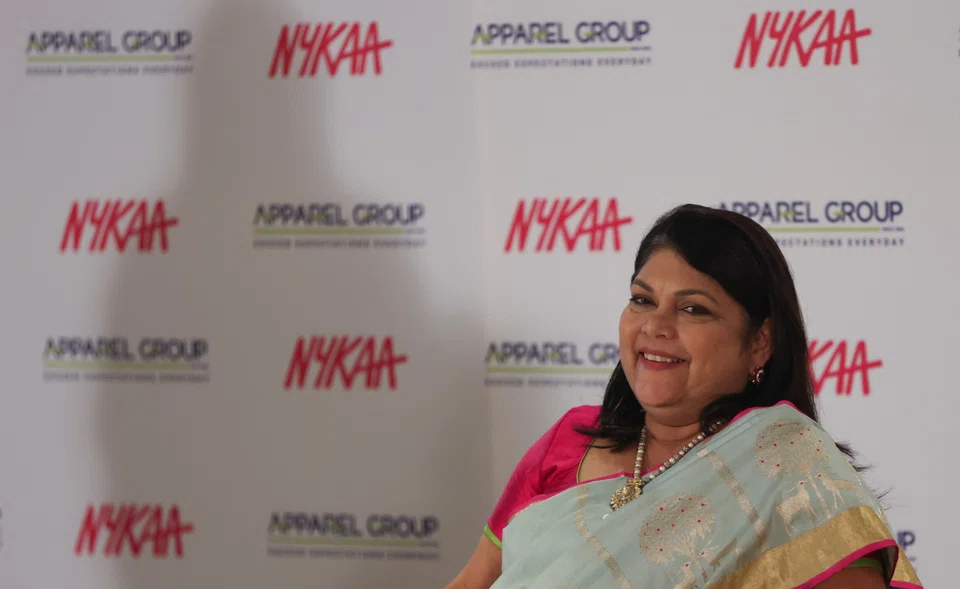
Being a successful investment banker at Kotak Mahindra Bank, a large private sector bank in India, did not deter Falguni Nayar from starting afresh. The founder and CEO of Nykaa – one of the most sought after wellness and beauty retailer in the country – wore the entrepreneurial hat just a few months before turning 50. She is now 59 years old, and finds herself in 44th position on the list with a net worth of US$4.08 billion, and is currently India’s richest self-made woman.
Founded in 2012, Nykaa has both an online and offline presence, stocking domestic brands as well as international names such as Bobbi Brown, MAC, Estee Lauder, Natasha Moor, Suva Beauty and The Camel Soap Factory. The company was listed in November 2021 amid an IPO rush in the Indian stock market.
Rafique Malik
With a fortune of US$2.2 billion, Rafique Malik – the chairman of multi-brand footwear retailer Metro Brands – makes his debut in 89th spot at the age of 71. His father founded the company in 1955, and Metro Brands currently has 624 stores across 142 cities in India. Farah Malik Bhanji, the second of his five daughters, runs the company as managing director.
The privately held companywith US$177 million in revenue carries brands such as Metro, Walkway and Mochi, and it has a tie-up with foreign brands Clarks, Crocs, Skechers and FitFlop.


Metro Brands reported a loss of 120 million rupees (S$2.08 million) in the first quarter of FY2022 compared to a profit of 1.06 billion rupees in the first quarter of FY2023, according to figures released by the company. It is among one of the few footwear retailers in India to outsource manufacturing that makes it an asset-light company.
Venu Srinivasan
The 69-year-old chairman emeritus of TVS Motor Company makes his debut on the list at 98th position, with a net worth of US$2 billion. He was conferred the Padma Bhushan Award – India’s third-highest civilian award – in 2021 to honour his contributions to trade and industry.
He played a crucial role in transforming TVS Motor from a moped maker to one of the leading manufacturers of two-wheelers in the world. The company ended its two-decade-old joint venture with Japan’s Suzuki in 2001 and tied up with BMW Motorrad in 2013 to manufacture motorcycles for the global market.
His son Sudarshan Venu has taken over the reins as the company’s managing director, while daughter Lakshmi Venu is a director on the board. Ralf Speth, the former CEO of Jaguar Land Rover, is TVS’ current chairman.
Nithin and Nikhil Kamath and family
The duo made their debut on the Forbes list in 2020, and has enjoyed an exponential surge in their fortunes from US$1.6 billion that year to US$3.45 billion in 2022. They are 58th on the Forbes list this year.
Their firm, Zerodha Broking, is unlisted and among a rare breed of profitable new-age companies. It is the largest broking firm in terms of active users, and saw an 82 per cent jump in revenue and an 87 per cent surge in net profit in the fiscal year to March 2022. The brothers bootstrapped the company in 2010 and never had to raise a penny to date. Zerodha is a combination of the word zero with the Sanskrit word rodha, which means barrier.
Indian stock market regular Sebi has granted them an in-principal approval to launch their asset management business. “Once we get the final approval, our mutual fund business can get going within a couple of months. We will only be focusing on passive mutual funds to start with,” said Nithin Kamath, the founder and CEO of Zerodha Broking.
Decoding Asia newsletter: your guide to navigating Asia in a new global order. Sign up here to get Decoding Asia newsletter. Delivered to your inbox. Free.
Share with us your feedback on BT's products and services

