



Investment into China picks up in January after late 2022 drop
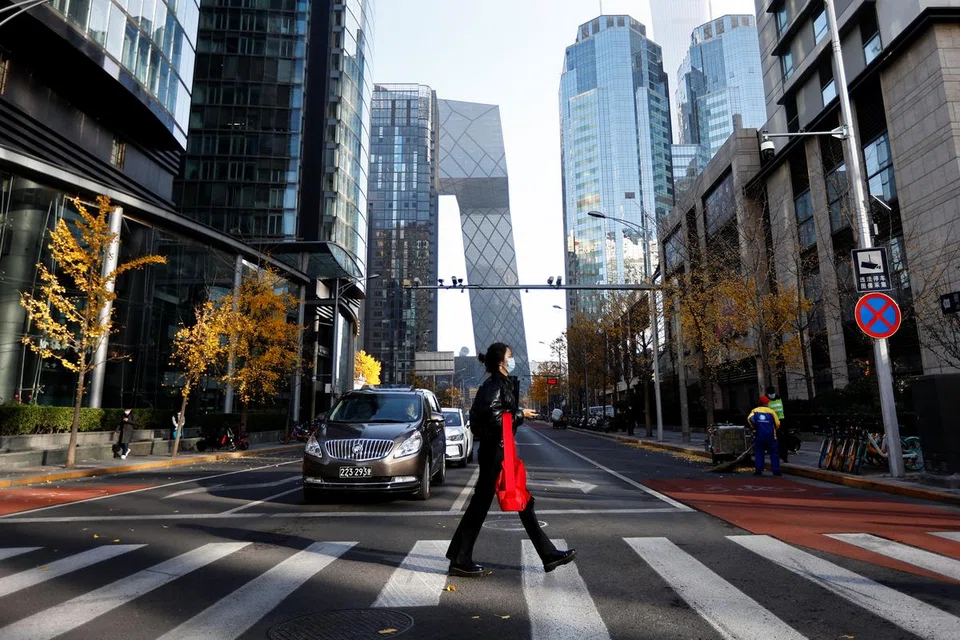
NEW foreign investment into China picked up in January to the highest level since June, reversing two months of double-digit drops as Beijing attempts to attract more investment and help the economy rebound.
China recorded 128 billion yuan (S$24.9 billion) in new actually utilised foreign investment last month, the Ministry of Commerce said in a statement late Monday (Feb 20). That was 14.5 per cent higher than the same month last year, according to the ministry, with a 75 per cent jump in investment into high-tech manufacturing.
The government’s push to bring in more investment comes as it is clearly concerned about the prospect of foreign firms in China either leaving or reducing their investments. Many firms have found it difficult to do business in China over the last three years during Covid Zero, with geopolitical tensions and efforts by companies to diversify their global supply chains adding to reasons for the dropoff in investment.
Late last week, Commerce Minister Wang Wentao visited foreign firms in Shandong province and promised the government would step up its efforts to attract more “high-quality” foreign companies, as well as do more to convince those already in the country to stay. Wang visited seven businesses, including the factories of French company Air Liquide in Yantai and Swedish company Hexagon AB in Qingdao, according to a ministry statement on Friday.
Struggling confidence
Foreign businesses confidence in China was undermined last year as border controls and increasingly frequent Covid Zero lockdowns hurt growth, cut supply chains, slashed business profits and damaged the country’s image as a reliable supplier. Last year’s almost 10 per cent decline in foreign industrial company profits was the worst on record.
While Shanghai’s European Union Chamber of Commerce has asserted that companies are not leaving China as the market “is simply too big and too important”, the chapter’s chair Bettina Schoen-Behanzin said last week that Covid policies have impacted operations.
“They are putting a fence around China,” she said.
The shift away from China could be seen in the strategies of several firms — including Apple, whose suppliers in Vietnam and India have been boosting output as the company looks to reduce dependence on Chinese production. Investment from Taiwanese firms in China, meanwhile, fell to a three-year low in 2022.
Japan’s net 1.4 trillion yen (S$13.9 billion) in investments into China and Hong Kong last year was the lowest since 2016, according to Bloomberg calculations based on data from Japan’s Ministry of Finance. More than half of major Japanese manufacturers surveyed by the Nikkei newspaper late last year said they planned to reduce their reliance on China as a supplier of parts.
Some Chinese provinces and cities are trying to reverse the trend. Tianjin hosted an investor roadshow in Tokyo and Osaka last month, and Qingdao did the same this month. Japan is the third-largest source of FDI into Qingdao with a stock of US$6.5 billion invested in the city, according to a speech by a city official at this month’s event. It brought more than a dozen local Qingdao firms together with possible Japanese investors in Tokyo.
Rebounding portfolio flows
There are some signs of renewed interest in investing in China this year from financial market participants. Foreigners returned to China’s stock market with a vengeance, buying more shares in January alone than they did for the whole of 2022.
Whether that interest is sustained will depend at least partly on the strength of the economic recovery. Growth well above the 3 per cent expansion seen in 2022 would also make the market attractive to further foreign direct investment into consumer goods and other sectors.
However, bond investors resumed selling in January after a one-month pause, underscoring the relatively unattractive yields on yuan-denominated debt as Beijing keeps monetary policy loose to support growth. By contrast, the Federal Reserve and other global central banks have been raising rates.
The recent announcement of sanctions on two US firms for selling arms to Taiwan may add to pressure on foreign firms to reconsider their position in China, too.
The measures were mostly symbolic and the Ministry of Commerce vowed to be sparing in its use of its new sanctions list. But there remains the clear possibility of fines, bans on doing business in China and other restrictions on companies that get caught up in tensions with the US or other nations. BLOOMBERG
Decoding Asia newsletter: your guide to navigating Asia in a new global order. Sign up here to get Decoding Asia newsletter. Delivered to your inbox. Free.
Share with us your feedback on BT's products and services
TRENDING NOW

He built the Vingroup empire. Now South-east Asia’s richest man is handing some key roles to his sons
Seatrium allocates S$200 million for new share buyback programme

32 companies, 6 individuals bag accolades at Singapore Corporate Awards 2026

Stocks to watch: Mapletree Logistics Trust, Seatrium, Keppel DC Reit, Food Empire

