Investors track key political events in China for word on GDP growth target and national security policy

Angela Tan
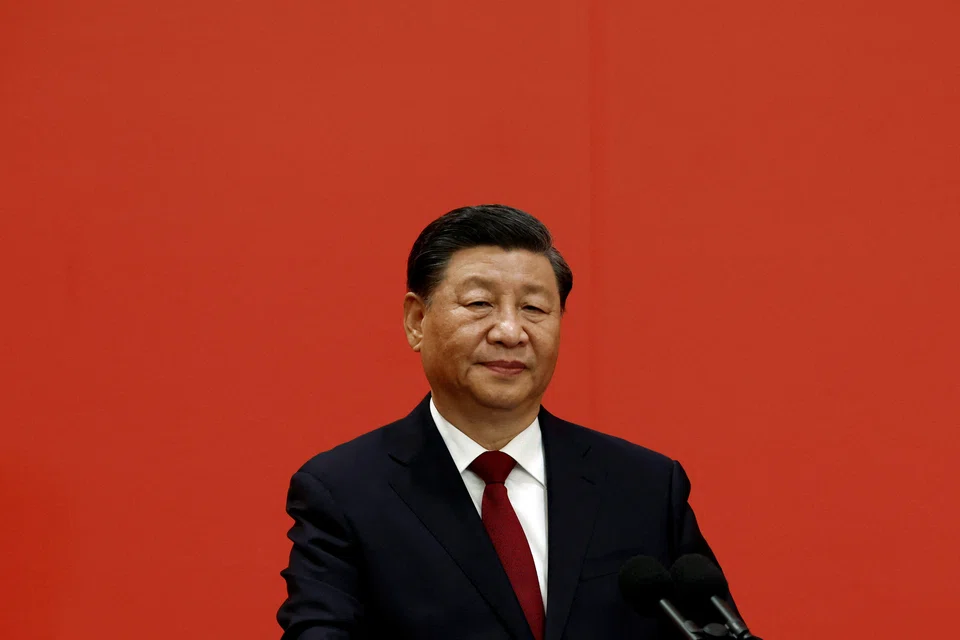
INVESTORS are looking to two of China’s biggest political events in March for “pro-growth” policies that will reignite the market, given that a rally that greeted Chinese markets at the start of 2023 is running out of steam.
The major annual political meetings in Beijing, involving the top political advisory body and the national legislature, will be the first since President Xi Jinping consolidated his power in October 2022. Commonly known as the “two sessions”, the meetings will shed light on the government’s priorities and plans for the year.
Beijing’s official gross domestic product growth target for 2023 will be closely watched.
Shuang Ding, chief economist for Greater China and North Asia at Standard Chartered Bank (Hong Kong), expects Beijing to set the 2023 growth target at above 5 per cent. This is based on the average 6 per cent target already adopted at provincial levels. Inflation and unemployment ceilings are likely to be kept at 3 per cent and 5.5 per cent, respectively.
Last year, the official target was “around 5.5 per cent”. But growth fell short – the economy expanded by only 3.0 per cent – making for the second-slowest pace since 1976 – due to the pandemic and the country’s strict zero-Covid stance.
Goldman Sachs’ China economist, Lisheng Wang, expects the GDP target to be “around 5 per cent, with a small possibility of an above-5 per cent target”. The on-budget fiscal deficit is expected to rise to 3.2 per cent of GDP in 2023, from 2.8 per cent last year, thus returning to the 2021 level.
Beijing could allocate a record-high quota of four trillion yuan (S$778.3 billion) for local government special bonds (LGSB) this year, up from 3.65 trillion yuan in 2022.
“However, the effective spending of LGSB proceeds could be smaller in 2023 than 2022, as policymakers spent part of 2021 LGSB issuance proceeds last year, and also issued an additional 500 billion yuan LGSB from under-utilised quota from previous years,” the Wall Street bank said.
Who will gather?
The week-long event will start with the meeting of the Chinese People’s Political Consultative Conference, China’s top political advisory committee. Consisting of representatives from various interest groups, professions and industry sectors, it will make various proposals but has no law-making power.

Power resides in the hands of the National People’s Congress (NPC), China’s top legislature, which will meet on Mar 5. Most members come from the ruling Communist Party, and typically do not oppose government-endorsed plans.
Agenda
The sessions will review and examine the Government Work Report, which outlines policy priorities for 2023.
Economists expect the NPC meetings to reaffirm policy-makers’ pro-growth stance set last December at the Central Economic Work Conference, which had echoed Xi’s call for an “overall improvement” of the economy, starting with efforts to boost confidence.
For the housing sector, policymakers are likely to retain an accommodative stance to keep prices stable; they are also likely to ensure construction projects can be completed to avoid systemic risk.
Ludovic Subran, chief economist at German insurer Allianz, said: “We do not foresee a strong trend reversal in the real-estate sector, given that the authorities will likely aim for consolidation among developers, and their long-held stance is that housing is for living in, not for speculation.”
A once-a-decade government reshuffle
This year’s two sessions will also include the once-a-decade reshuffling of top government officials, including China’s premier, vice-premier and the heads of most ministries.
Andrew Tilton, chief Asia-Pacific economist at Goldman Sachs, said: “We will also learn which senior party officials will occupy which government positions for the next five years, and may get some broad-brush sense of policy support.”
The market focus will be on the two positions with influence over the capital markets – those of the premier and vice-premier/director of the Financial Stability and Development Committee.
Li Qiang, a member of the Politburo Standing Committee and Shanghai’s former party chief, is expected to succeed Li Keqiang as the premier for the next five years.
He Lifeng, the head of the National Development and Reform Commission, is likely to replace Liu He, the vice-premier overseeing finance and economy.
Economists expect Beijing to adhere to the objective of common prosperity, and focus on jobs, education, social safety, health care, old-age care and housing. It is also likely to push ahead with sharpening its manufacturing sector, innovation technology and security in food, energy, supply chains, financial systems, information and the environment.
Zhu Hexin, head of Citic Group, appears to be the frontrunner to succeed Yi Gang as for governor of the People’s Bank of China (PBoC). His views are seen as being in line with the central bank’s long-standing positions: monetary conditions need to be consistent with the goals of maintaining steady growth and ensuring price stability.
Market impact
Kinger Lau, chief China equity strategist at Goldman Sachs, sees potential for a 20-per-cent price return from Chinese stocks over the next 12 months, as the market shifts from a reopening theme to one of recovery. Insurance, consumer services and staples are well-placed to deliver robust earnings growth and receive earnings upgrades, he said.
On lingering concerns over Beijing’s regulatory swings, Morgan Stanley’s chief China economist Robin Xing said that the overarching principle for policy decisions in China is ensuring social stability, and that the policy-makers had embarked on common-prosperity initiatives pre-emptively, by addressing income inequality to forestall social-stability issues.
T. Rowe Price, a global investment management firm with US$1.35 trillion in assets under management, recently initiated an “overweight” position on China equities, because it expects Beijing’s various stimulus measures to fuel consumption-driven growth.
Decoding Asia newsletter: your guide to navigating Asia in a new global order. Sign up here to get Decoding Asia newsletter. Delivered to your inbox. Free.
Copyright SPH Media. All rights reserved.