

Iran remains defiant as Israeli forces batter Teheran
Meanwhile, the entrance of Yemen’s Houthis in the war raises the prospect that they could target and block the key Bab el-Mandeb Strait
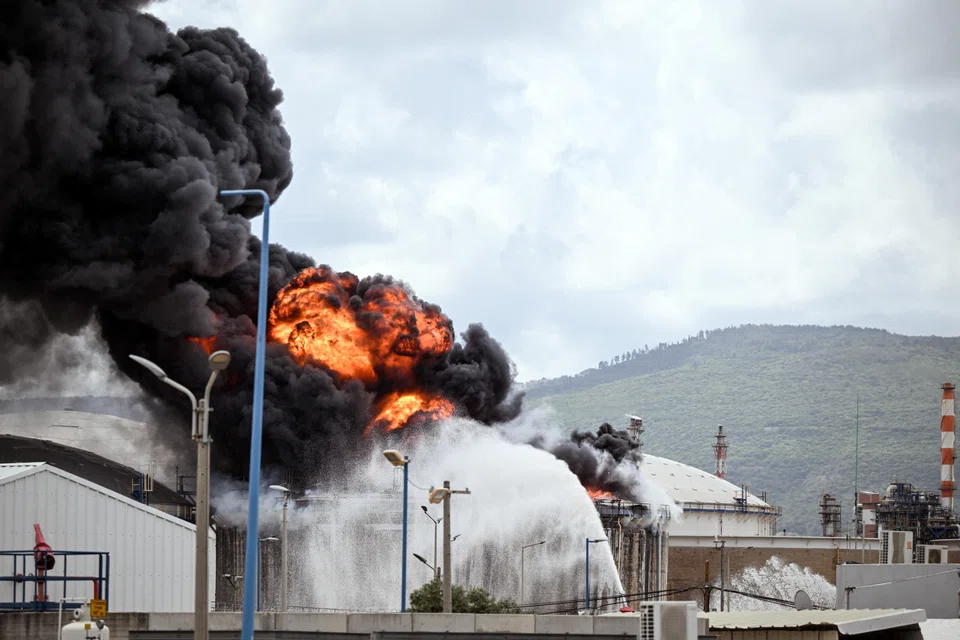
[DUBAI/TEL AVIV/WASHINGTON] Iran fired multiple waves of missiles at Israel on Monday (Mar 30) and vowed to “punish the aggressor” as Israeli forces pounded Teheran and oil prices rose after Yemen’s Houthis entered the war in the Middle East.
Israel’s military said that two drones from Yemen had been intercepted on Monday, two days after the Iran-aligned Houthis fired missiles at Israel for the first time since the start of the US-Israeli war on Iran that has spread across the region.
The Israeli military said that its forces were targeting what it described as military infrastructure in Teheran and had launched an attack on infrastructure in the Lebanese capital Beirut used by Hizbollah. The Iran-backed Lebanese group also fired more rockets at Israel on Monday, Israeli authorities said.
President Donald Trump said on Sunday that the US and Iran had been meeting “directly and indirectly” and that Iran’s new leaders – following the killing of Iran’s supreme leader on Feb 28 – have been “very reasonable”.
But he has also been sending more US troops to the region, leading to Iran’s parliament speaker accusing Washington of sending messages about possible negotiations while planning a ground invasion and prompting more defiance from Teheran.
Global economy badly affected
Iran’s acting Defence Minister Majid Ebn-e Reza was quoted by the Iranian news agency Irna on Monday as telling his Turkish counterpart that Teheran would continue to “punish aggressors, create deterrence and ensure war won’t repeat itself”.
The month-long war has spread across the region, killing thousands, causing the biggest disruption ever to energy supplies and hitting the global economy.
Oil prices extended gains on Monday, with Brent crude futures up 2.8 per cent to nearly US$116 a barrel at 0933 GMT.
The effective closure of the Strait of Hormuz by Iran has severely disrupted energy markets as it is a conduit for about a fifth of the world’s oil and liquefied natural gas supplies.
SEE ALSO



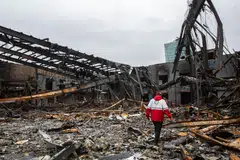

The Houthi attacks on Israel raise the prospect that they could target and block a second important shipping route, the Bab el-Mandeb Strait.
The Financial Times quoted Trump on Sunday as saying the US could seize Kharg Island, from where Iran exports much of its oil, but also that a ceasefire could come quickly. Taking control of Kharg would require ground troops.
“Meaningful talks”
Pakistan, which is acting as an intermediary between Teheran and Washington, said that it was preparing to host “meaningful talks” in the coming days aimed at ending the war. It was not clear whether the US and Iran had agreed to attend.
“I think we’ll make a deal with them, I’m pretty sure, but it’s possible we won’t,” Trump told reporters on Sunday evening as he travelled aboard Air Force One to Washington.
Trump said that he thought the US had already accomplished “regime change” in Teheran after air strikes killed Supreme Leader Ayatollah Ali Khamenei, and other top officials, but said twice that their replacements seemed “reasonable”. Khamenei was replaced by his son Mojtaba Khamenei.
Trump also has the option of launching a ground offensive, with the US Department of Defense dispatching thousands of troops to the Middle East, but he has not approved any of those plans, according to multiple news outlets.
Increasing air fares
Four weeks of US-Israeli bombardment has failed to silence Iran’s missile and drone batteries, and Iran has replaced leaders killed in the attacks. Iran confirmed on Monday the death of Revolutionary Guards Navy Commander Alireza Tangsiri, several days after Israel said he had been killed.
Kuwait said on Monday that it had intercepted five drones in areas under its protection. Iraq’s Defence Ministry noted that the Mohamad Alaa air base, beside Baghdad International Airport, was hit by rockets early on Monday, destroying an aircraft but causing no casualties.
Global airlines have begun to increase fares and cut capacity to cope with the surge in the oil price, but economic analysts say the industry’s ability to remain profitable may depend on whether consumers pull back on flying as energy costs threaten household budgets.
A majority of Americans are opposed to the war and a military escalation, which would risk a protracted crisis and would likely weigh further on Trump’s already low approval ratings ahead of November’s midterm elections for Congress.
Israeli Prime Minister Benjamin Netanyahu said on Sunday that he had ordered the military to further expand its operations in southern Lebanon, citing continued rocket fire by Hizbollah.
Israel has said that it will seize a chunk of southern Lebanon to create a “buffer zone” against Hizbollah, stoking Lebanese fears of Israeli military occupation that could deepen instability and cause further displacement.
US-based rights group Hrana says nearly 3,500 people have been killed in Iran, including 1,550 civilians, while authorities in Lebanon say nearly 1,240 people have been killed there. Over 400 Hizbollah fighters have been killed since it fired on Israel on Mar 2, sources told Reuters, but it is unclear if the official death toll includes those fighters.
At least 100 people have been killed in Iraq and 13 US service members have been killed. REUTERS
Decoding Asia newsletter: your guide to navigating Asia in a new global order. Sign up here to get Decoding Asia newsletter. Delivered to your inbox. Free.
Share with us your feedback on BT's products and services