
Iran vows to escalate attacks as Trump hails progress in war
Arab states across the Middle East – as well as Israel – have reported interceptions of Iranian missiles and drones
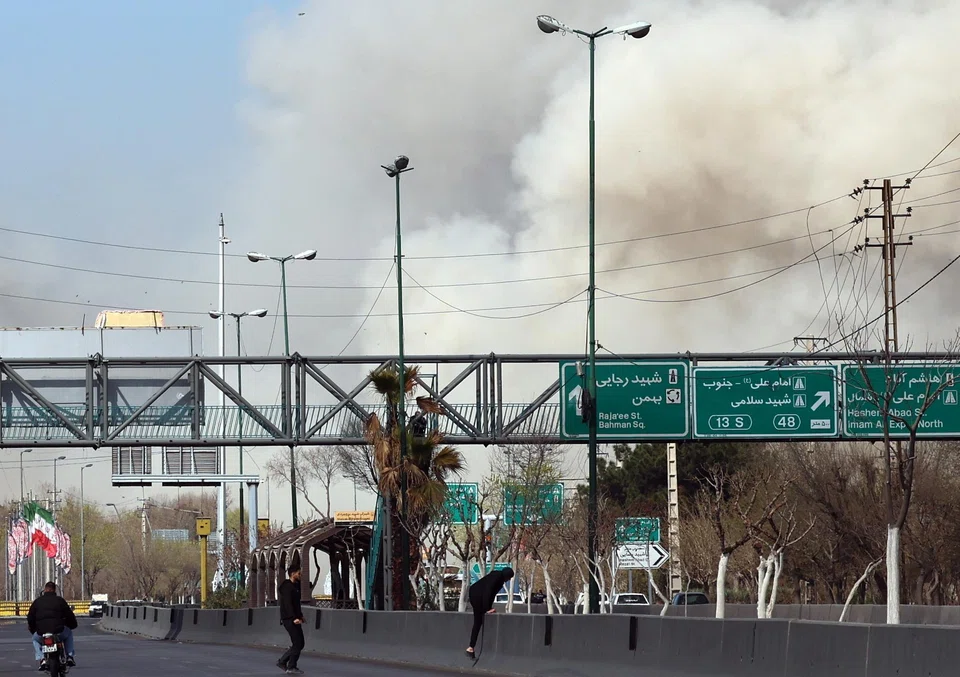
[RIYADH] The US-Israeli war on Iran entered a sixth day with little sign of easing, as the Islamic Republic vowed to intensify its retaliation and oil extended gains.
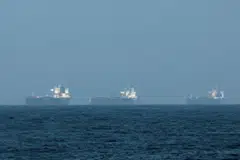
Arab states across the Middle East – as well as Israel – reported interceptions of Iranian missiles and drones into Thursday (Mar 5), with Qatar telling residents to remain indoors due to the high level of threat. Teheran said it struck an oil tanker in the Persian Gulf, underlining the risk to shipping in the energy-rich region.
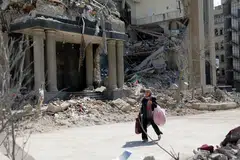
Israel is carrying out waves of airstrikes on the Iranian capital, hitting military and intelligence assets, following attacks on the Hizbollah militant group in Lebanon. At least 1,100 people have died in Iran so far, and dozens elsewhere in the region.
Iran’s Islamic Revolutionary Guards Corps said retaliatory attacks will intensify in the coming days, according to the Nour news agency.
US President Donald Trump was similarly defiant on Wednesday, saying the US is “doing very well on the war front”. The White House said it was close to “complete and total control of Iranian airspace”.
Iran pledged to respond to the sinking of a warship off the coast of Sri Lanka – the first time since World War II that an American submarine has attacked a surface vessel – which widened the geographic reach of the conflict. In all, about a dozen nations have become embroiled since the US and Israel launched their campaign on Feb 28.
Azerbaijan on Thursday threatened to hit back after two Iranian drones struck its territory of Nakhchivan, accusing Teheran of escalating regional tensions.
“These acts of aggression will not go unanswered,” Azerbaijan’s Defence Ministry said in a statement. Response measures “to protect national sovereignty and civilian safety” are being prepared, it said.
The Foreign Ministry in Baku summoned the Iranian ambassador to protest after one drone hit the airport terminal in Nakhchivan, an exclave bordering Turkey, Iran and Armenia, injuring two people and damaging infrastructure. A second drone came down near a school in the village of Shakarabad, according to the ministry.
SEE ALSO

“We strongly condemn these drone attacks,” the ministry said in a separate statement. Teheran must take “urgent measures to ensure that such attacks are not repeated in the future”, it added.
Iran denied any connection to the drones and reiterated that it is targeting US bases and interests, the semi-official Mehr news agency reported, citing military sources.
France has reached out to the governments of Italy and Greece to coordinate efforts in the Eastern Mediterranean as tensions over the war in Iran flare, a person close to French President Emmanuel Macron said.
Macron on Thursday morning held separate calls with Italian Prime Minister Giorgia Meloni and Greek Prime Minister Kyriakos Mitsotakis in a spirit of European solidarity, the person added on condition of anonymity.
The three leaders agreed to coordinate any military shipments to Cyprus and to work together to guarantee navigation freedom in the Red Sea.
The possibility of a protracted war is roiling markets, with Brent oil climbing towards US$82 a barrel, after spiking about 13 per cent over the first three days of the week. Gold extended gains amid concerns that the conflict could be drawn out. A global bond sell-off showed no respite, with the 10-year Treasury yield rising for a fourth straight day.
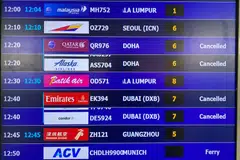
Airlines remain hamstrung by the conflict, with the number of cancelled flights to Middle East hubs surpassing 23,000 since fighting began. Thousands of passengers have been stranded in the Gulf region.
The Islamic Republic is still to appoint a new supreme leader after the assassination of Ayatollah Ali Khamenei at the weekend, with a decision to be made “as soon as possible”, according to Mehr.
Turkey came under fire on Wednesday, a first for a member of the North Atlantic Treaty Organization since the conflict began.
Nato said its air defences downed the ballistic missile, and Ankara warned Teheran against acts that could further widen the war. Iran’s armed forces denied targeting “neighbouring and friendly country Turkey”, according to a statement carried by Nour.
Saudi Arabia continued to thwart attacks on Thursday, saying it intercepted multiple missiles and drones overnight. Strikes have mostly been directed at Al Kharj near Riyadh, where the US has a facility, or the east, where Saudi Aramco operates its headquarters.
Sirens sounded three times in the Tel Aviv area overnight, warning of incoming missiles. Israeli media reported no casualties, suggesting successful interceptions of what may have been lone missile launches.
“We are seeing a decrease in both the number of launches from Iran and the number of missiles in each barrage,” said Israel Defense Forces spokesman Nadav Shoshani.
In Washington, the Republican-controlled Senate rejected a Democratic attempt to halt the US strikes on Iran. The House, also controlled by Trump’s party, is expected to vote on a similar measure on Thursday.
Trump has offered shifting explanations for the strikes, reiterating claims that Iran posed an imminent threat and saying the US acted before Teheran could attack Israel or American interests.
“Their missiles are being wiped out rapidly. Their launchers are being wiped out. They’re attacking their neighbours. They’re attacking their – in some cases – allies, or not-so-long-ago allies,” Trump said. “It’s really a nation that was out of control, and they would have used it on us if we let them.”
The duration of military operations remains uncertain, with Defense Secretary Pete Hegseth telling reporters “it could be six, it could be eight, it could be three” weeks before they are wrapped up.
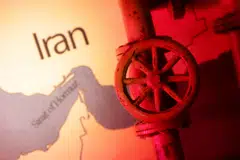
Traffic through the Strait of Hormuz, a maritime chokepoint vital for energy flows and container shipping, has slumped, prompting Trump to announce that the US would provide insurance guarantees and naval escorts if needed to ensure safe passage for oil tankers and other vessels.
While Iranian military commander Amir Heydari told state TV on Thursday the strait is not closed, traders and analysts still expect it will take weeks before flows can resume meaningfully.
Teheran dismissed an earlier report that its Ministry of Intelligence had reached out to the US to negotiate an end to the conflict as “pure falsehood”.
“We have no trust in the Americans and no intention of negotiating with the US,” Mohammad Mokhber, who was an adviser to Khamaeni, told Iran’s state-run television.
Israel confirmed attacking a building in Iran’s Qom used by the Assembly of Experts – a conclave that will select Khamenei’s successor. A military spokesperson also appeared to acknowledge that, as widely reported, the site was empty at the time and the clerics survived.
Iran’s Nour agency said three people were killed in the attack.
Preparations were under way for Khamenei’s funeral to begin in Teheran on Wednesday, but the ceremony has been postponed to a later date, Iran’s semi-official Tasnim news agency reported. BLOOMBERG
Decoding Asia newsletter: your guide to navigating Asia in a new global order. Sign up here to get Decoding Asia newsletter. Delivered to your inbox. Free.
Share with us your feedback on BT's products and services