Japan, Korea deals drive Asia-Pac commercial real estate investment to highest since 2022
Singapore investors are most active among cross-border deals

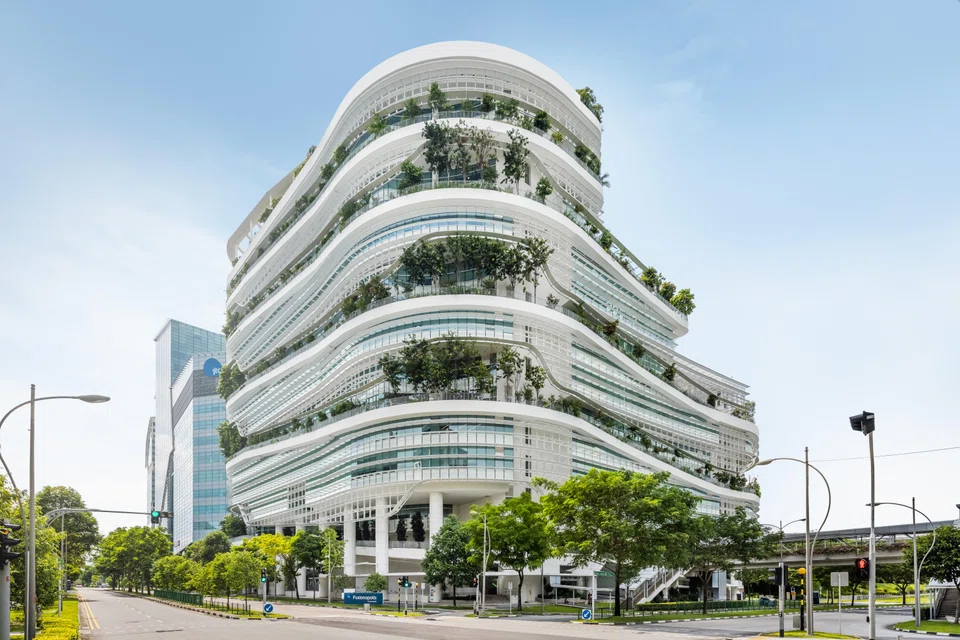
COMMERCIAL real estate investment volumes in the Asia-Pacific in the third quarter have risen to the highest quarterly levels since 2022, driven by lower cost of debt and a surge in interest in Korea.
Deals done in the Asia-Pacific recorded 82 per cent year on year growth to US$38.8 billion, said a report by JLL on Monday (Nov 4).
Korea was the most active market in the Asia-Pacific in the quarter, with mega-office deals fuelling a jump in deal value to US$8.4 billion, up 31 per cent year on year.
The largest office transaction in there so far this year was the sale of The Asset, a prime office building in Gangnam by Koramco Reits Management and Trust to Samsung SRA Asset Management for US$814 million.
In Q3, a CapitaLand Investment fund acquired Golden Tower in Seoul for about US$325 million.
JLL said: “There is an increasing number of new office deals (in Korea) as the senior loan rate for Grade-A offices is coming down to between 4 and 4.5 per cent.
“Rental growth continues to exceed the inflation rate in Seoul due to strong demand. With no Grade-A office supply in the pipeline in 2025, rental growth is expected to stay positive, but moderate from double-digit figures.”
Japan continued to stay on investors’ radar, with US$8.4 billion in deals closed in the third quarter, up 28 per cent. Several large hotel portfolio acquisitions, supported by tourist arrivals, propped up deals. The largest hospitality deal in Japan in Q3 was the sale of 12 assets from Fortress Investment Group to Invincible Investment Corporation for US$700 million.
US$4.4 billion in deals in Q3 in Singapore
The Singapore market had a strong showing in Q3, posting US$4.4 billion in deals, a 118 per cent increase from the year-ago period. Institutional investors sent money into industrial, retail and life-sciences assets. August saw the closing of a mega S$1.6 billion acquisition by Lendlease and Warburg Pincus, which jointly bought a portfolio of assets comprising business parks and high-tech industrial facilities from a Reit owned by Blackstone and Lim Chap Huat, Soilbuild’s executive chairman.

Brunei’s sovereign wealth fund, the Brunei Investment Agency, recently bought a 49 per cent stake in Ho Bee Land’s Elementum, a biomedical life-sciences complex in Singapore’s one-north area, for US$206 million.
Christine Li, head of research for the Asia-Pacific at Knight Frank, said: “With the borrowing environment expected to become more benign, individual buyers purchasing industrial properties for business use, and private equity funds acquiring assets for investment will increasingly start to make their move; and transaction volume of multiple-user factory spaces and warehouses will gain momentum.”
In cross-border deals, Singaporean investors were the most active in Q3, with GIC making acquisitions in Japan and China, JLL said.
JLL’s chief executive of capital markets for the Asia-Pacific, Stuart Crow, said: “Many factors came together in the third quarter to ensure that Asia-Pacific transaction volumes surged – a theme we believe will only gain momentum with the expected easing of borrowing costs in major regional markets.
“Coupled with the bottoming-out of real estate valuations, we expect 2025 to be a strong vintage for market entry, with early movers likely to face less competition from other investors.”
In Australia, the logistics market rebounded, particularly in Sydney and Melbourne.
“Australia became more appealing to foreign investors, with the view that interest rates have seemingly peaked,” JLL said.
The largest logistics transaction in Australia during the quarter was the purchase of a 99- hectare business park in Melbourne by superannuation fund Aware Super and investment manager Barings for US$402 million.
In the year to date, Asia-Pacific investment volumes totalled US$96.3 billion, a 28 per cent increase from the corresponding period a year ago.
Pamela Ambler, JLL’s head of investor intelligence in the Asia-Pacific, said: “As inflation across the region begins to moderate, and the Fed moves to loosen monetary policy, Asia-Pacific central banks also begin their rate-reduction cycle. Property yields could follow a similar trend, but long-term interest rates are expected to stay higher than what we’ve seen over the last decade.”
Knight Frank’s Li cautioned, however, that since the Fed’s 50-basis-point rate cut in September, only Hong Kong and South Korea have reduced their rates by 25 basis points.
“This suggests that most Asia-Pacific central banks are exercising caution, meticulously evaluating their monetary policy strategies before enacting any changes, given the uncertainty surrounding the duration and extent of the Fed’s easing cycle.”
In contrast to other central banks, the Bank of Japan is expected to adopt a more hawkish stance, with economists predicting further rate hikes, Li said.
“We anticipate a moderate expansion in cap rates for traditional real estate sectors such as office and logistics.”
Safe-haven markets like Singapore and Australia will continue to be high on the list for institutional investors who want to benefit from their solid fundamentals, stabilising cap rates and completion of asset repricing. Interest in South Korea will also surge, given the strong occupier demand for office, Li said.
In Greater China, structural challenges are still expected to plague the market and weigh on capital values, but investors can take this opportunity to acquire quality assets at a discounted price, she added.
JLL noted that China volumes rose 32 per cent year on year to reach US$6.2 billion in Q3. Local insurers continued to pick up assets offloaded by overseas investors and domestic developers, while overseas capital targeted retail assets, JLL said.
Sinar Mas bought a 40 per cent stake in Shanghai Landmark Center, a building with office and retail space, from State Grid Corporation of China for US$406 million, and GIC acquired a 48 per cent stake in Nanxiang Incity Mega Mall from Vanke for US$268 million.
Decoding Asia newsletter: your guide to navigating Asia in a new global order. Sign up here to get Decoding Asia newsletter. Delivered to your inbox. Free.
Copyright SPH Media. All rights reserved.