


Japan’s megabanks, PE market see greater interest from investors amid stock boom
The country’s buoyant market is driven by a combination of corporate governance reforms and monetary policy changes
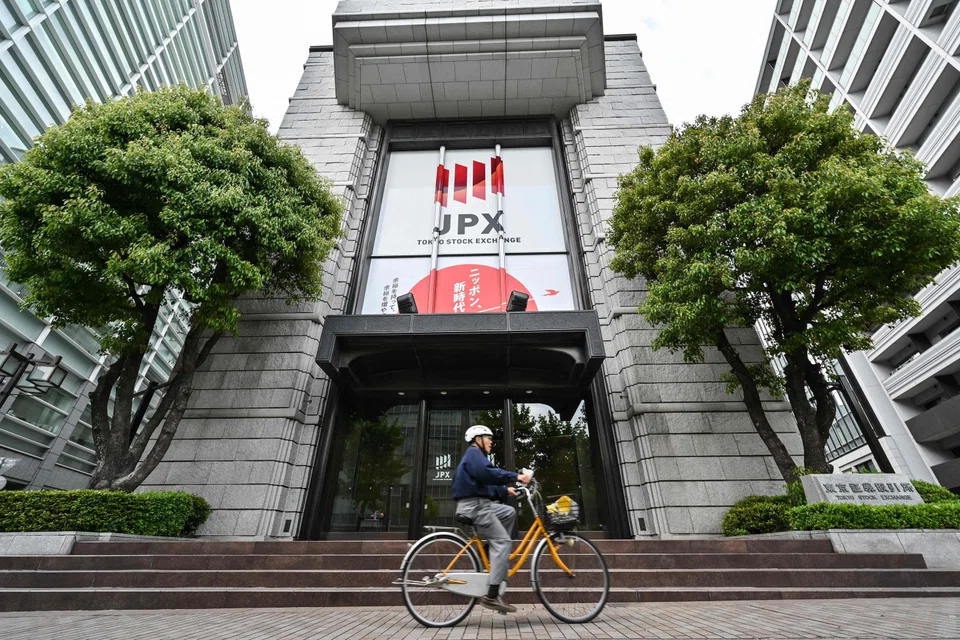
MORE investors interested in the Japan market are eyeing the private equity market and “megabanks”, which are likely to see gains in light of recent regulatory reforms in the country. But observers warn there are sectors, such as the real estate market, that could see a potential slowdown.
Fiscal reforms in Japan have drawn a surge of renewed interest from investors, which has sent the stock market soaring.
The Nikkei 225 index earlier this year hit a 34-year high.
The value of private equity deals also trebled last year, compared with the annual averages from 2018 to 2022, according to a recent report by consultancy Bain & Co.
Meanwhile, a report by Knight Frank in December 2023 found Japan to be the third most-sought-after investment destination within the Asia-Pacific for Singapore-based investors, behind mainland China and Australia.
Singapore was also the top source of real estate investments in Japan last year.
Series of regulatory changes
The buoyant market is driven by a combination of corporate governance reforms and monetary policy changes.
Last year, the Tokyo Stock Exchange called for companies to disclose their plans to improve capital efficiency and lift shareholder value.
The Bank of Japan (BOJ) ended its negative interest rate policy in March with its first rate increase in 17 years. At the same time, it abandoned its bond yield curve control framework, which kept long and short-term interest rates from rising.
SEE ALSO
It also stopped purchasing assets such as exchange-traded funds (ETFs) and Japanese real estate investment trusts. The BOJ usually does so to support the Japan stock market.
Meanwhile, the yen has been on a downward slide, hitting three-decade lows against the US dollar.
The regulatory changes are “a pivotal step” in creating self-sustaining economic growth in Japan, said Derrick Tan, chairman of wealth management company Wrise Group.
While deflationary pressures had previously stifled Japan’s economic activity, the regulatory changes aim to stimulate growth by lifting investments, prices and wages, said Tan.
Sectors on the rise
Market observers flagged the private equity, banking and real estate sectors as areas for investors to watch.
Tan of Wrise pointed out that the private equity landscape has seen a “remarkable surge” in recent years, due to low interest rates and investment opportunities.
The US$14 billion private equity buyout of industrial conglomerate Toshiba last year, for instance, was one of the largest private equity deals globally in the last five years.
Tan said that policymakers and finance professionals increasingly view private equity as a way to enhance returns on capital, and improve labour productivity and competitiveness amid subdued public-market performance.
Yeo Hui Shi, the assistant manager of the research and portfolio management team at FSMOne.com, said that megabanks such as Mitsubishi UFJ Financial Group, Sumitomo Mitsui Financial Group and Mizuho Financial Group have large and stable deposit bases, and possess greater flexibility to raise lending rates.
As such, they are poised to benefit from improvements in their net interest margins due to higher rates. Increased investment activity will also support their non-interest income, said Yeo.
However, these banks could make a loss on their bond holdings due to rising long-term rates, warned Wrise’s Tan.
“Foreign investors and banks will need to reassess their investment strategies and risk management practices to mitigate potential losses amid these changes,” he added.
The semiconductor industry in Japan also stands to benefit from the diversification of supply chains by global chip companies due to US-China tensions, said Yeo of FSMOne.
The country has announced plans to provide significant subsidies to chip giants, such as TSMC, and to develop its home-grown semiconductor manufacturer, Rapidus.
On the real estate front, however, higher mortgage rates could dampen the booming market, said Tan.
Investors might see lower profits due to higher interest rates, resulting in lower rental yield and property valuation, he said.
How can investors enter the Japan market?
Observers said that one way investors can enter the Japan market is through ETFs.
Andy Ng, head of iShares equity product strategy at BlackRock, said that demand for Japan-focused ETFs has grown as a result of the various regulatory changes.
The investment company had seen US$16.5 billion of inflows into Japan-focused ETFs globally in 2023 – its best year over the past decade – and Ng expects investor interest in Japan to grow.
However, investors will need to monitor the value of Japanese ETFs following Japan’s shift in monetary policy, said Wrise’s Tan.
He added that the central bank’s departure from purchasing ETFs indicates the potential withdrawal of a stabilising force from the market. This could lead to heightened volatility and uncertainty which impacts various asset classes, including ETFs.
Likewise, the end of the bond yield curve control framework means that bond ETFs, which are influenced by bond yields, could experience fluctuations in value due to changes in the bond market, added Tan.
Decoding Asia newsletter: your guide to navigating Asia in a new global order. Sign up here to get Decoding Asia newsletter. Delivered to your inbox. Free.
Copyright SPH Media. All rights reserved.
TRENDING NOW
‘My grandfather’s legacy’: Sherman Kwek lays out three-year plan for CDL to drive returns
He built the Vingroup empire. Now South-east Asia’s richest man is handing some key roles to his sons
Canada is upping oil flows to Asia, but South-east Asia’s refineries aren’t ready to handle them yet
Deal between tycoon friends sparks scrutiny of Philippine power sector



