JustCo eyes expanding to 6 new markets in Asia, Middle East over next 2 to 3 years
Co-working operator also hopes to move towards a management contract model

JUSTCO is aiming to double the number of markets it operates in over the next two to three years, as the co-working operator grows its presence in the region.
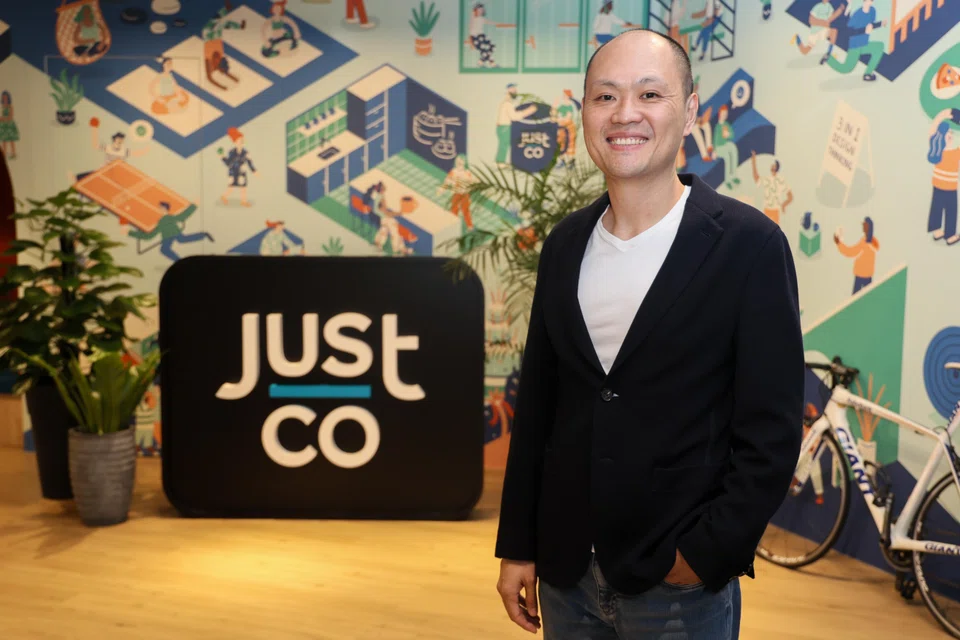
In an interview with The Business Times, JustCo’s chief executive officer and founder Kong Wan Sing said that the group is looking to expand to Malaysia, the Philippines, Vietnam, Indonesia, India and Dubai in the United Arab Emirates.
Currently, JustCo has 46 locations across the six markets that it operates in. Twenty of these centres are in Singapore, including one in Samsung Hub which will close by the end of the year.
Kong said: “JustCo saw an uplift of almost 20 per cent in demand for January to October 2024, as compared to the same period last year.”
According to Accounting and Corporate Regulatory Authority filings, JustCo’s revenue increased by 14.9 per cent from US$99 million in 2022 to US$113 million in 2023.
“After Covid-19, (in) the last two years, we were trying to emerge stronger and do a good job,” Kong noted. “After opening all these (locations), we will cover all of Asia,” he added.
Countries such as Vietnam, Malaysia and India are likely to benefit from the China+1 strategy as firms diversify their operations amid US-China tensions.
He said: “Manufacturing and tech companies would like to set up their offices there and would definitely require flex (space) for expansion needs and diversification from China.”
The new markets that JustCo is eyeing are also seeing demand from companies looking to build up back-office capabilities.
Management contract model gaining traction
As the group looks to scale regionally, it hopes to move towards a management contract model, in which co-working operators are paid to manage the space on behalf of landlords who pay for the capital expenditure costs.
It could cost up to S$200 per square foot (sq ft) to fit out a co-working space in Singapore, Kong said.
Given that most co-working spaces are at least 10,000 sq ft based on checks by BT, it could cost a few million dollars to fit out a unit.
About 10 per cent of JustCo’s locations now are run on a management contract basis, while 90 per cent are on a fixed lease. In three years, JustCo is aiming for the split between management contracts and fixed leases to be 50:50.
Kong noted: “We observe the management contract model growing traction among our partner landlords. As professional needs shift from functional offices to workspaces elevated by design and service, landlords recognise the increasing benefits that a management contract offers in tapping into JustCo’s brand and operational expertise when it comes to enhancing their overall tenant mix. In turn, this model allows us to keep an asset-light portfolio as we expand our footprint across the region.”
New brand
In November, the group announced the launch of a new brand, The Collective, which seeks to meet the growing demand for premium co-working spaces.
Its first flagship location in Japan spans 24,000 sq ft, and is located in GranTokyo South Tower which has direct access to Tokyo Station. The Collective will open officially in January 2025.
Kong said: “We see the demand for better-quality, higher-specification office spaces, especially in expensive (markets) like Singapore, Tokyo, Korea and Australia. That’s driving us to think that maybe it’s time for us to build another tier above JustCo that will cater to the needs of this group of customers.”
He added that JustCo is “very selective” for The Collective and opened its first co-working space under the brand in Japan because it managed to find the right location.
Kong said: “In every country, there are a lot of operators. But if you truly talk about operators that have an international network, (there are) very few.”
JustCo is probably one of three or four co-working operators that have an international network which can serve clients with such requirements, he noted.
“If you’re based in Japan and if you come to Singapore, (and) you want to have a meeting with someone here, you can easily pop in to one of the 20 locations (under) JustCo to meet up with a client.”
He added: “If you come to Singapore and you don’t know anybody, you can easily communicate with our community staff that you want to get connected to different businesses, (and they) can introduce you to the local network.”
The group is “looking actively” to open The Collective in Singapore and is in negotiations with a few parties now, he said.
When asked for his outlook on the Singapore office market in 2025, Kong said that office rents in the Republic have “increased quite steeply in the last two years”, but he expects them to stabilise next year.
In 2025, foreign companies may wait to see how US-China relations develop under Donald Trump’s second term as US president, and this might affect their decision whether to expand to Asia and choose Singapore as their headquarters. Businesses with a presence in Singapore may also be mulling over whether they want to expand, Kong added.
He said: “Singapore is in a unique space. It’s neither pro-China nor pro-US, it’s quite neutral. Whoever wants to do business in Asia, they will treat Singapore as a launch pad. A lot of tech companies are coming here, (and so are) family offices, financial companies and pharmaceutical (companies).”
Decoding Asia newsletter: your guide to navigating Asia in a new global order. Sign up here to get Decoding Asia newsletter. Delivered to your inbox. Free.
Copyright SPH Media. All rights reserved.