



Logistics players step up investments as e-commerce charges ahead despite supply-chain hiccups

Mindy Tan

THERE is no doubt that e-commerce boomed during the pandemic. But even as consumers resume their travel with a vengeance, industry players see no signs of a drop-off in online spending. In fact, strong growth is motivating some to raise their investment spending in the region.
US-listed supply-chain management company GXO Logistics, for one, is increasingly optimistic about its prospects.
“Our business is growing really fast, (and) we recently upgraded our growth guidance for this year from 8-12 per cent to 11-15 per cent,” said chief financial officer Baris Oran.
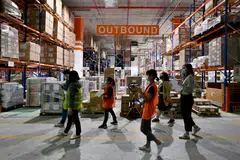
GXO — spun out of US-listed freight company XPO Logistics in last August — is the largest third-party pure-play, contract logistics provider globally. Its services include e-commerce and omni-channel order fulfilment and distribution, returns management and cold-chain logistics. The company operates out of 869 locations, with some 208 million sq ft of warehouse space.
In May, GXO reported a year-on-year revenue increase of 14 per cent for the first quarter of the year — to US$2.1 billion from US$1.8 billion. Net income rose to US$37 million from US$14 million.
Fresh from the completion of a US$1.3 billion acquisition of British player Clipper Logistics, GXO is undertaking what Oran calls “a review of the entire landscape”.

“One area we are keenly looking into is South-east Asia; and within South-east Asia, of course Singapore is a major hub,” he told The Business Times on a visit to Singapore.
“The neighbouring countries, where there is a lot of concentration of industries or consumers with certain levels of automation and infrastructure, would also an interesting area for us to invest.”
Regional logistics company J&T Express is just as bullish. “Even as borders reopen and Singaporeans are spending more on overseas travels, a large majority are still going online to shop for day-to-day needs,” said Martin Tan, head of operations at J&T Express Singapore.
SEE ALSO


“Amid long delays and increased cost of air freight, we are now seeing a regionalisation of supply chains, under which businesses are establishing supply networks closer to end-consumer markets.
“South-east Asia has therefore emerged as a highly attractive market, propelled by strong consumer demand and a rapidly growing manufacturing industry,” he added.
Strategic location
Tan said more businesses are seeking to leverage Singapore’s strategic location within the region. Increasingly, overseas companies from Europe and the United States, as well as mainland China and Hong Kong, are setting up their global or regional headquarters here, he noted.
“We expect that Singapore will continue to grow as a commercial centre and an e-commerce hub, with strong demand for international logistic services,” he added.
In Singapore, J&T operates 2 sorting hubs, a fulfilment centre in Penjuru and a warehouse at the Changi Airfreight Centre. Since it launched its Singapore operations in January 2020, the company has multiplied its fleet 4-fold.
It has also been actively beefing up its portfolio across the Causeway. On Jun 7, the company announced that it was investing RM600 million (S$189.4 million) to buy a 30-acre land parcel in Selangor, Malaysia. The plan is to build an integrated logistics centre for express distribution, transportation and warehousing as the startup grows its business in Malaysia.
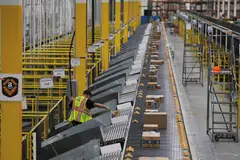
Automation is another big area for investment. J&T Express Singapore recently upgraded its automated parcel sorting system to make it more seamless.
“Such strategic investments in technology have helped us to cut down on human error and free up manpower resources,” Tan said.
GXO also has plans for technological upgrades, in cooperation with its customers.
“A lot of our customers want us to invest with them in the Asia-Pacific... especially on the technology side, as they have high service-level expectations,” said Oran.
He added that a full third of GXO’s on-site operations are automated. The industry average is 5 per cent. A recent report by Fitch Ratings put GXO as a top global purchaser of packaging and materials handling equipment.

Contract logistics the sweet spot
In its report, Fitch Ratings noted that the contract logistics industry, in particular, is experiencing positive tailwinds.
“Global trends towards outsourcing benefit contract logistics providers, which can deliver goods more quickly and efficiently through superior scale, technology and specialisation,” it noted.
“E-commerce is growing much more quickly than bricks-and-mortar retail, which is increasing complexity in the supply chain. Contract logistics providers are better positioned to re-allocate resources during peak periods.”
A global trend towards outsourcing is helping. Almost half (44 per cent) of GXO’s first quarter wins came from companies outsourcing for the first time. This was further buoyed with a second wave of outsourcing from brick-and-mortar businesses.
“Customers see a lot of value in outsourcing. For some customers, we were able to take 50 per cent of the variable cost out when they outsource (the job) to us,” said Oran. “We have improved their products available from the mid-90s to over 99 per cent, and we have shown over 30 per cent growth in net promoter scores.”
Contract players such as GXO are also taking on more roles within the e-commerce and logistics supply chain.
Said Oran: “Warehousing has become an important part of the consumer experience now. We are the last ones to touch the product. It’s not just about the cost element, it’s consumer satisfaction that really makes a big difference for global brands.”
Tan said J&T has noticed that traditional retailers are moving their operations online: “While trying to keep operating costs low and streamlining supply chains, such retailers are also increasingly moving into other parts of South-east Asia. Hence, we’re very much optimistic about the outlook for cross-border e-commerce in the region, which will likely continue to grow even after the pandemic eases.”
Decoding Asia newsletter: your guide to navigating Asia in a new global order. Sign up here to get Decoding Asia newsletter. Delivered to your inbox. Free.
Copyright SPH Media. All rights reserved.






