As Macau roars back to life, Sands China plots next stage of reinvestment
The Las Vegas Sands subsidiary has opened the US$2 billion Londoner Macao integrated resort, and more flagship projects are on the way, says COO Grant Chum

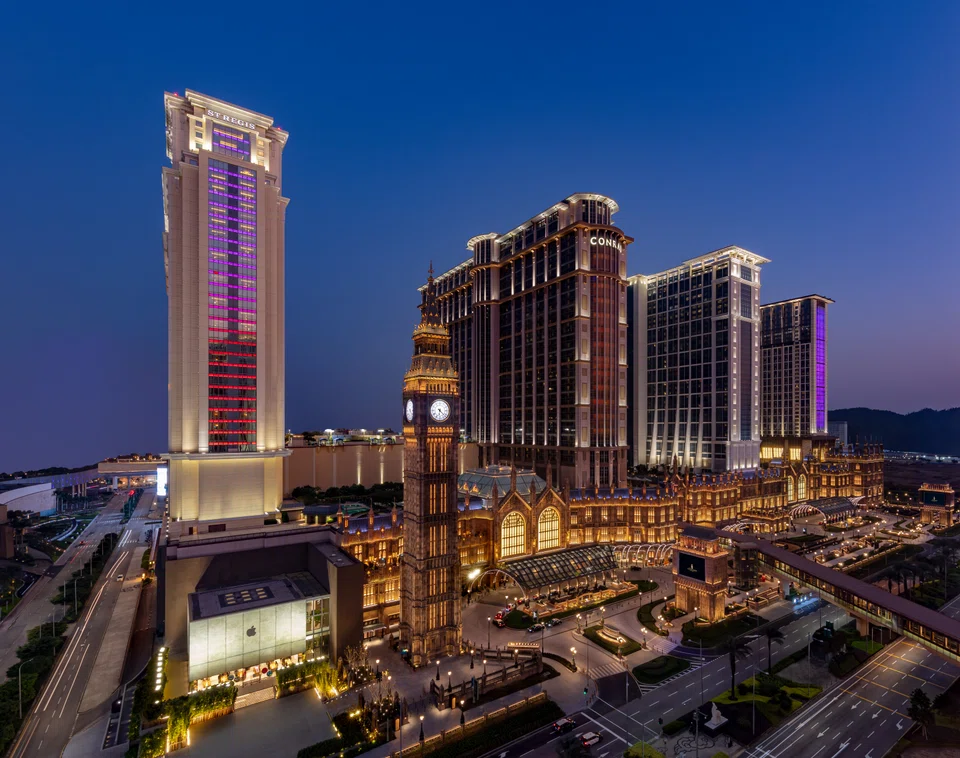
THE glory days of Macau – the former Portuguese colony widely known as the “Las Vegas of Asia” – appear to be back, now that the worst of the pandemic is firmly in the rear-view mirror.
Crowds have returned in droves, especially after China’s reopening in January. Gaming tables and slot machines have roared back to life, convention halls are booked out, global music acts are playing to full houses, and hotels and celebrity chef restaurants are bustling with activity.
In late May, the Chinese special administrative region celebrated the latest addition to its glittering Cotai Strip. The Londoner Macao – a US$2 billion integrated resort (IR) by Las Vegas Sands (LVS) and its majority-owned subsidiary Sands China – held its grand opening, with international celebrities such as football icon David Beckham and jazz-pop singer Jamie Cullum in attendance.
Last November, it was announced that Sands China was among Macau’s six incumbent casino operators that would be granted new 10-year licences by the government to operate from January this year.
The news was significant as it gave the operators – which have collectively invested over US$50 billion in Macau over the past 20 years – a fresh runway to pump in fresh capital and grow their footprint in the city.
On its part, Sands China has already committed to investing 30 billion Macanese pataca (S$5.1 billion) over the next decade.

In an interview with The Business Times, the company’s chief operating officer Grant Chum said that almost all of that amount – 93 per cent – would go towards non-gaming segments such as Mice (meetings, incentives, conventions and exhibitions), entertainment and sports events as well as attractions.
“Like (LVS) group CEO (Robert) Goldstein said before, that’s only the baseline. For us, this is just the starting point. We are ready and we would love to have the opportunity to invest even more, given the right project and the right circumstances,” he said.
Chum, who is also executive vice-president of Asia operations at LVS, gave some details of two new flagship projects that Sands China will embark on over the next 10 years.
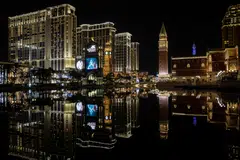
He spoke of a plan to double the size of the carpeted meeting space at Sands China’s iconic property, The Venetian, which is one of the city’s most-visited attractions. Another big initiative in the works is a conservatory garden-themed attraction, which could take some inspiration from Singapore’s Gardens by the Bay.
Chum was speaking to BT at Sands China’s sister property Marina Bay Sands in Singapore. He was in town last month to attend a three-day event to showcase the best of Macau, the first major event organised by Sands China in an overseas market post-pandemic.
After spending 14 years at UBS Investment Bank, Chum joined Sands China in 2013 as senior vice-president of global gaming strategy. He then served five years as chief of staff before being appointed COO in February 2020 – a difficult time for the company as the pandemic was starting to shut borders and force countries into lockdown.””
Chum recalled how he, together with the rest of the senior management, had taken a huge risk in deciding to start operations at The Londoner Macao in early 2021, with no clear sign at that point as to when tourists would return.
The sprawling resort, with nearly 6,000 rooms and suites in total, has replicas of some of the British capital’s most famous landmarks such as Big Ben, the Palace of Westminster, the British prime minister’s official residence on 10 Downing Street and even London’s red double-decker bus.
“It was a big challenge for us, because we had to bring in the right people with the right motivation during the pandemic, and have them work in this abnormal set-up with so few customers,” said Chum. “But we took that decision to persist with that, because it was a great opportunity for us to ensure things could be as optimal as possible for the reopening, whenever that would be.”
While Macau’s tourism numbers and gaming revenue today are still well below what they were in 2019 before the pandemic, Chum expressed confidence that the pace of Macau’s recovery would pick up in the coming months.
He is also hopeful that Macau will continue to retain and build on its allure as a top destination for business and leisure visitors, despite growing competition from other countries that are opening mega-resorts, or considering doing so. In April, Japan’s government gave the go-ahead to build an IR in Osaka, with the aim of opening in the latter half of 2029.
“In general, (Macau’s) recovery has been stronger in terms of revenue and spend per head, than the actual number of people coming through,” he said. “The highest-spending customers are coming back first, and we see that especially in retail spending.”
That said, he pointed out that Macau has a clear advantage over its competitors in the region and beyond, given the fact that the city already has several world-class IRs opened by various operators over the last 20 years.
“In our business, these physical buildings take a lot of time, willpower and financial wherewithal. Building just one IR is hard enough, having two is really difficult,” he said. “But (for Macau) to have eight to 10 in a short period of time, are there other cities and destinations that can replicate this?
“Firstly, it will take more than a decade. Secondly, is it realistic? The answer is probably no. What Macau has is an irreplaceable critical mass of world-class IRs. So now, the challenge is how the industry continues to reinvest in that existing infrastructure, grow it and more importantly, to programme it so that it sustains its attractiveness.”
Decoding Asia newsletter: your guide to navigating Asia in a new global order. Sign up here to get Decoding Asia newsletter. Delivered to your inbox. Free.
Copyright SPH Media. All rights reserved.