


Global Enterprise logo
BROUGHT TO YOU BYsc logo

Manufacturers continue to worry about parts, more lockdowns in China

Mindy Tan
Mindy Tan

Published Wed, May 11, 2022 · 05:50 AM
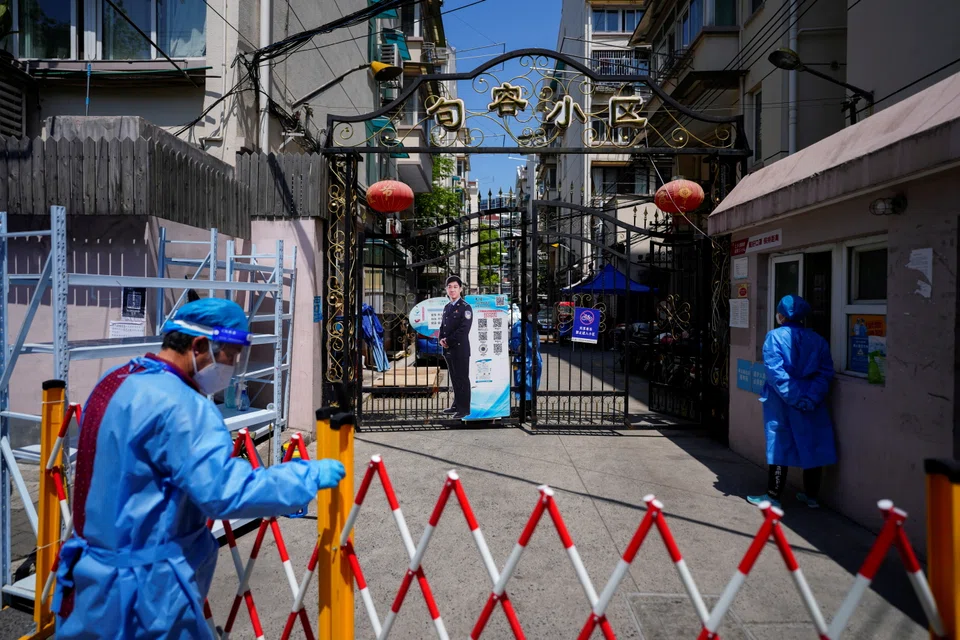
    • The closed entrance of a residential area is pictured during lockdown amid the Covid-19 pandemic, in Shanghai, China on May 5.
    • The closed entrance of a residential area is pictured during lockdown amid the Covid-19 pandemic, in Shanghai, China on May 5. REUTERS

    EVEN as Shanghai allows more companies to restart work, much of the city continues to be in lockdown mode – and manufacturers here are still missing required parts and worrying about more lockdowns, as China continues to fight its largest outbreak of Covid-19 since the early days of the pandemic.

    Griffin Group International, which makes filtration systems, has been unable to fulfil a customer's order since Shanghai went into lockdown in April.

    “For some of the big systems, we need parts which are built by a German company,” said Mei Reading, co-founder and global marketing director. “They have an office in Shanghai but because of logistics issues, we haven’t been able to get the parts (we require).


    "We have a shipment waiting to be sent to Holland but we haven't been able to complete it as delays have been ongoing since Shanghai went into lockdown."

    China-related strains on supply chains are starting to show up in a key indicator of production. China’s official Purchasing Managers’ Index showed that manufacturing activity slumped to its lowest level since Feb 2020, clocking 47.4 in April. This is the second month of contraction, marked by a figure below 50. China’s export growth in April too fell to a 2-year low of 3.9 per cent, a steep change from the 14.7 per cent in March.

    “For manufacturers, it’s very frustrating,” said Lawrence Pek, secretary-general at the Singapore Manufacturing Federation. “With the lockdowns, parts are not arriving on time, so factories and businesses are undergoing a major slowdown. It is a very precarious situation. Orders keep coming in from overseas, but you can’t procure the parts.”

    Asean Intelligence

    Get insights into businesses across South-east Asia

    Get the free report

    Things could worsen as Covid case counts climb in Beijing and other cities, raising the possibility of additional lockdowns. Beijing also announced on May 6 that the Asian Games, which were due to take place in Hangzhou in September, have been "postponed indefinitely".

    The European Chamber of Commerce in China said in a May 5 report that the impact of China's Covid-19 policy and Russia's war in Ukraine were creating "severe challenges" for European business operations.

    Specific to China, 92 per cent of companies polled in the report said they have been hit by measures such as China's recent port closures, the decrease in road freight, and spiralling sea freight costs. As a result, 23 per cent are considering shifting current or planned investments out of China to other markets – more than double the number that were considering this at the start of 2022, and the highest proportion in a decade.

    Even for companies whose supply chains are less affected, rising costs are an issue. Activecool Fashion's Steven Tan said the company is less impacted by the current lockdown as they found subcontractors for required parts in different provinces earlier.

    The company manufactures customised apparel and accessories such as flags and tentage. While the flags are now in Singapore, the flag hooks are stuck in Shenzhen, he added.

    "From the very start, we started subcontracting out to different provinces, so I would say only 20-30 per cent of my goods were affected," said Tan. "It's manageable. The problem now is inflation. The fuel charges are hurting us."

    Tan ships his items by air freight and according to him, the total bill has almost doubled: "Last month, compared with 2 months ago, my total bill went up from about S$4,000 to S$7,000."

    Sea freight rates too remain higher relative to the pre-Covid market. Griffin Group's Reading said that before the pandemic, a container from China to Singapore used to cost around US$900; now, it costs US$1,700. The cost of shipping to Holland has similarly more than doubled.

    Lars Jensen, CEO of container consultancy Vespucci Maritime, warned that "unless Shanghai re-opens soon, carriers are likely to further increase the number of blank sailings as well as increasingly omit Shanghai port to safeguard the integrity of the rest of their networks".

    At the same time, the reopening of Shanghai will result in a "surge of cargo out of the area", setting the stage for capacity shortages and upwards rate pressure, he said in a post on the Baltic Exchange.

    Judah Levine, head of research at Freightos Group, similarly noted that while the existing lull in ocean volumes is a "welcome chance for destination ports to clear some of the existing backlog", the longer the lockdown lasts, the "larger and more concerning the coming surge of containers will become" for already-congested ports.

    Singapore’s major imports from China include intermediate goods required by manufacturing and construction industries, such as electronics, machinery and metals. In a speech delivered in Parliament on Monday, Minister of State for Trade and Industry Low Yen Ling acknowledged that some businesses may have been affected by rising costs and supply disruptions, and may need to hold higher volumes of inventory and in turn require more working capital.

    However, Singapore is not expecting any significant impact to its essential supplies of food and healthcare items, as the country’s reliance on China for such goods is “relatively low”, she noted.

    Decoding Asia newsletter: your guide to navigating Asia in a new global order. Sign up here to get Decoding Asia newsletter. Delivered to your inbox. Free.

    Copyright SPH Media. All rights reserved.


