



Market reforms in Asean could open up stock-picking opportunities: JPMorgan
Some Malaysian banks, a Thai energy firm are among analysts’ picks

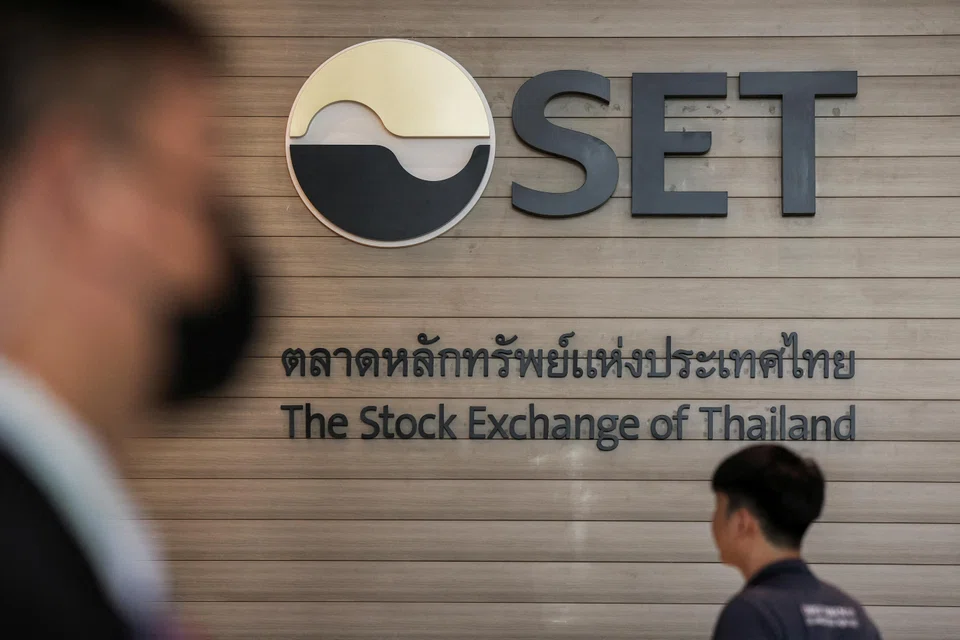
[SINGAPORE] Market reforms by various Asean governments have increasingly been implemented in a bid to attract foreign inflows, boost liquidity and improve shareholder returns, noted equity research analysts from JPMorgan.
A report on Saturday (May 9) indicated that countries like Malaysia and Thailand have moved forward with such plans, and that these could benefit specific stocks.
Singapore, meanwhile, has also pushed forward with its own Value Unlock initiative. The government announced an additional S$1.5 billion top-up to the Equity Market Development Programme (EQDP) in February, bringing the total amount of EQDP funds to S$6.5 billion.
“We estimate a total of around S$2.1 billion has been disbursed... and more funds will be appointed in the second quarter of this year,” said the JPMorgan analysts.
Opportunity to position in Malaysian stocks
The analysts noted how Malaysia’s MY Value Up programme is a recent move by the government to jump on the market reform bandwagon in Asia.
Its programme strategy targets companies with a market capitalisation above RM4 billion (S$1.3 billion) each. This encompasses 88 companies on Bursa Malaysia, which together account for 80 per cent of the market capitalisation. The initiative remains voluntary now, but could move towards structured disclosure by 2027.
Key indicators to benchmark Malaysian corporates for the value uplift exercise include that of dividend yield, return-on-equity (ROE) levels, market cap, price-to-earnings ratio and total shareholder returns.
Additionally, for sell-side firms, the regulator is looking to reduce fees, and provide support to boost analyst coverage of smaller-capitalisation stocks.
Such reform could create investment opportunities in stocks with upside from asset monetisation, operational improvement, and/or the potential to raise dividend payout, added the JPMorgan analysts.

“The initiative (may) still (be) in its early phase, (but) we believe investors can reap the opportunity to position in stocks that have the potential to unlock value,” they wrote in their report.
They are overweight on banking counters such as Maybank, Hong Leong Bank and RHB Bank, amid rising dividend payouts; on top of healthcare stocks IHH Healthcare, for asset-monetisation reasons, and Top Glove.
Further stimulus for Thailand’s stock market
As for Thailand’s market reforms, the analysts noted that certain changes by the Securities and Exchange Commission of Thailand are further stimulating investment flows to specific counters.
For instance, Thai ESG funds are now able to invest in companies participating in the country’s Jump+ programme, upon revised regulations.
These companies must have a corporate governance report score of 90 or above, effective from Mar 1.
The analysts noted that retail investors also get a tax deduction of up to 30 per cent of income, capped at 300,000 baht (S$11,786) a year, for investment in Thai ESG funds between Jan 1, 2024, and Dec 31, 2026. “This should keep investment flows continuing into these names.”
They have an overweight rating on state-owned energy firm PTT, and credit business Muangthai Capital.
Established in June 2025, Jump+ is the country’s initiative to revive its stock market by helping companies improve their strategy, governance and emissions management, in the form of support and incentives.
As at May 2026, multiple companies listed on Thailand’s benchmark SET Index were marginally above their book value and saw their ROE staying below the cost of equity, said the analysts.
“We believe the reasons are weak business outlooks as companies provide minimal foresight on their long-term goals; concerns over governance and capital allocation; and low and declining market liquidity,” they explained.
The SET Index was the best-performing major Asean benchmark in the year to date as at Apr 30 – up 18.6 per cent – although specific domestic factors such as the Bhumjaithai Party’s victory in the general election triggering an approximate 3.5 per cent single-day surge on Feb 8 this year were cited to be at play.
Singapore’s equity-stimulus measures
Singapore launched a range of measures last year – including the initial S$5 billion EQDP stimulus; tax incentives for fund managers investing substantially in Singapore-listed equities; and adjustments to the Global Investor Programme to support capital inflows.
This was coupled with a corporate income tax rebate for new listings in the city-state and an enhanced concessionary tax rate for new fund-manager listings, to encourage more participation in trading in stocks and support for the market, noted the JPMorgan analysts.
“The new optional CPF (Central Provident Fund) life-cycle investment scheme would (also) enable investors to provide additional inflows into riskier asset classes,” they wrote on Saturday.
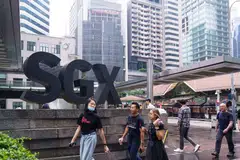
The Singapore Exchange also introduced two new equities indices on Sep 22 last year – which track companies beyond the 30 constituents of the Straits Times Index (STI).
This comprises stocks outside the STI in an attempt to “help investors follow how the next tier of large and liquid companies are evolving”, said the analysts.
The new iEdge Singapore Next 50 Indices come in two variants to cater to different investor needs – one weighted by market capitalisation (iEdge Singapore Next 50 Index), and the other by liquidity (iEdge Singapore Next 50 Liquidity Weighted Index).
The analysts are overweight on real estate names City Developments Ltd , UOL Group and asset manager Keppel .
Decoding Asia newsletter: your guide to navigating Asia in a new global order. Sign up here to get Decoding Asia newsletter. Delivered to your inbox. Free.
Copyright SPH Media. All rights reserved.
TRENDING NOW
Far East Organization’s The Serra Residences sells less than a quarter of units released at average S$3,460 psf

Philippine power giant First Gen rebuffs foreign offers, plans up to US$2.6 billion in expansion

Once staunchly pro-China, Malaysian Chinese businesses are now distancing themselves from Beijing

Is stagflation returning? That mostly depends on the Iran war

