


China’s Q3 GDP beats expectations, but few believe it
Hong Kong’s Hang Seng Index tumbles over 6 per cent to a 13-year low

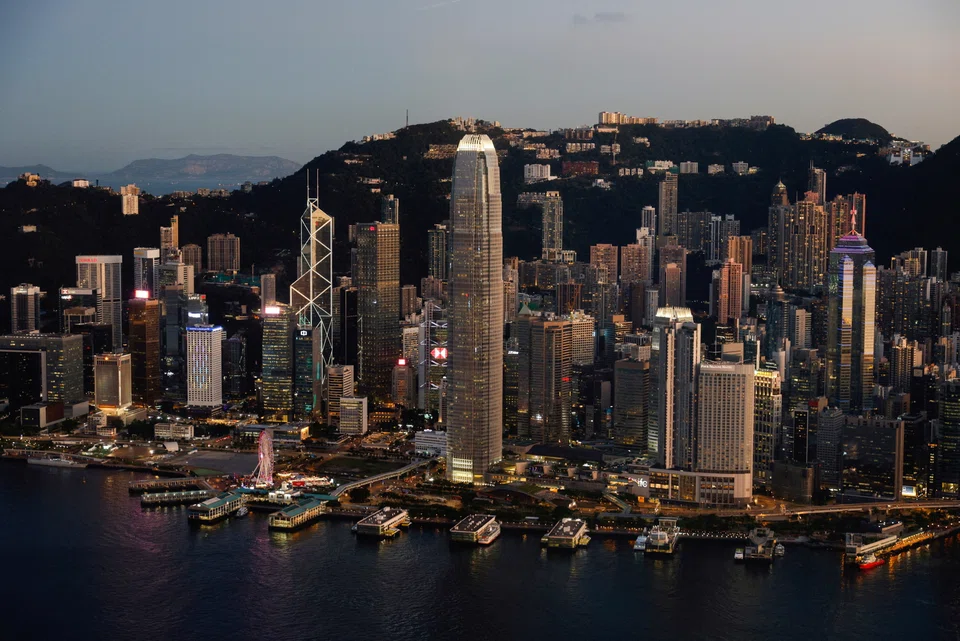
AFTER nearly a week of delay, China released on Monday (Oct 24) better-than-expected gross domestic product (GDP) growth for the third quarter.
But the market was unimpressed, with Hong Kong’s Hang Seng Index tumbling more than 6 per cent to a 13-year low and some economists slashing further their growth projections for this quarter. Some also blamed the market rout on the make-up of China’s latest Politburo Standing Committee, which signals continuing Covid restrictions.
China’s GDP for the third quarter rebounded to 3.9 per cent on year, higher than the 0.4 per cent on year in the second quarter, beating market expectations of a 3.3 per cent growth, thanks to a raft of government support measures. But most economists took the robust release with a “pinch of salt”. The data was originally scheduled for release on Oct 18 but was delayed until after the Communist Party Congress which took place last week. Standard Chartered economists said their calculation shows that “overall economic activity remained three per cent below trend, due to a negative output gap of minus 5.8 per cent for the tertiary sector, calling for continued support for an economic recovery”.
The economists lowered their Q4 GDP growth forecast to 4.3 per cent on year, from 4.8 per cent on slower-than-expected activity in October, but kept their 2022 GDP growth forecast at 3.3 per cent, compared to Beijing’s official target of around 5.5 per cent.
Goldman Sachs economists said the Q3 GDP figure reflected “a bumpy growth recovery from the stringent Covid lockdowns in April-May amid multiple headwinds”.
China’s industrial production growth surprised to the upside, expanding 6.3 per cent on year in September, up from 4.2 per cent in August as continued policy stimulus and the easing in power shortages more than offset slower export growth. The market consensus was 3.8 per cent. Property sector investment remained in a double-digit contraction despite some policy easing such as tax breaks, lower mortgage rates, easing of home ownership requirements, and an accommodative monetary stance.

Reflecting the market’s scepticism over the data and concerns after the close of the Communist Party’s national congress over the weekend, Hong Kong’s HSI tumbled 6.36 percent to close at 15,180.69, its weakest level since the 2009 global financial crisis. The Shanghai Composite Index slipped 2.02 percent to 2,977.56.
The Hang Seng China Enterprises Index, a gauge of Chinese stocks listed in Hong Kong, plunged 7.3 per cent in its worst showing after any Communist Party congress since the inception of the index in 1994. According to Bloomberg data, foreign investors fled mainland markets, selling a record amount of equities via trading links in Hong Kong and fuelling a nearly three per cent loss in the CSI 300 Index.
On Sunday, President Xi Jinping tightened his grip, unveiling the newly-elected CPC Politburo Standing Committee (PSC) members. The four outgoing members are Premier Li Keqiang, Head of Congress Li Zhanshu, Head of the Political Consultative Conference Wang Yang, and First Deputy Premier Han Zheng. The four new joiners are: Li Qiang (currently the party chief of Shanghai), Cai Qi (currently the party chief of Beijing), Ding Xuexiang (currently head of the Central Committee General Office) and Li Xi (currently party chief of Guangdong).

Li Qiang is widely expected to become China’s next Premier. He is the architect of the two-month lockdown in Shanghai, a city seen as a role model for achieving a reasonable balance between Covid containment and economic growth. His appointment suggests that Beijing is unlikely to shift away from its strict zero-Covid stance - a policy that has derailed growth targets for the world’s second largest economy.
HSBC’s Greater China economist, Erin Xin, said: “The economic recovery gained significant ground in the third quarter, but there are still notable downward pressures which are holding back a full rebound.”
China’s economy remains on a weak footing as stringent Covid controls and a housing slump continue to affect consumer spending and business confidence.
Economists are not expecting major changes to China’s zero-Covid policy until the first-half of 2023, with the higher risk of Covid resurgence as the weather gets colder and the government reshuffle only completed by March. They warned that given China’s low Covid infection rate, new infections are likely to rise significantly on easing Covid controls, leading to a period of increased disruption to business and consumer activity as people stay home.
Decoding Asia newsletter: your guide to navigating Asia in a new global order. Sign up here to get Decoding Asia newsletter. Delivered to your inbox. Free.
Copyright SPH Media. All rights reserved.
TRENDING NOW
OCBC Q3 profit rises 3% to S$2.04 billion, slightly above expectations

Stocks to watch: OCBC, IHH Healthcare, FLCT, SingPost, Koh Brothers Eco Engineering

From legacy to launch: Francis Yeoh and Yeoh Pei Xien on family unity and YTL’s next‑gen ventures
Wealthy Indonesians snap up government bonds as yields near 8%: OCBC

