



Nobel winner warns China is ‘nanoseconds’ behind the US in quantum race
The US, Europe and China are all vying to build quantum computers with practical applications
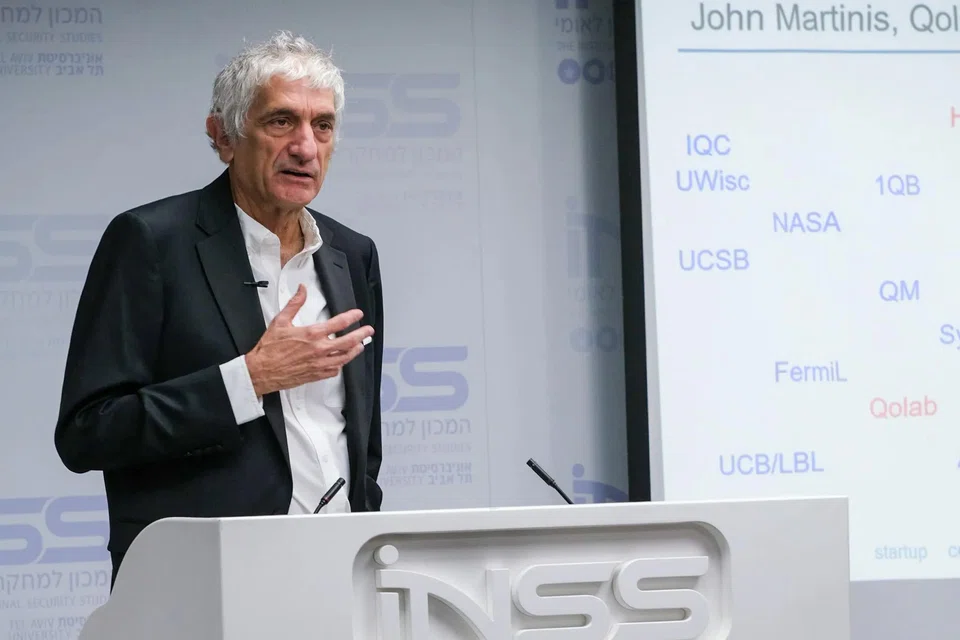
[TEL AVIV] One of this year’s winners of the Nobel Prize in Physics warned that China is rapidly narrowing the gap with the US in quantum computing.
“China is definitely very competitive in this,” John Martinis said in an interview with Bloomberg News in Tel Aviv. “People should be concerned that there’s a real race.”
The US, Europe and China are all vying to build quantum computers with practical applications, a development which Martinis said is five to 10 years away.
The strategically important technology promises to create a new kind of computer that vastly increases processing power, potentially able to decrypt military communications and help hack into critical infrastructure.
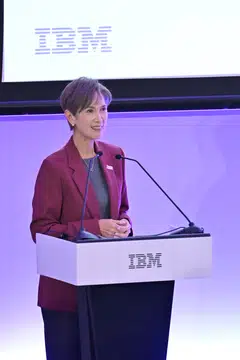
Governments around the world, companies including Alphabet’s Google and International Business Machines, and numerous startups are all working on the technology, which remains in a research phase.
Martinis previously worked at Google to build useful quantum hardware with the goal of achieving quantum supremacy, or the ability to perform a task far faster than a classical computer.
Martinis said China was seen as about three years behind in the technology when Google announced it reached this target in 2019.
“But they caught up quickly. Now we’re worried that maybe we’re nanoseconds ahead of them,” Martinis said. “I read their papers, they understand what they’re doing very clearly. When people in the West have published papers on recent advances, they often in a couple of months publish a paper with similar capabilities.”
Martinis, a professor at the University of California, Santa Barbara, said he’s flagged the danger to White House officials, most recently in a visit several weeks ago. The Trump administration is well aware of the challenge, he said, but first prioritised maintaining an edge in artificial intelligence over China. “They’re now moving on to quantum,” he added.
SEE ALSO



Quantum computers rely on qubits, which can be both 0 and 1 simultaneously, dramatically increasing the amount of information that can be processed compared to traditional computers.
In October, Google said it ran an algorithm on its “Willow” quantum-computing chip that was 13,000 times faster than possible on the world’s best supercomputer. The breakthrough can be repeated on similar platforms and cleared a path for useful applications of quantum technology within five years, according to Google.
Martinis was in Tel Aviv to to install a superconducting qubit device created by Qolab, a company he founded after leaving Google in 2020.
The project is a collaboration with the Israeli Quantum Computing Center and startup Quantum Machines and will be made available to researchers worldwide.
He will accept the Nobel Prize next week in Stockholm. Martinis was awarded it together with John Clarke and Michel Devoret, a chief scientist on Google’s quantum AI team, for discoveries that are helping advance quantum computing and sensors. BLOOMBERG
Decoding Asia newsletter: your guide to navigating Asia in a new global order. Sign up here to get Decoding Asia newsletter. Delivered to your inbox. Free.
Share with us your feedback on BT's products and services
TRENDING NOW

Britain’s mansion tax shows the difficulty of targeting wealth

Once staunchly pro-China, Malaysian Chinese businesses are now distancing themselves from Beijing

The only common thing in S-E Asia is that we all eat rice: Cisco’s Asean president

Singapore data centre operator DayOne opts for US IPO at likely US$20 billion valuation

