



Nvidia CEO says he would cut off buyers who build unsafe AI, bubble fears overdone
Jensen Huang says AI itself can be used to safeguard and help contain the technology
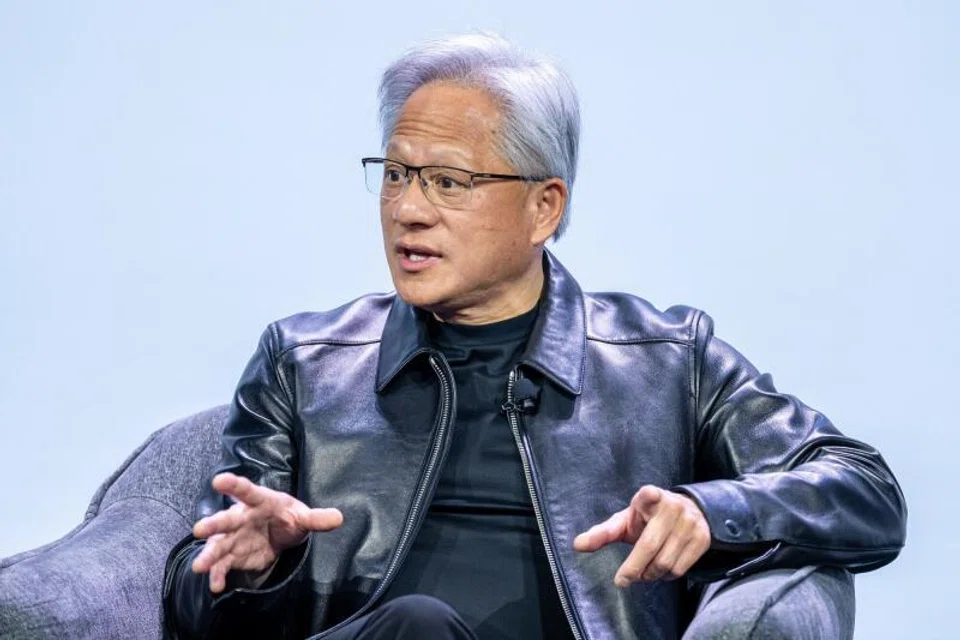
[SAN FRANCISCO] Nvidia chief executive officer Jensen Huang said he would halt the supply of chips to a customer that was developing unsafe artificial intelligence software, though he does not believe that the current level of concern about the technology is warranted.
“It’s a hypothetical, but yes,” he said in an interview with Bloomberg’s Emily Chang in London when asked if he would stop supplying an irresponsible developer.
“But before you do so, you would have a conversation. We don’t run other people’s companies, and there’s a limit to the judgment we apply to other companies’ use of our technology. Our technology is general-purpose.”
Nvidia is the dominant supplier of AI accelerators, the chips used to train and run AI models. That has put it at the centre of a debate over whether the software risks growing too powerful and slipping out of human control.
AI executives such as Anthropic CEO Dario Amodei have proposed an industry-wide slowdown to address the concerns.
Huang, who is on a tour through Europe ahead of a company event in Berlin, said the fears about AI safety are part of growing pains for an industry expanding quickly. The executive said he believes that the software can be controlled and deployed safely.
As part of its commitment to keeping AI safe, Nvidia is donating US$250 million over five years towards UK research into the issue.
The support will come in the form of access to time on advanced computers. Various academic institutions in that country, including the University of Oxford and University College London, will study safeguards and ways to control AI agents.
“Many of the young companies are going through growing pains, and they’re growing incredibly fast,” Huang said in the interview. “There’s an accountability, responsibility that goes along with building companies that they’re just growing into.”

Some of the concern that exists is “self-imposed”, he said, and the industry in general is doing a “horrible job” of explaining the benefits of the new technology.
AI itself can be used to safeguard and help contain the technology, Huang added.
“We should accelerate the integration of this containment technology into AI systems,” he said. “We should accelerate the development of monitoring technologies, and AI is that monitor. So we should accelerate AI technology.”
On a day when Nvidia shares and other chip stocks led declines in US trading, Huang reiterated his belief that AI bubble fears are overdone. Demand for AI infrastructure will continue to outrun the supply of components for years to come, he said.
“Eventually supply and demand will harmonise,” he said at an event in London, “but not today”. BLOOMBERG
Decoding Asia newsletter: your guide to navigating Asia in a new global order. Sign up here to get Decoding Asia newsletter. Delivered to your inbox. Free.
Share with us your feedback on BT's products and services
TRENDING NOW

Once staunchly pro-China, Malaysian Chinese businesses are now distancing themselves from Beijing

Stocks to watch: HPL, Aims Apac Reit, Zico, Advanced Systems Automation, ComfortDelGro

‘How many will survive?’: Bubble fears arise as China’s humanoid robotics face reality check

Smaller board lots can’t fix a market run by three banks

