‘People laughed at us’: Naysayers blew them off – then this underdog built Asia’s first cross-border wind farm
Impact Electrons Siam is now selling electricity to Vietnam. Next stop: Singapore?


The strategies and stories that shape today’s leaders.
[BANGKOK] Few took Impact Electrons Siam (IES) seriously when it spoke of harnessing the gusty highlands of Laos to power homes beyond its borders – most dismissed the new, no-name developer’s ambition as hot air.
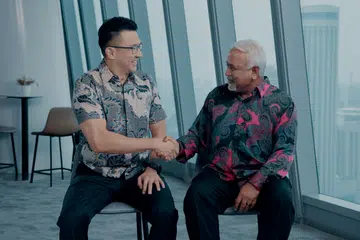
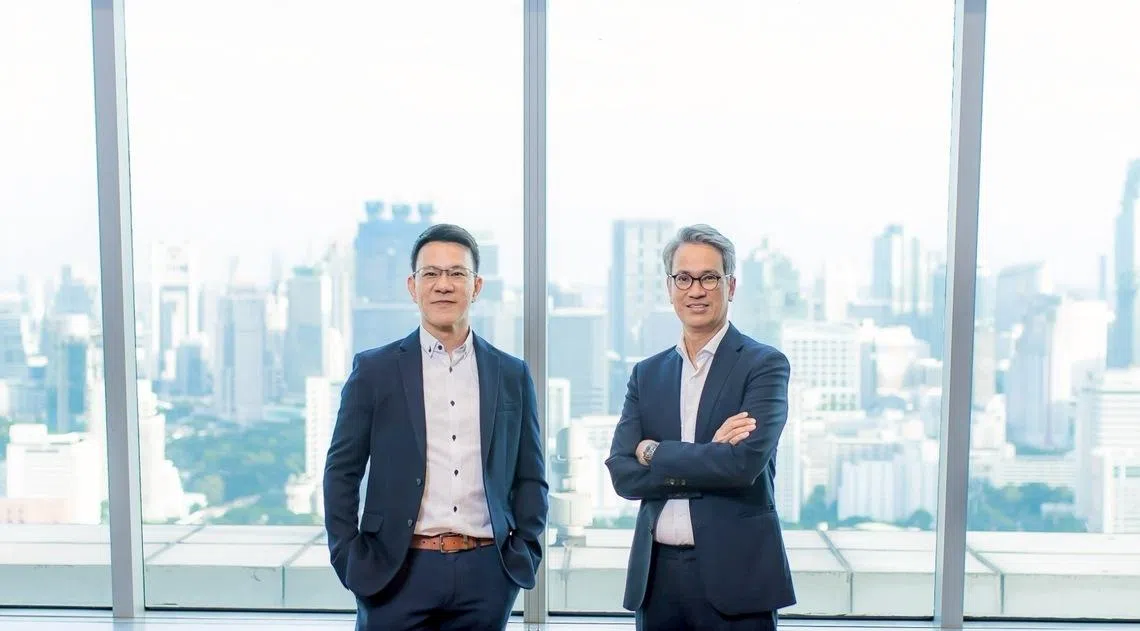
“We were nobody,” said founder and executive chairman Peck Khamkanist in an interview with The Business Times, from IES’ penthouse office 45 storeys above the heart of Bangkok’s Central Business District.
“We knocked on people’s doors; they didn’t open. They thought we were crazy,” he remarked wryly.
IES’ chief executive officer Nat Hutanuwatr chimed in: “Imagine the scale of scepticism at the start when we didn’t have anything – just a power development agreement from Laos. People were laughing (and) nobody believed us… until we brought in the first blade.”
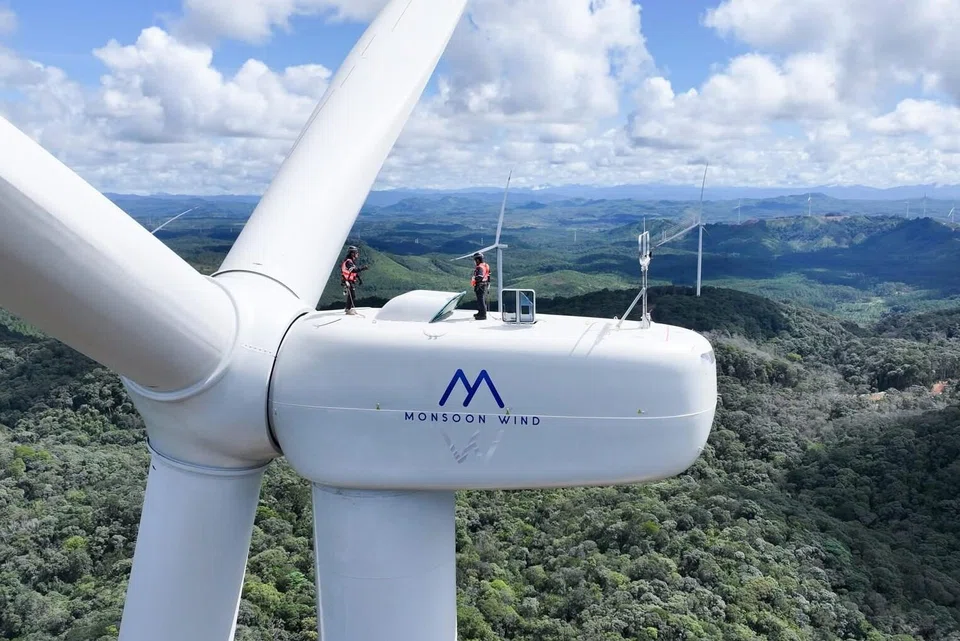
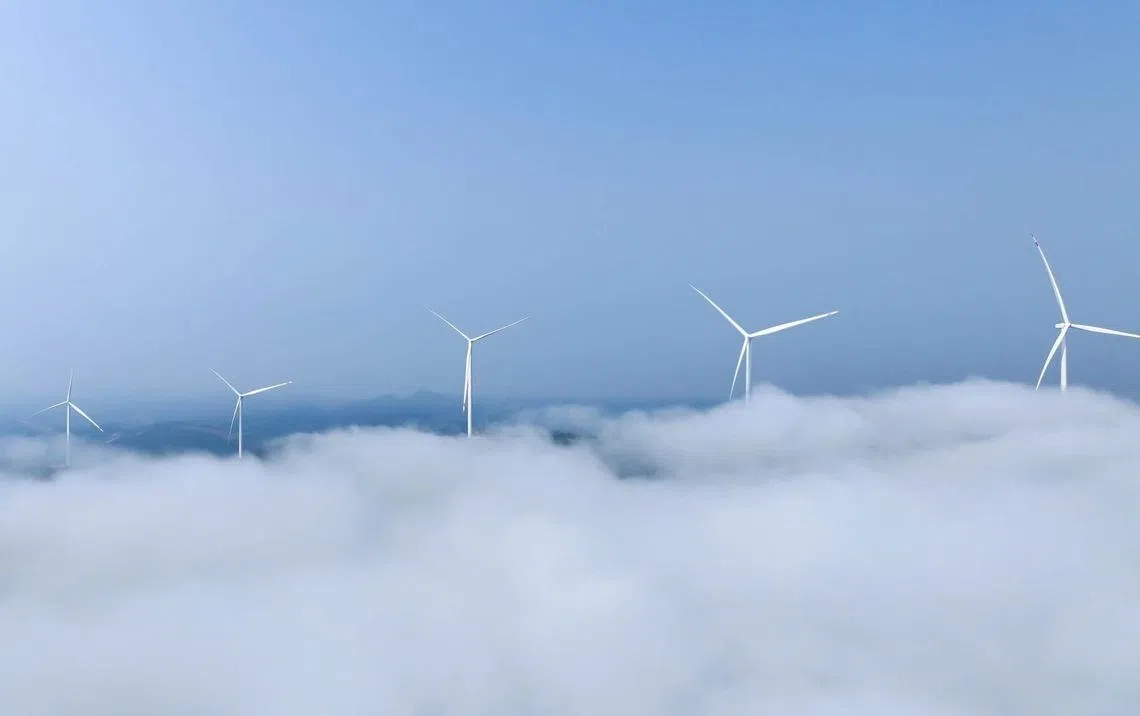
Construction of the US$950 million wind farm took 28 months – during which the blades, towers and other individual components of more than a hundred turbines were hauled up the mountainous terrain, before being assembled across a swathe of land nearly the size of mainland Singapore.
The first set of wind turbines supplied by Shanghai-headquartered Envision Energy arrived at the site in July 2023.
'%3e%3cpath%20d='M12.1475%2025.5262C13.7713%2025.4295%2014.94%2023.913%2014.94%2021.8832C14.94%2019.5359%2013.474%2018.093%2011.5917%2018.093C11.3745%2018.093%2010.9582%2018.093%2010.8393%2018.1413V25.2086L11.8891%2025.5745C11.8891%2025.5745%2012.207%2025.5262%2012.1475%2025.5262ZM11.4934%2017.6281C13.2567%2017.6281%2014.3843%2016.4292%2014.3843%2014.4501C14.3843%2012.372%2013.275%2011.2973%2011.4339%2011.2973H10.8393V17.6305H11.4934V17.6281ZM6.66078%2025.6482L7.39265%2025.5492C8.02617%2025.4502%208.26403%2025.3053%208.26403%2025.1097V11.6149C8.26403%2011.4193%208.1451%2011.3709%207.23484%2011.249L6.68137%2011.173L6.6219%2010.7588H11.9508C15.7153%2010.7588%2017.0624%2012.0797%2017.0624%2014.1578C17.0624%2015.9666%2015.7748%2017.1909%2013.4969%2017.6305V17.7041C16.111%2017.948%2017.6571%2019.5382%2017.6571%2021.7636C17.6571%2024.3318%2015.8937%2026.0417%2012.1109%2026.0417H6.60132L6.66078%2025.6482Z'%20fill='%232B2B2B'/%3e%3cpath%20d='M20.6287%2025.6505L21.5596%2025.5515C22.1725%2025.4779%2022.4104%2025.3076%2022.4104%2025.112V11.249H21.9346C20.073%2011.3479%2018.982%2013.0095%2018.408%2014.6227L18.1907%2015.5018H17.6555L18.1701%2010.7588H29.3837L29.6421%2015.4787H29.1664L28.9491%2014.6227C28.3728%2012.8645%2027.3047%2011.2743%2025.5002%2011.249H24.9856V25.1856C24.9856%2025.3812%2025.1251%2025.4548%2025.9965%2025.5515L26.7695%2025.6505L26.829%2026.0417H20.5693L20.6287%2025.6505Z'%20fill='%232B2B2B'/%3e%3c/g%3e%3cdefs%3e%3cclipPath%20id='clip0_5242_21648'%3e%3crect%20width='24'%20height='16.8'%20fill='white'%20transform='translate(6%2010)'/%3e%3c/clipPath%3e%3c/defs%3e%3c/svg%3e)
By April 2025, all 133 structures were installed.
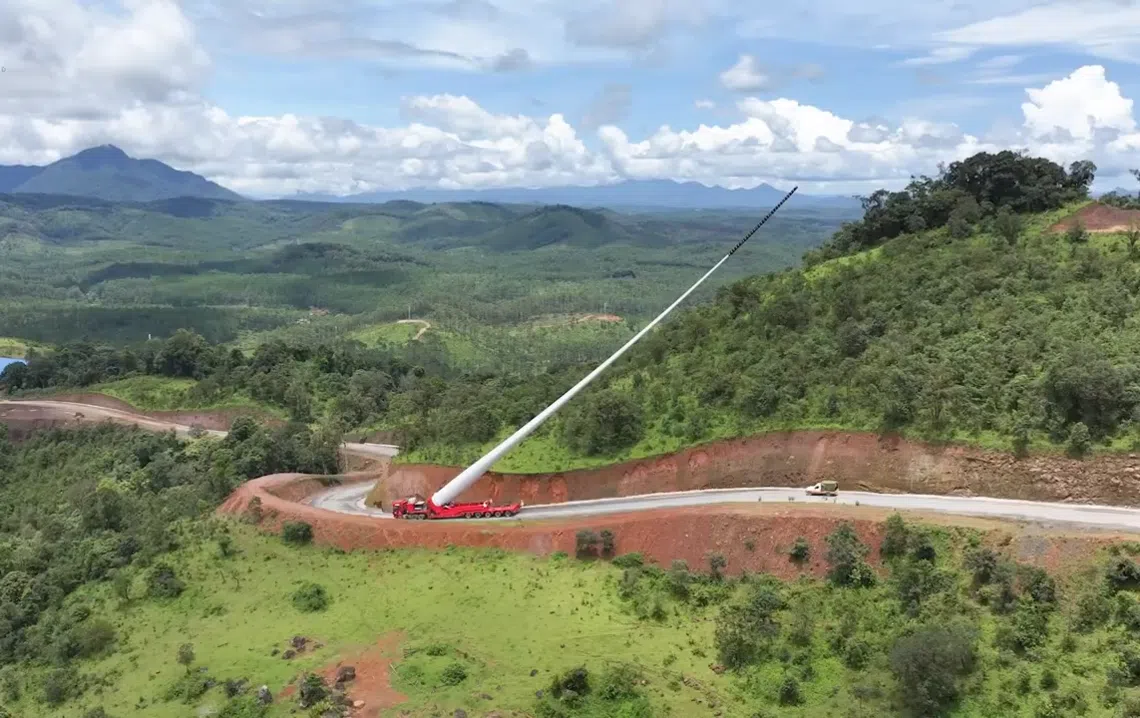
With an installed capacity of 600 megawatts (MW) that can power more than a million households, Monsoon Wind Power Project stands today as Laos’ first wind farm, South-east Asia’s largest and Asia’s first such cross-border venture.
No one is laughing now.

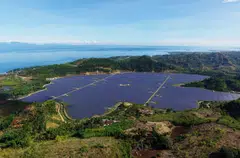
Each spin from the 133 wind turbines generates electricity that snakes 27 km eastward to the Lao-Vietnam border and another 44 km into the heart of Vietnam, before reaching a substation that links it to the country’s power grid.
Each kilowatt-hour of what he calls “green gold” costs Vietnam US$0.0695 – a price tag competitive with that of conventional power while matching the cost of hydropower sent from Laos to Vietnam.
Importantly, wind complements Vietnam’s hydropower-dominated renewable energy mix well. During the dry season, hydropower resources are strained but wind projects thrive; and the converse happens during wet spells, said Nat.
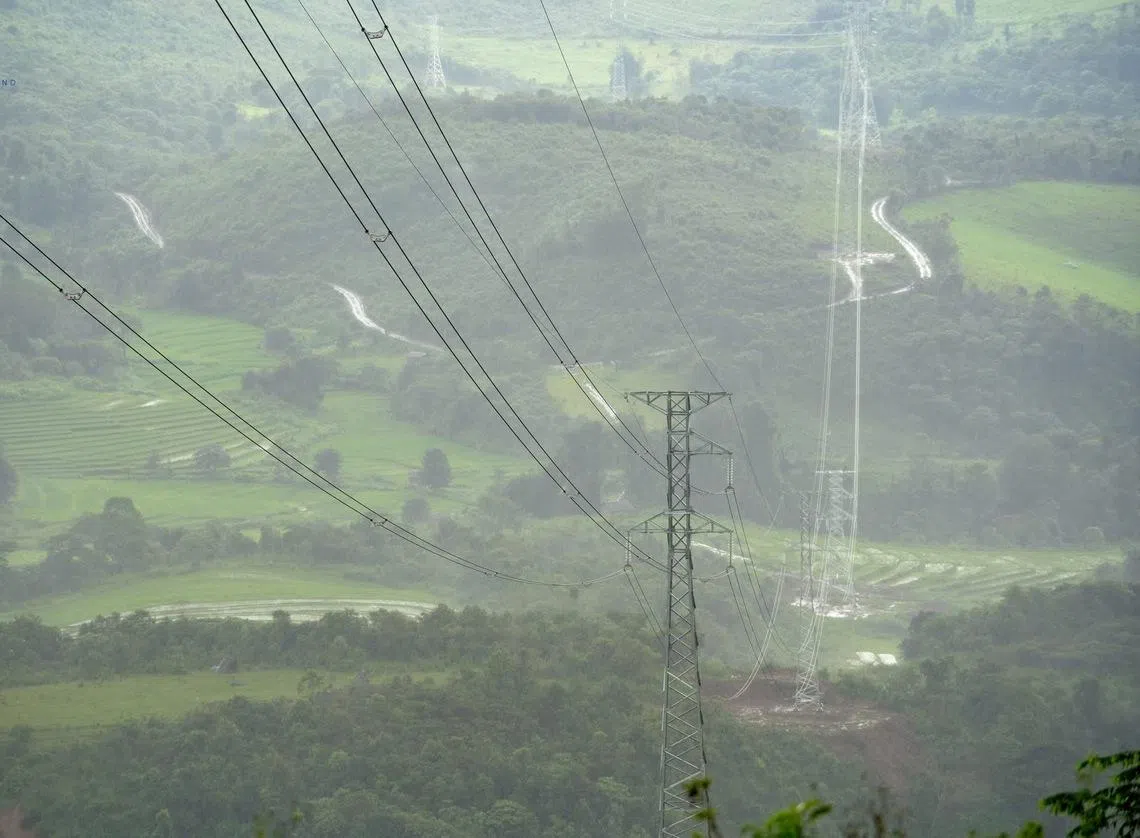
Its sheer scale is a key factor in keeping prices down, said Nat. Even if the farm produced a sixth of the power it currently does, the processes remain the same. In its current state, it can charge less and thereby is more attractive to contractors, suppliers, lenders and other investors.
The project is backed by an international consortium of shareholders including Japan’s Mitsubishi; Acen, the listed unit of Philippine conglomerate Ayala Group; and BCPG, the listed renewables company spun off from Thai energy giant Bangchak – though IES retains a majority in its controlling shareholding.
In a revealing moment that spoke to the 15-year-old company’s humble beginnings as a David among Goliaths, 56-year-old Nat asked why BT chose to speak with IES instead of the marquee names.
“Most go for the big names,” Peck added matter-of-factly.
Yet the architect behind the madness is hardly a lightweight; if anything, the company’s ability to punch above its weight might precisely be what propelled it into the orbit of some of the world’s largest lenders.
The project has secured financing from the world’s top development financiers, led by the Asian Development Bank, alongside the likes of the Asian Infrastructure Investment Bank, Sumitomo Mitsui Banking Corporation, Kasikornbank and Siam Commercial Bank.
State-owned PowerChina led the construction of the project, which operates under a 25-year power purchase agreement with state utility Vietnam Electricity and a 28-year concession agreement with the Lao government.
Equally crucially – for Peck, 52, and Nat at least – IES is making a direct impact on the local community. One of the efforts they are most proud of is undoubtedly their coffee livelihood programme which Nat brought up, unprompted at the start of the interview.
For them, having community woven into the very tapestry of the project is key. With this initiative, IES is able to turn otherwise unused land into additional sources of income for the community.
Families are employed to grow seeds into seedlings, which the company purchases and passes on to other villagers living around the area to plant around the wind turbines and beneath the project’s transmission lines.
More than 1,600 jobs have been created since construction began three years ago, of which over 1,000 were filled by Lao nationals, said Nat.
IES recently announced on their social media platforms their newest venture: Haksa Roastery. The first harvest from this initiative began recently; the beans – internationally award winning, as Peck is quick to add – will be available for experience in the near future.
Where the wind blows
IES’ next milestone is a US$1.4 billion expansion that adds another 1,000 MW of capacity.
The Thailand-headquartered renewable energy developer has secured additional land under another concession agreement to build more wind turbines, and set for itself a goal of reaching a commercial operation date by 2030.
Some 500 MW of the output is expected to be transmitted to Vietnam at ideally the same price and the other half is anyone’s play.
“With the first 600 MW, we have proven not only to Vietnam but other countries that this power is valuable,” said Nat.
“We are confident that it has a home, but we’d like to give the first 500 MW to Vietnam because they understand its value and that there’s demand for it,” he added. “But we really hope that the second 500 MW can be split between many countries who see the value.”
Singapore is one option.
Peck told BT that the group is trying to send power from Laos to Singapore via Vietnam through subsea cables, and that it submitted in 2022 a proposal to the Republic’s Energy Market Authority and has held discussions.
IES’ bigger vision, though, is to grow today’s bilateral trade into tomorrow’s multilateral power market.
The way Nat sees it, when it comes to mega projects such as the Asean Power Grid, it is impossible to impose a legal framework on a dozen or so countries at one time.
“It needs to start bilaterally – make it happen, set an example and then find ways for other countries to join… rather than talk for 30 years,” he said.
Monsoon Wind prides itself on being successful because of its own merit.
“It’s not a framework that all governments pushed to make happen,” remarked the chief executive.
“This is happening because people like us are driving it, working with the government, partners, lenders, technology providers, contractors – pulling teeth (to make it) happen. Not by asking for subsidies. And yet keeping it competitive and meeting all the high international standards for safety, quality, environment, social and financing.”
Concluded Peck: “Monsoon is the foundation of many things, including, hopefully, the Asean Power Grid. We demonstrated that we have done a cross-border, bankable, international and complementary power (project) that makes Vietnam’s grid stronger. Who else has done that?”
Three questions with Impact Electrons Siam founder Peck Khamkanist
Q: Was there a pivotal moment in your career or personal life that changed your approach to leadership?
For me, turning points in life aren’t always deliberate choices – often they’re paths that open unexpectedly. What we can choose is the belief and effort we bring with us as we walk these paths. That mindset has influenced my approach to leadership more than any single moment.
Q: What is one piece of “unconventional wisdom” you swear by that most business schools would tell you is wrong?
Leadership isn’t about having every answer. Rather, it’s about moving forward with clarity of intention, even when the path wasn’t one you planned for. Real progress comes from embracing uncertainty with purpose and passion.
Q: When you feel burnout creeping in, what’s your non-business-related “panic button” activity or routine that reliably resets your focus?
When I’m working with a team aligned in vision and values, I hardly feel burnout at all. Their energy and commitment make the journey both possible and enjoyable.
Decoding Asia newsletter: your guide to navigating Asia in a new global order. Sign up here to get Decoding Asia newsletter. Delivered to your inbox. Free.
Copyright SPH Media. All rights reserved.