



Peru court restores state oversight over China’s Cosco mega-port in win for US
The ruling overturns a January decision that said the Pacific port of Chancay was exempt from some oversight by Peru
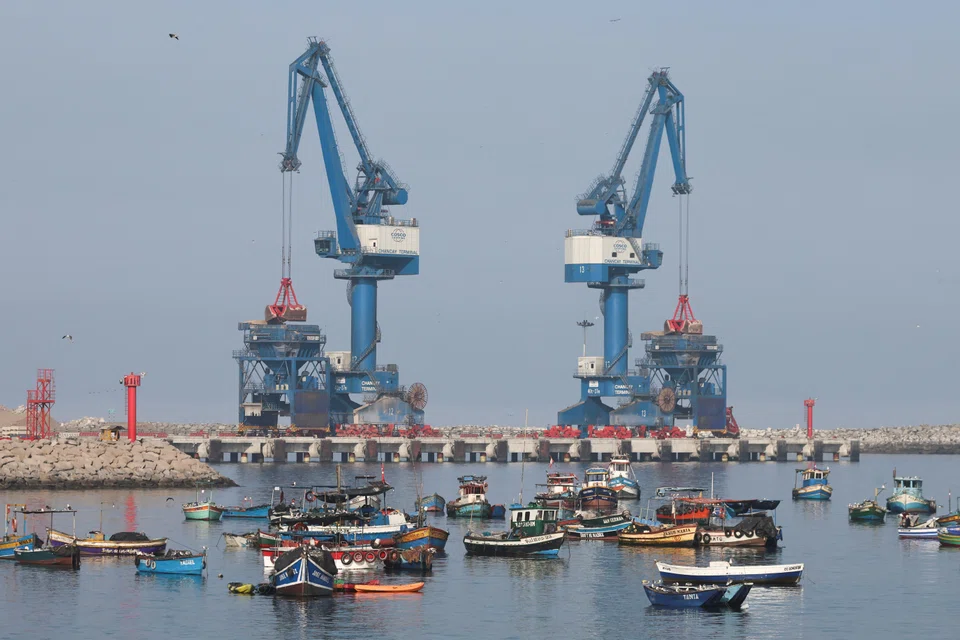
[LIMA, Peru] A Peruvian court ordered the government to oversee a Chinese-owned port near Lima, helping US efforts to curb Beijing’s growing power in the region.
The ruling overturns a January decision that said the Pacific port of Chancay was exempt from some oversight by Peru’s infrastructure regulator Ositran.
Chancay is a privately-owned port, operated by Chinese-owned Cosco Shipping Ports, which was designed to cut shipping times between Latin America and Asia. But as the US renewed its focus on the region, it became a focus of the growing rivalry between Washington and Beijing.
That earlier ruling raised alarms in the Donald Trump administration, which warned that this would undermine Peru’s sovereignty. Ositran also criticised that decision, arguing it would leave port users unprotected.
“Let this be a cautionary tale for the region and the world: cheap Chinese money costs sovereignty,” the US State Department’s Bureau of Western Hemisphere Affairs wrote last February in a post on X.
The US Ambassador to Peru Bernie Navarro celebrated the new ruling on social media. He visited Chancay for the first time last month to donate two scanners aimed at improving the work of Peru’s customs agency.
The US$1.3-billion port was inaugurated by Chinese President Xi Jinping in 2024. The world’s second-largest economy is Peru’s biggest trading partner, followed by the US.
The new ruling accepted the argument that, although Chancay is privately owned, it is a public-use port. As a result, it falls under Ositran’s powers to regulate, supervise, inspect and sanction operators under Peruvian law, the regulator said in a statement.
Cosco will appeal the decision and take the case to the Constitutional Court, the company’s lawyer Ramiro Portocarrero told media outlet RPP. Portocarrero said that Ositran “changed the rules of the game” just as the port was about to begin operations by claiming full authority to regulate all aspects of the facility. This requires paying the regulator 1 per cent of all sales, an extra cost that wasn’t included in Cosco’s original calculations when it decided to invest in Chancay.

“There can’t be a special law that sets out certain rules, under which an investor commits more than US$1.3 billion, only for those rules to change before operations begin,” he said.
Earlier this week, both Navarro and Secretary of State Marco Rubio congratulated conservative Keiko Fujimori for winning the presidential election, saying the Trump administration looks forward to deepening cooperation on regional security and trade. BLOOMBERG
Decoding Asia newsletter: your guide to navigating Asia in a new global order. Sign up here to get Decoding Asia newsletter. Delivered to your inbox. Free.
Share with us your feedback on BT's products and services
TRENDING NOW
MSCI proposes standalone status for Indonesia; Jakarta stocks plunge 8%

Palm oil stocks slide after Singapore begins looking into which firms responsible for haze
High Court rules against Julius Baer’s Singapore trust arm in US$50 million family trust dispute
Why is the haze so bad in South-east Asia this year?

