


Property crisis pummels Chinese developers’ bottom lines
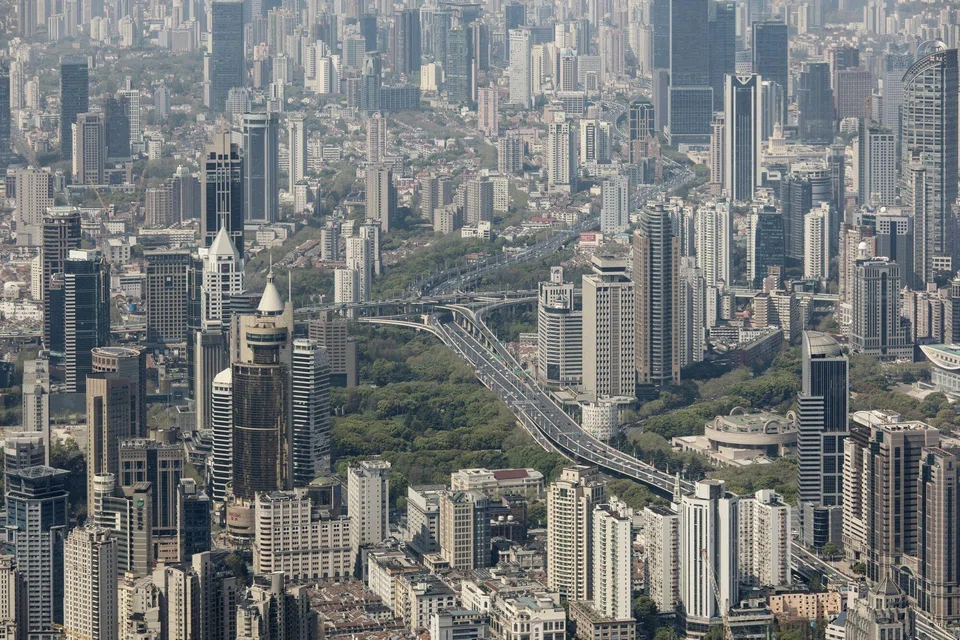
CHINESE developers reported barrels of red ink for 2022, amid an unprecedented property slump and a crisis of confidence that hurt firms’ home sales and squeezed their financing.
As at Apr 6, among the 50 publicly-traded Chinese real estate companies that have released their 2022 earnings, 24 firms saw their net income decline, while 16 recorded losses. Among those, six saw their deficits exceed 10 billion yuan (S$1.93 billion), according to data from Wind Information.
The worst performer was Sunac China Holdings, the country’s 11th largest developer by sales. The company was 27.7 billion yuan in the red in 2022, its second straight year of losses.
Only a handful of stronger developers such as China Vanke and Longfor Group Holdings managed to post a slight increase in their 2022 profits – by 0.4 per cent and 2.1 per cent, respectively.
Overall, total value of new home sales in 2022 by China’s 100 biggest developers fell 41.6 per cent year on year, according to a Dec 31 report by consultancy China Real Estate Information Corp (CRIC).
“2022 is the first time the company has suffered a net loss since its establishment 30 years ago,” Hu Baosen, chairman of the board at Central China Real Estate said at an April 3 investor meeting.
“While this isn’t an exception in the industry, the amount of losses still exceeded my expectations,” Hu added. The Hong Kong-listed firm recorded net losses of 7.6 billion yuan in 2022, down from a profit of 605 million a year earlier.
The grim figures, which had been flagged by a number of developers in advance, shed light on the severe challenges faced by the property sector, which is now expected to undergo a consolidation as the housing meltdown engulfs weaker players severely affected by slumping home sales and debt defaults.
Beijing embarked on a campaign in 2020 to rein in speculation and excessive borrowing in the industry, stripping many developers of their main funding sources and resulting in a sector-wide liquidity crisis.

Since late last year, authorities have introduced a raft of policy measures including bank credit, bond guarantees and equity financing to revive the sector. But most developers have continued to struggle.
Combined with slowing demand, especially in China’s smaller cities, many developers are now compelled to explore new growth areas.
Apart from plunging sales, a number of developers attributed the profit plunge to asset impairments. China Merchants Shekou Industrial Zone Holdings, which saw its net profit drop nearly 60 per cent from a year earlier, said its impairment losses widened by two billion yuan to around 6.4 billion yuan.
Many developers also saw a decline in their profit margins as they acquired land at higher prices several years ago when the market was red hot. By the time the projects were developed and delivered around 2021, rules to cap new home prices to help cool the market were put in place, people in charge of investments at several listed developers told Caixin.
Some real estate companies have also been offering discounts on existing projects since late 2021 amid the property downturn, which further eroded their margins, said an investment executive at a state-owned developer.
Finding new growth points
Many developers have been shifting away from investing in smaller third- and fourth-tier cities and focusing on expanding in bigger cities, where home prices have largely held up better. Analysts at China Index Academy said in early-February that first- and second-tier cities could be first to welcome a recovery in their property market.
Average prices of new homes in first-tier cities in the first quarter of 2023 rose by 0.1 per cent from the previous quarter, according to the company’s data on housing prices in 100 cities released on Apr 1. Meanwhile, most third- and fourth-tier cities remained in a slump, with prices falling 0.13 per cent quarter on quarter.
Country Garden Holdings, despite managing to retain the top spot as China’s largest developer by sales value in 2022, recorded its first annual loss since its Hong Kong listing in 2007.
Cheng Guangyu, executive vice president of the Foshan-based company, said at its earnings conference that the firm would aim to increase its land bank in first- and second-tier cities to 50 per cent from around the current 40 per cent, citing volatility in smaller cities’ housing market. The company also said that it would ramp up contract construction to boost growth.
In the first two months of 2023, almost all land acquisitions made by the 16 leading real estate companies tracked by Hua Chuang Securities were in first- and second-tier cities, according to its Mar 15 report.
At the same time, officials are planning to broaden the scope of real estate investment trusts (Reits) to help bolster the property sector.
The government will accelerate the development of affordable rental housing projects in the Reit market and will consider expanding a pilot Reit programme to include market-oriented long-term rental and commercial real estate sectors, said Li Chao, deputy director of the China Securities Regulatory Commission in early December.
Uneven recovery
Uncertainties surrounding the revival of the real estate sector are weighing on the world’s second-largest economy this year. Recovery is expected to be uneven across the sector, with analysts predicting that stronger developers are more likely to benefit from regulators’ support, compared with those that have defaulted.
“Despite more local housing easing measures in recent months, we believe the property markets in lower-tier cities still face strong headwinds from weaker growth fundamentals than top-tier cities, including net population outflows and potential oversupply problems,” analysts at Goldman Sachs said in a Mar 16 note.
The overall financing environment for developers could see substantial improvement this year, with state-owned enterprises and high-quality private companies to benefit the most from the support measures, CRIC’s analysts said in their Dec 2022 report. However, many real estate companies are facing significant pressure on debt repayment, especially in the first three quarters of this year, they noted.
A total of 958 billion yuan of onshore and offshore bonds will come due by the end of this year, an increase of 70 billion yuan from last year, said Liu Shui, a senior researcher at the China Index Academy, in a January report. In Q1 alone, around 263 billion yuan of bonds issued by property companies will mature.
For those that are at risk of default, some have made progress in their debt-restructuring plans. China Evergrande Group and Sunac, two of the biggest offshore defaulters last year, successfully reached agreements recently with creditors to restructure existing offshore debt following lengthy negotiations.
Yet, completing a debt restructure is only the first step, one person at a distressed developer told Caixin. The opportunities for such developers to gain successful refinancing will be slim, and the key to turning the companies’ fortunes around will still depend on sales. CAIXIN GLOBAL
Decoding Asia newsletter: your guide to navigating Asia in a new global order. Sign up here to get Decoding Asia newsletter. Delivered to your inbox. Free.
Share with us your feedback on BT's products and services
TRENDING NOW

First Resources blames El Nino, outside fires for Kalimantan hotspots amid haze scrutiny

High Court rules against Julius Baer’s Singapore trust arm in US$50 million family trust dispute
Singapore key exports jump by higher-than-expected 68.4% in September, led by non-electronics

MSCI proposes downgrading Indonesia to standalone market status

