


The questions hanging over Ant Group
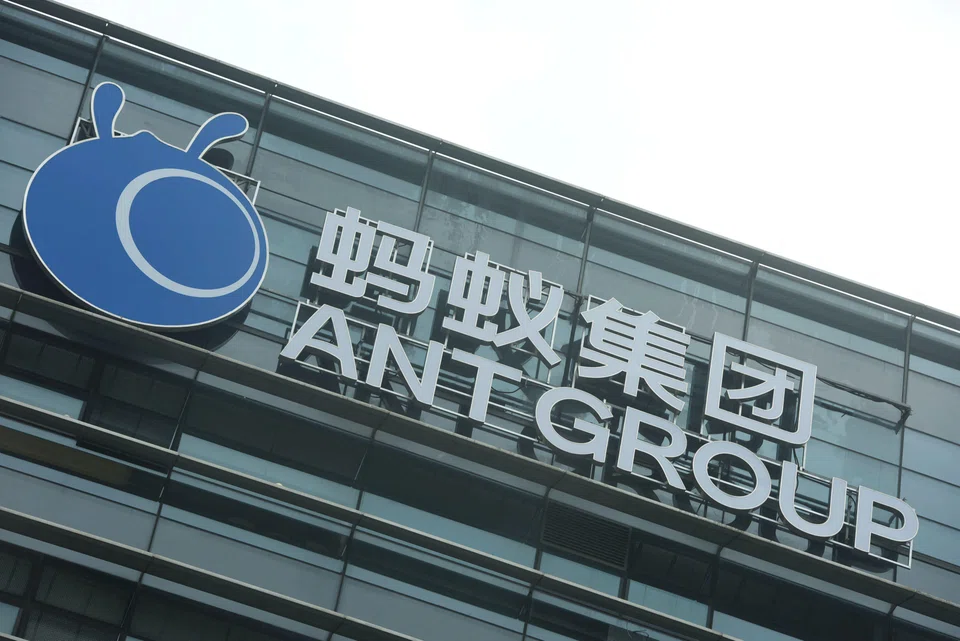
THE clouds hanging over Ant Group are finally parting.
Following the startling suspension of its would-be record-setting US$34.5 billion initial public offering (IPO) in November 2020, the fintech company was plunged into an extensive restructuring that has been ongoing for the past two years as regulators clamped down on misconduct in the industry.
Ant Group’s business, operations and management all went through tremendous changes, including decoupling the company’s highly lucrative consumer lending business from its payments service Alipay, and improving its corporate governance.
It has also gone to great lengths to sever ties with Alibaba Group Holding, the e-commerce giant that counts Jack Ma among its founders. Alibaba has removed all Ant Group executives from its partnership of owners and has terminated its 50-year data-sharing agreement with the fintech company. In the latest move in the decoupling, Ma has given up his controlling rights of Ant Group.
All of that worked for regulators. According to a Jan 7 report by the state-run Xinhua News Agency, central bank Communist Party chief Guo Shuqing said that the rectification of the financial business of 14 Internet platform companies – including Ant Group – was “basically complete”, signifying an end to the government’s crackdown on the fintech sector.
While regulators have largely moved on, observers are still curious about some of Ant Group’s outstanding issues, particularly whether it will revive its IPO plans and how it will go about getting licensed as a financial holding company (FHC) – one of the last items on its restructuring to-do list.

Holding out
After its IPO was suspended, regulators had ordered Ant Group to apply for an FHC licence.
Their initial plan was for Ant Group to transform itself into an FHC that contained all its institutions engaging in financial activities. However, in an attempt to seek a higher valuation, the company later altered the plan. It proposed dividing its key operations into four main areas – finance, Internet, technology, and overseas – with only the finance unit applying for an FHC licence.
Ant Group prefers this proposal because rules issued in 2020 require that in principle, an FHC’s investments in institutions related to financial business cannot exceed 15 per cent of its net assets. This means that if Ant Group as a whole is transformed into an FHC, it could devote only 15 per cent of its net assets to developing its fintech business, a severe limitation that would hurt the company’s valuation, a source close to Ant Group’s management told Caixin.



Separating its finance business, on the other hand, would make it possible for its other businesses to be listed, which would enable Ant Group to rebuild its valuation, another person close to the matter previously told Caixin.
Despite the benefits for Ant Group, regulators have not been keen about the proposal. Because they already see the company as a finance spin-off of Alibaba, they are unlikely to approve an FHC that is essentially a financial spin-off of Ant Group, people familiar with the matter told Caixin. Alibaba owns 33 per cent of Ant Group.
Ant Group has been negotiating the issue with the People’s Bank of China (PBOC) for more than a year, and the central bank hasn’t budged on its preference for Ant Group as a whole to become an FHC, they said.
“The company has recognised that there is basically no room to manoeuvre in terms of its FHC strategy,” one person close to Ant Group said.
The central bank also has yet to approve a personal credit reporting licence for Qiantang Credit. Ant Group would have a 35 per cent stake in the company, according to an initial plan filed to the central bank. Establishing a licensed credit scoring unit is also part of the overhaul ordered by regulators amid growing concerns about misuse of troves of consumer data.
The People’s Bank of China (PBOC) accepted its application in November 2021 but failed to make a decision within the usual 60-day time frame. In February 2022, Qiantang was told that its application was suspended, sources familiar with the matter said.
Under regulatory pressure, the company will likely have to adjust its ownership structure, which could result in raising state-owned enterprises’ combined stake to more than 50 per cent and limiting Ant Group’s holding to around 33 per cent, a person close to one of the fintech giant’s business partners said.
Another source close to Ant Group predicted that the PBOC would not release a decision on Qiantang’s credit reporting licence until June at the earliest.
IPO on ice
While Ma’s relinquishing of control could clear the way for Ant Group to revive its IPO, it won’t happen within this year due to listing regulations, market observers said.
The Shanghai and Shenzhen stock exchanges’ main boards require companies that have undergone a change of their actual controller to wait three years before going public. The Hong Kong Stock Exchange requires a one-year wait.
That period is two years for Shanghai’s Star Market, but sources close to Ant Group said the company will probably not be allowed to list on the Nasdaq-style board because revised rules issued in April 2021 bar financial companies from listing there. Finance makes up a large share of Ant Group’s business.
Even when the time comes for Ant Group’s IPO, the company won’t be chasing the valuation it sought when it tried to go public in 2020, another person close to the company told Caixin.
As a result of the government-ordered rectification, falling revenues from its consumer loan products Huabei and Jiebei – Ant Group’s major earners – have caused the fintech giant’s valuation to shrink.
Fidelity Investments had projected a valuation of US$235 billion for Ant Group prior to its 2020 IPO suspension, but slashed its estimate to about US$70 billion as at May 2022, going by Bloomberg calculations based on filings.
In December 2021, China Cinda Asset Management, a state-owned bad-debt manager, valued Ant Group at somewhere between US$58 billion and US$72 billion, people close to Ant Group previously told Caixin.
The reduced valuation may have been based on several factors – Huabei and Jiebei are struggling to grow their already-large customer base amid fierce competition, and Ant Group could be forced from its dominant position in various customer groups under regulatory pressure, a person close to the fintech giant’s lending business previously told Caixin.
The foremost issue that chief executive officer Eric Jing faces in the post-Jack Ma era is to find new sources of growth for Ant Group, one investor said. CAIXIN GLOBAL
Decoding Asia newsletter: your guide to navigating Asia in a new global order. Sign up here to get Decoding Asia newsletter. Delivered to your inbox. Free.
Share with us your feedback on BT's products and services
TRENDING NOW

JPMorgan, BlackRock among those making bid to manage CPF savings
Asean’s biggest trade problem is no longer tariffs. It is friction

As Indonesia picks new vice-president to succeed Gibran, investors see risks and opportunities

US chips curb could slow down Asean data centre growth; Malaysia, Thailand at higher risk: analysts

