Raging price war poses survival threat for China’s automakers
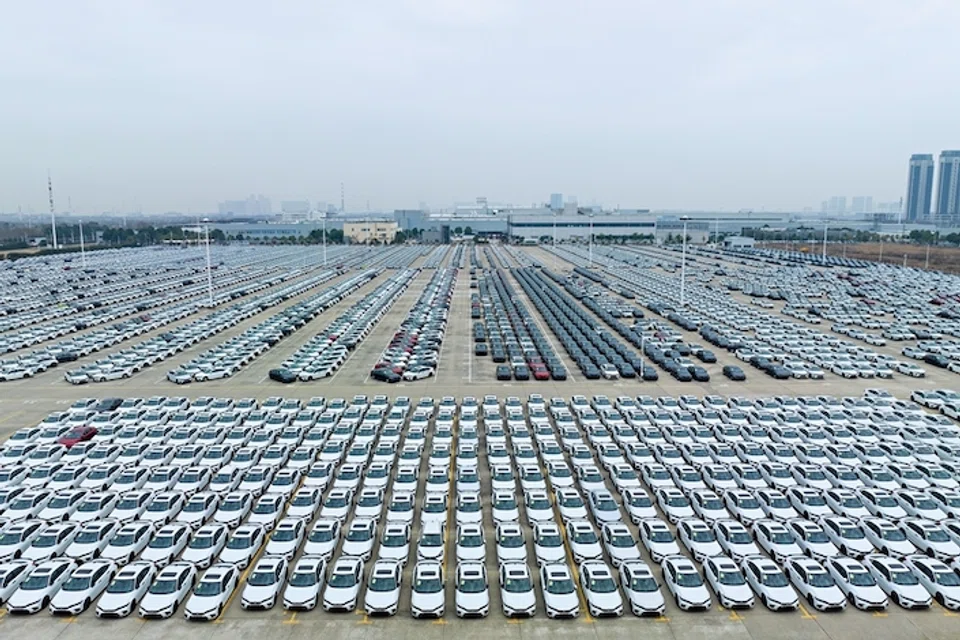
THE raging price war poses survival challenges to automakers in China as it accelerates a major industry shift toward electrification and automated driving, experts said.
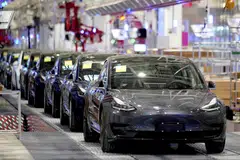
Tesla ignited the war late last year in the electric vehicle (EV) sphere, spurring rival BYD to follow suit. The wave of price cutting has escalated since March as it spread across the industry and dragged in makers of conventional fossil fuel cars.
Dozens of automakers, from domestic EV upstarts to joint venture brands, have slashed prices over the past few months in ways that have rarely been seen before, offering deep discounts that amount to as much as 40 per cent off list prices to secure market share amid slowing sales.
Nobody wants a price war as it is a double-edged sword that hurts both rivals and one’s own business, said a sales manager at a leading joint venture automaker who declined to be named.
But it happens for a reason. Whenever a company obtains more-advanced technology and production efficiency, it will inevitably demonstrate cost competitiveness, which in turn triggers price wars to clear the market.
In the auto industry’s history, leaders like Ford, Volkswagen and Toyota have all taken similar measures, said Chen Binbo, the chairman of the Wuhan Automobile Industry Association.
This year’s auto price war is unprecedented also because it marks the first major incursion by EVs into market territory traditionally dominated by conventional cars in the world’s largest auto market, Chen said.
Industry analysts have widely seen the cutthroat competition as a prelude to an industry shake-out that will force some automakers out of business while accelerating the pace of new-energy vehicles replacing conventional cars.
Eighty percent of gasoline-powered auto brands will be squeezed out of the market or restructured over the next three to five years, Chang’an Auto chairman Zhu Huarong said last year.
Future contest
It is a pressing issue for auto manufacturers to rethink their business model, said Zhu Yulong, an independent auto industry analyst. Their understanding of products will affect their judgment on the future competitive landscape, he said.
Some companies have provided answers. On March 1, Tesla chief Elon Musk released his Master Plan Part 3, the latest of a series of strategic plans he laid out for business growth.
He said he thinks EVs can completely replace gasoline vehicles, and Tesla will expand its scale with a goal of producing and selling 20 million vehicles annually by 2030. If global automobile sales remain at their current level of about 80 million vehicles a year, Tesla could capture a quarter of the global market.
Musk has planned for only about 10 models to achieve his grand vision, indicating that he places more emphasis on the scale of individual vehicle sales. It also reflects his belief that auto hardware will be standardized to some extent and cost-saving capacity will be key in future competition.
In the era of fossil fuel vehicles, product differentiation was mainly reflected in hardware. However, in the era of smart EVs, the intelligent experience can influence consumers’ perceptions, and hardware standardization is necessary to reduce costs and compete with fossil fuel vehicles, said Li Peng, founder of smart vehicle startup Shanghai U Power Technology.
Such a shift will unleash a sweeping overhaul in China’s auto industry, which consists of more than 80 passenger car manufacturers and more than 100 brands, including joint ventures involving nearly 10 multinationals, according to CPCA data.
China’s auto industry will undergo a wave of reshuffling similar to that of the aviation manufacturing industry, which left only a few players in the market, said Richard Yu, the CEO of Huawei’s Consumer Business Group. He is also in charge of the company’s smart car business. The main players in China’s auto market will eventually number no more than five, Yu said.
The keys to surviving the fierce competition are cost controls and advances in technology, said Gan Jiayue, the CEO of Geely Auto Group, a subsidiary of Zhejiang Geely Holding Group, during an earnings call on Mar 21. Geely is learning from Tesla how to adopt new technologies such as integrated die casting to improve production efficiency, Gan said.
Standardized production and self-reliance on key parts such as semiconductors, sensors and batteries have greatly improved Tesla’s profit margins.
According to its financial report, Tesla’s 2022 revenue was $81.46 billion with operating profit of nearly US$13.7 billion. Despite deep price cuts in the last quarter, the company’s gross profit margin was still as high as 25.9 per cent.
Another focal point for future competition will be auto intelligence. Autonomous driving is set to change the landscape of the auto industry, and Chinese companies are trying to catch up with industry leaders, said Li Auto CEO Li Xiang. By 2024, the performance of autonomous driving systems among China’s leading automakers will match that of Tesla at the end of 2022 and early 2023, Li said.
The intelligence transition will change automakers’ profit model. The hardware cost of a car is cumulative, meaning the more vehicles sold, the higher the total cost.
But software is different as it requires only investment in research and development, said an autonomous driving algorithms expert. If a company establishes an advantage in software, the marginal cost of large-scale production expansion is almost zero, offering greater room for profitability, the person said.
Tesla’s success proved that smart EVs can be a money-making business, said Sheng Yue Gui, CEO of Geely Automobile Holdings, the Hong Kong-traded unit of Zhejiang Geely. “In the long run, the price war may lead to some good changes,” Gui said on the March earnings call.
There isn’t a consensus on how long the price war may last, but industry experts said it will not be the final round of price competition.
In the foreseeable future, EVs will continue to launch one assault after another on traditional vehicles, with gasoline-car makers struggling to catch up with electrification and the intelligence transition. These old and new forces will continue to clash in the market, analysts said. CAIXIN GLOBAL
Decoding Asia newsletter: your guide to navigating Asia in a new global order. Sign up here to get Decoding Asia newsletter. Delivered to your inbox. Free.
Share with us your feedback on BT's products and services