



Ralph Lauren, Walmart suppliers among winners in India-US trade deal
The deal removes the key overhang on the Indian economy, markets and currency
[NEW DELHI] Footwear manufacturers and apparel exporters emerged as major winners in the joint framework for an interim trade deal between the US and India, a development that will alleviate uncertainty for financial markets.
Under the new outline unveiled this week, US President Donald Trump agreed to lower tariffs on Indian goods to an effective rate of 18 per cent from 50 per cent. In return, India pledged to buy US$500 billion of American products and eliminate trade barriers on some US goods, including agriculture, manufactured items, chemicals and medical devices. More details of the agreement were released on Friday after an executive order signed by Trump.
“The much awaited India-US tariff deal removes the key overhang on the Indian economy, markets and currency,” said Nitin Jain, chief executive officer at Kotak Mahindra Asset Management Singapore. “This puts India in the pole position in the race to China +1 opportunity in global supply chains,” he said, referring to the strategy where companies diversify their manufacturing operations outside China.
The deal brought relief to Indian assets, with both equities and currency markets surging this week. The rupee enjoyed its best week in three years against the US dollar, while the NSE Nifty 50 Index jumped 3.5 per cent.
Here is how Indian industries will be impacted by the trade deal:
Labour-intensive sectors
Indian companies are some of biggest suppliers of apparel, footwear and jewellery products to the US. High tariffs on exports have skewed their supply agreements, forcing firms to opt to absorb the elevated costs and fulfill their commitments. Those will now be tariffed at 18 per cent.
Pearl Global Industries, one of India’s biggest garment exporters, expects its operations to gain significant momentum following the deal.
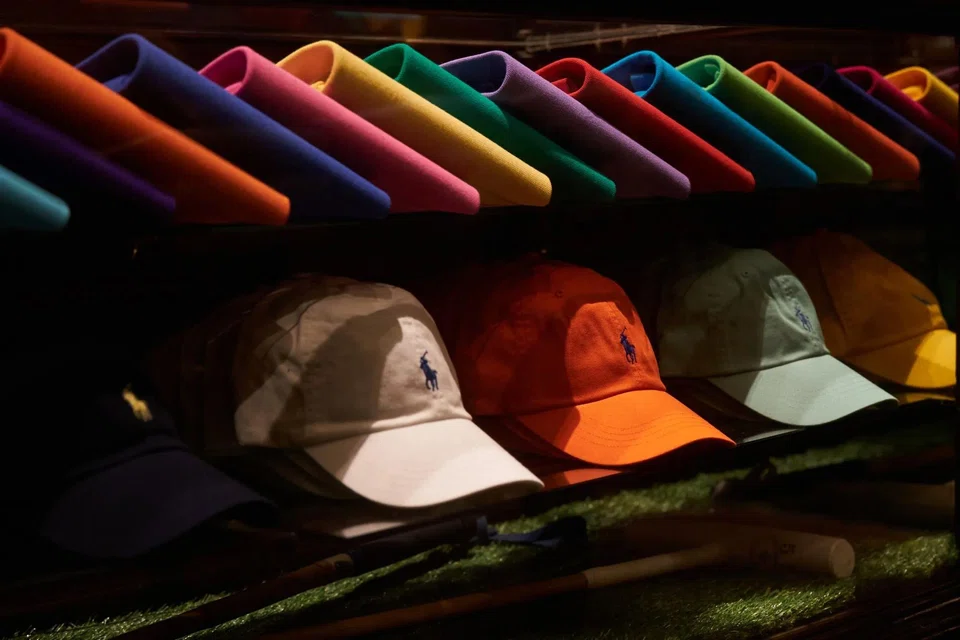
“With the penalty now eliminated, the discount pressure disappears – directly boosting profitability from February onwards,” managing director Pallab Banerjee said. Pearl Global counts GAP and Ralph Lauren among its clients.
Suppliers to Walmart such as Welspun Living and Kitex Garments might see improvement in order inflows. Gems and jewellery makers like Rajesh Exports and Titan will see immediate benefit.
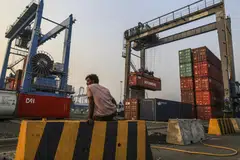

Shoe-making, another sector that employs millions of low-cost labourers, is anticipating relief now that both punitive and so-called reciprocal tariffs will be removed.
“For leather footwear, half of the season orders are already gone because US customers typically place winter and autumn orders in December,” said Rafeeque Ahmed, chairman of Farida Group. “We hope to be able to get at least 40 per cent of the orders from the US now,” he said.
Aviation and auto
The aerospace and aviation sector enjoyed relative spotlight in the framework, with the US agreeing to remove duties on certain aircraft and aircraft parts exported by India. US companies sourced over US$2 billion in aerospace components from India, according to Aequs’ chairman Aravind Melligeri.
“At a time when the Indian industry was mentally preparing for at least 18 per cent tariffs, this zero rating on certain parts is more than welcome,” Melligeri said. “The announcement is a positive development, potentially leading to improved cash flows and enhanced cost competitiveness for the supply chain.”
Auto parts makers like Sona BLW Precision Forgings and Samvardhana Motherson International will gain after the US said it will give India preferential tariff rate quota on such products. India exported auto components worth US$6.2 billion to the US in the year ended March 2025, according to the Automotive Component Manufacturers Association.
India’s Trade Minister Piyush Goyal said that elementary auto parts exported by Indian manufacturers will face zero tariffs in the US, while some components will still be subjected to duties.
Further, India will cut levy on import of Harley-Davidson’s motorcycles – a key Trump demand – with more than 800 cubic centimetres of engine capacity but less than 1,600-cc to zero, a government official said. That will rev up competition for India’s high-end bike producer Eicher Motors.
Meanwhile, carmakers Mahindra & Mahindra and Tata Motors Passenger Vehicles will be relieved after an official said that electric vehicles will be kept out of the trade negotiations, while duty reduction on US cars will be limited to those with engine capacity of more than 3,000-cc.
Refiners
The joint framework did not allude to India’s purchases of Russian oil even though the executive order that Trump signed on Friday explicitly stated that punitive duties of 25 per cent will return if there are purchases from Moscow. Indian refiners – Indian Oil, Bharat Petroleum, and Reliance Industries – can be among the key losers. They have benefited by processing cheap Russian barrels, which boosted their profits.
Though India has not said it will stop buying oil from Russia, the purchasers will find themselves in the spotlight. Russian oil is still not sanctioned and India can legally buy it. Industry insiders say imports peaked in June 2025 at over two million barrels per day and are likely to remain below one million barrels, if India decides to continue lifting discounted crude.
Reliance, which has been the biggest importer of Russian oil, is also a major exporter of petroleum products to the US. It will be under greater scrutiny on the oil it processes for making and shipping fuels such as petrol and jet fuel to the US.
As per Kpler data, exports to US comprised 16 per cent of Reliance’s overseas shipments of petroleum products in 2025.Reliance has said that it has stopped processing Russian oil at its export-oriented refinery on India’s west coast.
Vintners and spirit makers
The deal will compound challenges for the alcohol beverage sector after India agreed to eliminate barriers on wine and spirits. On the back of benefits for European vintners and alcohol producers, it means even more competition for companies including Diageo’s Indian unit.
Sula Vineyards, India’s largest winemaker, will also see an intensifying battle for market share with European and the US peers.
While duty concessions have been offered to US wine makers, they will be subjected to a minimum import price and relaxation on levy would be in a phased manner, an official said. BLOOMBERG
Decoding Asia newsletter: your guide to navigating Asia in a new global order. Sign up here to get Decoding Asia newsletter. Delivered to your inbox. Free.
Share with us your feedback on BT's products and services






