



Regional integration trends in Asia Pacific 'positive' despite initial slowdown during Covid-19: ADB
 Add BT as a preferred source
DeeperDive is a beta AI feature. Refer to full articles for the facts.
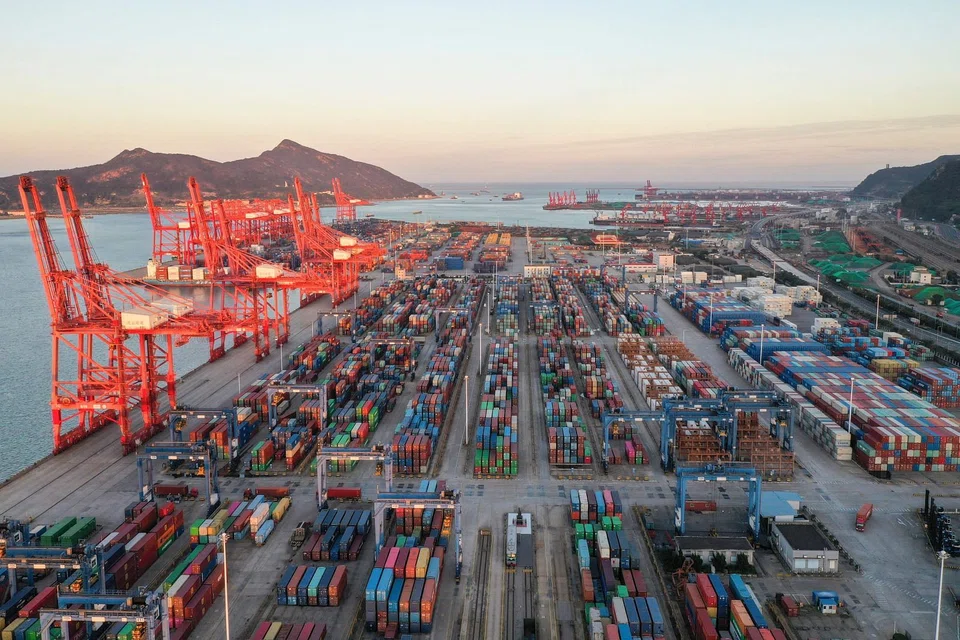
THE Asia-Pacific region's regional integration trends remained positive despite the Covid-19 pandemic, even though there was an initial slowdown during the first wave, a report by the Asian Development Bank (ADB) has found.
The region's intra-regional trade share rose to 58.5 per cent in 2020 from 57.5 per cent in the previous year, driven mainly by the early recovery of China that led to a surge in its exports, according to ADB's Asian Economic Integration Report 2022.
Excluding China however, intra-regional trade share dipped marginally to 38.2 per cent in 2020, from the previous year's 38.4 per cent.
However, Asia's merchandise trade recovered much faster than expected in 2021 after bottoming out in mid-2020 during the first wave of the pandemic.
Trade growth accelerated by 19.7 per cent by June 2021 before settling down to 9.7 per cent in September, underpinned by the release of pent-up demand supported by stimulus packages and economic recovery around the world, ADB said.
The region has been relatively resilient in terms of foreign direct investment (FDI), which slipped 1.3 percentage points to 53.6 per cent in 2020, compared with the global average decline of 34.7 percentage points.
Navigate Asia in
a new global order
Get the insights delivered to your inbox.
East Asia and South-east Asia were the largest recipients in the region, attracting roughly 80 per cent of Asia's inward FDI, ADB noted.
Noting that FDI is "increasingly important" for fostering digital services trade in the region, ADB said digitalisation is fundamentally transforming how firms operate and invest overseas with less need for physical presence and faster speed of business transactions.
It noted that 24 per cent of FDI into the region from 2003 to 2020 went into digital services on average, with East Asia and South Asia the main destinations.
In the area of financial integration, ADB said an accommodative macroeconomic policy environment and broadening vaccine rollouts buttressed the economic recovery and financial conditions in 2021, but considerable uncertainties remain.
It noted that financial markets were "much calmer" in the first half of 2021 than throughout 2020.
While supportive fiscal and monetary policy measures and vaccination rollout lifted growth prospects, risks associated with high inflation loomed as it could prompt advanced economies to normalise monetary policy earlier than expected, ADB said, adding that the Omicron variant also poses a "significant risk" to financial stability.
Meanwhile, Asian investors in 2020 continued to invest more outside the region than inside, with two-thirds of their asset and liability holdings placed in external economies.
Foreign capital inflows in the region continued to increase in 2021. Non-resident capital inflows increased to US$1.6 trillion in 2020 from US$1.2 trillion the previous year, mainly due to increases in other accounts payable, currency and deposits as well as debt inflows including portfolio debt and loans.
Surprisingly, the pandemic did not alter the upward trajectory of the global stock of migrants.
This increased to 280.6 million in 2020, from 248 million in 2015, with migrants from the Asia-Pacific region reaching 93 million, according to ADB.
However, the economic repercussions of the pandemic curtailed the flow of migrant workers out of the region, especially from Central Asia and South Asia, it said.
Remittance inflows to the region fell by 2 per cent in 2020 and are estimated to grow by 2.5 per cent in 2021, according to ADB.
The pandemic has however hit tourism hard, and establishing a recovery momentum remains challenging amid recurrent outbreaks, it said.
International tourism arrivals plunged by 72.6 per cent year on year globally in 2020, snowballing to a loss of US$1.3 trillion in tourism revenues and over US$2 trillion in global gross domestic product.
In Asia and the Pacific, international arrivals plummeted by 82.8 per cent while tourism revenues tumbled 66.5 per cent relative to the pre-pandemic average in 2015 through 2019, ADB said.
Arrivals continued to be "deeply stunted" in 2021 as economies reopen their borders at a varying pace, ADB added.
"Government support in particular, restoring travel confidence and use of technology to facilitate travel and follow health protocols could support the recovery of tourism," it said.
Pre-pandemic, the region saw a 7 per cent increase in the Asia-Pacific Regional Cooperation and Integration Index from 2006 to 2019, ADB noted. In particular, the region was the best performing, among all regions, in the area of new technology and digital connectivity.
The region saw its digitally deliverable services trade grow to US$1.4 trillion in 2020, more than triple the value in 2005 at US$403.4 billion.
However, the region is still far behind other advanced economies in the share of digital services exports out of total goods and services exports, translating into a lower revealed comparative advantage, ADB said.
This means the region needs to focus on policy reforms with lower trade barriers and deregulation of digital services, it suggested, adding that data-related policies could also have a "significant impact" on the digital services trade.
Decoding Asia newsletter: your guide to navigating Asia in a new global order. Sign up here to get Decoding Asia newsletter. Delivered to your inbox. Free.
Copyright SPH Media. All rights reserved.
TRENDING NOW

Air India asks Tata, Singapore Airlines for funds after US$2.4 billion loss
‘Boring’ is the new black: The stars are aligning for a Singapore stock market revival

From 1MDB to ‘corporate mafia’: Is Malaysia facing a new governance test?
South-east Asian markets account for 8.8% of global capital inflows from 2021 to 2024: report

