



A rejuvenated Alibaba takes off, but with Beijing in tow

Angela Tan
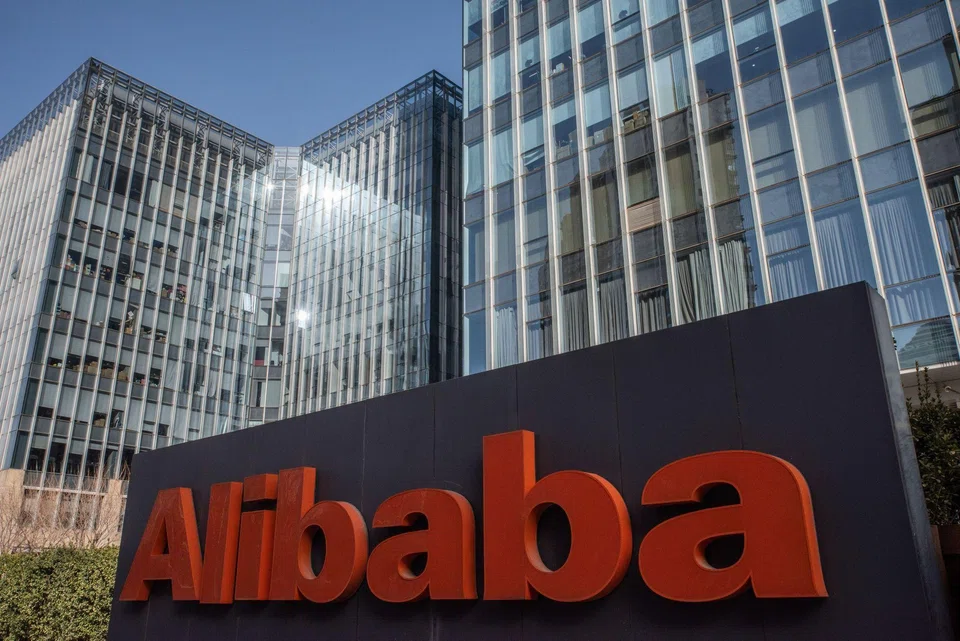
ALIBABA shares are shining again as analysts call a “strong buy” on the Chinese e-commerce giant that has been sidelined since 2020 after its founder Jack Ma fell foul of Chinese President Xi Jinping.
Since the start of the year, the company’s shares have risen more than 30 per cent to around US$120. Compared to last October, the price has doubled.
Alibaba, which is often referred to as the “Amazon of China” and seen as a proxy to China is enjoying a “strong buy” consensus rating based on 16 resounding “buy” calls.
The renewed optimism is underpinned by a consumption recovery story as China finally reopens, a reacceleration in cloud revenue, and a more favourable economic and regulatory environment. Activist investor Ryan Cohen – the man behind the rallies of companies such as GameStop and Bed, Bath and Beyond – now boasts of a minority stake in Alibaba.
Among the Wall Street investment banks which are calling a buy on the stock is Morgan Stanley, which raised Alibaba’s target price by 50 per cent to US$150. For the first time in three years, the American investment bank regards Alibaba as the “top pick” among Chinese technology and Internet stocks.
At 11 times the estimated 2024 earnings, compared to Tencent’s multiple of 22 times, it’s understandable why Alibaba is attractive. Its free cash flow yield of 10 per cent is above peers, and with about US$22 billion remaining in its share repurchase programme (effective through March 2025), there is potential for the stock price to hit US$200 in a bull case scenario, Morgan Stanley said.

Others in the bull camp are Jefferies, with a target price of US$220, UBS (US$135), Mizuho Securities (US$155), as well as Barclays (US$141) and Citi (US$160). Goldman Sachs also added Alibaba to the “convinced buy” list as “the worst is behind”.
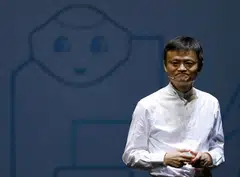
Despite recent rallies, Alibaba stock price is still a far cry from its heyday. Its shares have fallen 60 per cent since the fateful October 2020 summit in Shanghai, where Ma criticised Chinese regulators and the state-dominant banking sector.
The speech is widely believed to be responsible for the government’s dramatic halt in the US$37 billion initial public offer (IPO) of its fintech spin-off, Ant Group, less than 48 hours before it was to begin trading in Shanghai and Hong Kong.


State media said the listing suspension was necessary to “better protect the rights and interests of financial consumers”, forcing the company to restructure as Beijing reined in the rapidly growing and lightly regulated market for online micro-lenders.
Insiders including Masa Son, Ma and Joe Tsai have pared their stakes, and sold more than US$40 billion worth of Alibaba since 2020, as the stock was battered by regulatory pressures on both sides of the Pacific. In the east, it faced a crackdown by Beijing on what it saw was an unbridled boom in the tech sector. In the west, threats from Washington to delist some US-listed Chinese tech stocks.
But during the Central Economic Work Conference (CEWC) involving China’s top leaders last December, Beijing appeared ready to adopt a more conciliatory approach towards its battered tech sector – a major source of innovation, employment and creator of China’s overnight billionaires.
Ma ceded control of Ant, whose Alipay overtook Paypal as the world’s most used digital wallet in 2013 with 1.3 billion users. Days later, China’s central bank concluded its more than two-year long investigations on 14 internet companies, paving the way for Ant to apply to become a fully regulated financial holding company.
With its visionary tamed and Beijing placated, many are looking forward to a rejuvenated Alibaba, even as the government takes “golden shares” which give special management rights in its tech units.
Banny Lam, head of research at Ceb International Investment, told Hong Kong media recently that the government stake could potentially help Alibaba to get greenlights to do businesses in new areas and lower the risks of further clampdown by the regulators.
Led by chairman and chief executive Daniel Zhang, Alibaba has identified three major strategies – consumption, cloud computing, and globalisation – as the immovable pillars guiding the group’s future.
For the fiscal year ended March 31, 2022, revenue grew 19 per cent on year to US$134 billion, driven by growth of the China commerce segment; cloud segment and international commerce.
The China commerce segment, which includes Taobao and Tmall, accounted for 70 per cent of total revenue. China’s e-commerce market is expected to grow to US$3 trillion by 2024.
The group is focused on exploring consumption sector opportunities overseas too. International commerce retail businesses, including the Lazada, AliExpress, Trendyol and Daraz platforms, accounted for seven per cent of total revenue in FY22.
But it is Alibaba’s cloud computing segment – comprising Alibaba Cloud and DingTalk -– that Zhang sees “massive market potential”.
Morningstar said China has at least seven large cloud service providers – Alibaba, Tencent, Baidu, Huawei, China Telecom, China Mobile, and China Unicom. By 2025, the size of China’s cloud computing market is expected to reach 1 trillion yuan, which is three times the size of the current market. In FY22, the segment contributed nine per cent of Alibaba’s total revenue.
The group intends to offer a suite of cloud services. These include proprietary servers, chips, elastic computing, storage, network, security, database and big data to sectors spanning financial services, telecommunications to industrial applications, as it competes with market leaders such as Microsoft and Google.
By March 31, 2022, Alibaba Cloud offers computing services in 27 places globally, with new internet data centres in Indonesia, the Philippines, South Korea, Thailand and Germany.
Another growth area is the group’s distribution and logistics business under Cainiao, key to its overall e-commerce operations. In FY22, 69 per cent of Cainiao’s total revenue came from external customers, and the daily international packages processed by Cainiao exceeded 4.5 million.
Jefferies believes that “Alibaba’s dedication to customer experience with comprehensive product selections, service quality and good matching of products with consumers at competitive pricing should build for the long term. High quality growth is crucial”.
In 2022, the key was stability given the changes in external environment and efficiencies were crucial. In 2023, however, the key will be progress and innovations. Alibaba needs to continue to focus on technology advancements, customer service and rebuilding trust as it seeks growth opportunities within and outside China, said Jefferies.
Decoding Asia newsletter: your guide to navigating Asia in a new global order. Sign up here to get Decoding Asia newsletter. Delivered to your inbox. Free.
Copyright SPH Media. All rights reserved.
TRENDING NOW

JPMorgan, BlackRock among those making bid to manage CPF savings

GIC in talks to lease bulk of 88,000 sq ft CapitaSky space to be vacated by Allianz

BN-PN’s Melaka election landslide puts spotlight on jobs, investments and political divides

Why Singapore, Johor and Riau Islands should build a cross-border ecosystem for AI

