Relief for shippers as spot rates decline – though not to pre-Covid rates

Mindy Tan
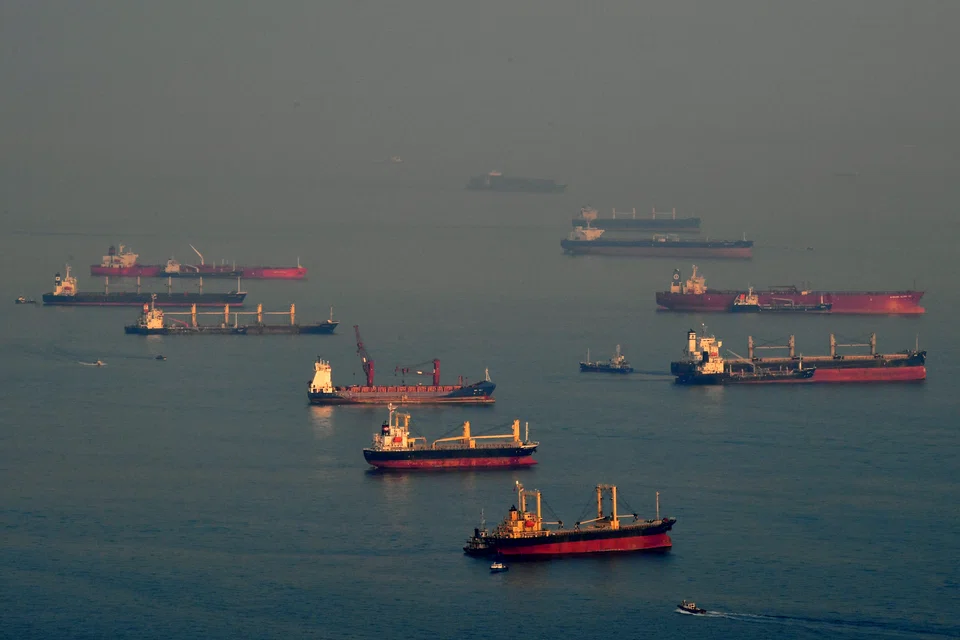
THINGS are turning in favour of shippers as spot rates for freight are expected to continue declining – though neither dramatically nor to pre-Covid levels – in the face of significant global headwinds, with consumer demand falling even as freight capacity grows.
“Shippers are increasingly tempted to go into the spot market, as short-term rates on several main trades fall below the level of long-term contract rates.,” said Peter Sand, chief analyst at Xeneta, the ocean and air freight rate benchmarking and market analytics platform.
“Xeneta data shows this has been the case for Far East to US West Coast since June; we expect it to happen for the Far East to US East Coast trade lane any day now,” he added.
“As for Far East into North Europe main trade lanes, the gap between the two is now down to less than US$1,000 per 40-foot equivalent (FEU), from US$9,000 one year ago.”
Paul Coutts, chief operating officer at EV Cargo, noted that spot rates in general have fallen by 20-30 per cent over the last few months. He attributed this to a range of factors including slowing consumption and constraints brought about by the Russia-Ukraine conflict, adding: “That’s not even factoring in fuel and other inflationary costs across the globe.”
In the United States, for instance, high fuel and food prices are denting consumer confidence, according to a report from Fitch Ratings which noted that US consumer demand is significantly slowing for big-ticket items and durables.
The report further noted that the cost of shipping has declined significantly on the China to Los Angeles/Long Beach route, from US$21,000 to US$7,500 per FEU – although this is still 3 times higher than the cost before the start of the pandemic. Meanwhile, the time taken to ship goods has eased to around 95 days on the China to the US West Coast/Transpacific Eastbound route, down from a peak of 113 days at the start of the year.
Looking ahead, Oxford Economics senior economist Lloyd Chan expects Asia’s goods exports to slow amid weakening global growth.
“While we have seen some uplift to regional exports since May, we note that Asian export growth has nonetheless broadly been on a decelerating trend,” said Chan. “We maintain our expectations for Asian goods export momentum to cool further over H2 and into 2023.”
According to analysis from research firm Sea-Intelligence, even as demand growth slows, capacity growth is increasing.
“Once utilisation gets into the 90-95 per cent range for the Transpacific, it effectively means all capacity is fully utilised and spot rates increase dramatically,” said Alan Murphy, chief executive officer of Sea-Intelligence.
“Now, we have had 2 consecutive months (May and June) where utilisation is below 90 per cent. It is clear that the market is no longer at a point which can sustain the extremely high spot rates,” he said, noting that a similar trend on the Asia-Europe and Transatlantic routes.
Ken Ngan, group CEO of the Singapore-based integrated logistics company CK Shipping, said they noticed that the space crunch on shipping routes between Singapore and China started easing since the start of the year, with freight rates declining more significantly in the second quarter of the year.
For this particular route, rates have more than halved from a peak of US$3,000 to US$1,200 per FEU currently. Pre-Covid, the rate was US$600 per FEU, said Ngan.
Meanwhile, shippers who are still signing long-term contracts are signing them with a shorter duration compared to a year ago, said Xeneta’s Sand.
The global Xeneta Shipping Index, which measures the level of long-term contracts, rose in July to 435.2 points, marking the fifth straight month of hitting new record highs. “Yet growth is slowing, the slowest since January. Tables are about to turn in favour of shippers,” said Sand.
But while he does expect spot rates to continue declining, it makes a difference that demand into North America is still up 1.3 per cent year on year in the first half of 2022, said Sand. In contrast, demand from the Far East to Europe is down by 4.7 per cent.
“Container ship congestion around US East Coast and North Europe ports, in addition to overloaded terminals, makes the easing of the strained global supply chain an issue that will take a long time to solve,” added Sand. He expects 12 to 15 months to pass before supply chains operate “fairly normally” again.
“Between now and then, spot rates will gradually decline and long term rates will follow suit with some lag. A fall ‘off the cliff’ of rates is not expected,” said Sand.
EV Cargo’s Coutts was more non-committal, noting that even short-term predictions are challenging due the combination of macroeconomic factors and uncertain macro-geographical challenges.
“We are at the beginning of what would normally be the peak season and spot-rates would historically start to rise at this time. However, there are early indicators that this season could be somewhat ‘soft’, in which case we may see spot-rates rise, remain flat or even slightly decline,” said Coutts.
Even if a decline were to happen, it is unlikely to reduce to “anywhere close” to pre-Covid levels, noted Coutts. He added that he expects disruption to continue into 2023, with more market normalisation not happening until 2024 at the earliest.
Decoding Asia newsletter: your guide to navigating Asia in a new global order. Sign up here to get Decoding Asia newsletter. Delivered to your inbox. Free.
Copyright SPH Media. All rights reserved.