The rise and fall of accused Cambodian scam kingpin Chen Zhi
Prince Group claims to have “over 100 businesses in Cambodia” spanning sectors beyond property
[SINGAPORE] For years, well-connected but mysterious tycoon Chen Zhi lived the high life. The 38-year-old Chinese billionaire accumulated luxury properties around the world, including a mansion in London and designer condos in Singapore.
In Cambodia, he built a real estate and business empire that included a bank and a watchmaking school producing luxury timepieces gifted to world leaders.
But Chen’s world unravelled in October 2025, when he was accused by US authorities of operating “one of the largest transnational criminal organisations in Asia”. Alongside the UK, they sanctioned Chen, his associates and related companies. Authorities also accused Prince Holding Group, the conglomerate he founded and chairs, of operating scam centres that laundered billions of US dollars stolen from victims worldwide.
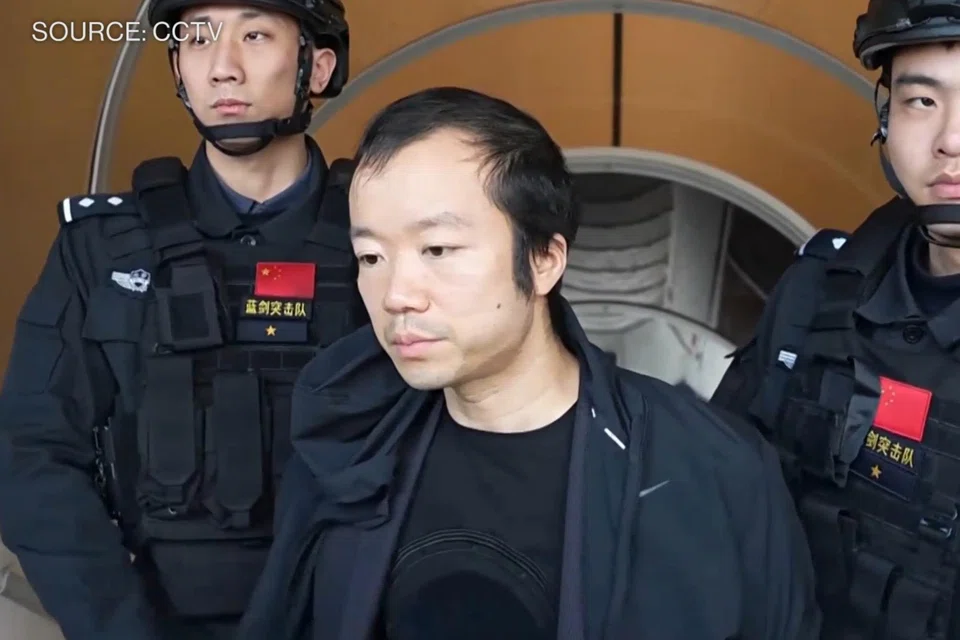
For months, there were few signs of Chen even as he mounted a legal counteroffensive against the US charges. Then, in a surprise twist, he was arrested on Jan 6 in Cambodia and extradited to China for investigations.
Who is Chen Zhi?
Chen was born in China’s Fujian province in 1987. He became a Cambodian citizen in 2014 and subsequently renounced his Chinese citizenship, although China has since said that he is still a Chinese national. He also holds passports from Saint Lucia, Vanuatu and Cyprus.
The since-removed website of his Singapore family office described him as a “young business prodigy” who got his start setting up gaming centres in Fujian province’s capital, Fuzhou. He began investing in real estate in Cambodia in 2011, and later founded Prince Holding Group, a Cambodia-based conglomerate whose interests span entertainment, finance and supermarkets.
Chen became politically well-connected in Cambodia, serving as an adviser to the country’s former leader Hun Sen and his son and current Prime Minister Hun Manet. He also advised other senior figures, including former deputy premier and interior minister Sar Kheng and Heng Samrin, the former president of Cambodia’s lower house. Chen was also granted the honorary title of a “Oknha”, roughly equivalent to a lord, typically awarded to those who have made significant financial contributions to the state.
According to US prosecutors, Chen, who also goes by the name Vincent, has lived in Singapore, Taiwan and the UK, where he has numerous assets.
What is Prince Holding Group?
Prince Group grew into a major property conglomerate in Cambodia after it was founded in 2015, buoyed by a real estate boom driven by an influx of Chinese cash. Among its most high-profile projects is a US$16 billion, 934-hectare development, now known as the Bay of Lights, being built near the southwestern coastal city of Sihanoukville. Prince Group has received investment from and formed partnerships with several multinational firms to develop and operate hotels at the site.
SEE ALSO


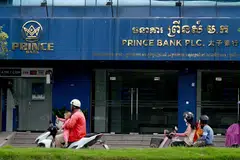

The group also claims to have “over 100 businesses in Cambodia” spanning sectors beyond property, including tourism, logistics and technology. It runs Prince Bank, which began as a micro-financing firm in 2015 and grew within a decade into a mid-sized commercial bank, holding about 4.7 trillion riels (S$1.5 billion) in deposits at the end of 2024. The group has also previously claimed to have owned local airline Cambodia Airways.
Through its charitable arm, the Prince Foundation, the group established Prince Horology, a watchmaking school that produced luxury timepieces. Some were gifted to world leaders, including then-US President Joe Biden and Canadian Prime Minister Justin Trudeau, during a regional summit in 2022.
What scams is Prince Group accused of?
US prosecutors allege that Prince built and operated at least 10 scam compounds in Cambodia, where thousands of migrant workers were forced to work in tightly guarded conditions under threats of violence.
The company is accused of specialising in so-called “pig-butchering” scams, in which fraudsters pose as investment advisers or attractive people on social media and messaging apps, slowly cultivating trust, akin to fattening a pig for slaughter. Victims are often emotionally manipulated for weeks or months before being persuaded to hand over money on false pretences, such as promised investment returns or fabricated pleas for financial help.
Fraudsters frequently string victims along by showing fake gains, prompting the victims to send additional funds before the money is syphoned off and the scammers disappear.
US authorities said Chen kept ledgers on Prince Group’s facilities, including one complex that allegedly ran multiple scam operations across different floors and buildings, ranging from investment scams targeting victims in the US to fraudulent orders in Vietnam. These schemes were highly lucrative: one of Chen’s accused co-conspirators later boasted that in 2018, Prince Group earned more than US$30 million a day from pig-butchering and related criminal activities.
US prosecutors also allege that Prince Group relied on criminal networks around the world to syphon cash, including one in Brooklyn, New York, that laundered more than US$18 million stolen from US victims.
Chen is accused of instructing his associates to use “sophisticated cryptocurrency laundering techniques”, such as separating funds across numerous digital wallets before reconsolidating them, obscuring their origins. Chen’s associates are also accused of bribing public officials in multiple countries, including China, to avoid enforcement actions.
How did Prince Group’s scams unravel?
Early cracks in Prince Group’s image began to show in 2020, when courts in China started prosecuting and convicting scam mules with connections to the group, as well as associates accused of facilitating online gambling, which is illegal in mainland China.
Authorities in Beijing went as far as setting up a task force to investigate Prince Group, which a Chinese court labelled an “enormous online gambling syndicate”. Prince Group previously claimed the convictions stemmed from unauthorised individuals “impersonating” the company.
Scrutiny intensified from 2024 onward, after reports by Radio Free Asia and other media outlets detailed the group’s alleged scam activities. The allegations were strenuously denied by Prince Group, which enlisted a Singapore law firm to counter them. That firm, Duane Morris & Selvam, told Bloomberg in November it no longer represented Prince Group, and earlier denials it helped issue have been removed from Prince’s website.
Authorities in Taiwan and Singapore have also said they began investigating Chen’s network before sanctions on him and his related companies were announced in mid-October, which brought the saga to a head.
What sanctions does Chen and Prince Group face?
In October, the US Treasury Department imposed sweeping financial sanctions on Chen and the Prince Group network, designating the conglomerate as “a transnational criminal organisation”.
The measures bar individuals and companies in the US from conducting business with them and cover 146 individuals and business entities in total. They also effectively cut Prince Group off from the global financial system, since most international banks avoid transactions involving US-sanctioned parties.
The US Treasury Department said the action would dismantle Prince’s global reach, extending as far as the Pacific nation of Palau, where the group was allegedly working with known organised-crime facilitators to lease an island and develop resorts.
Chen himself faced additional consequences. He was criminally charged in the US with wire-fraud conspiracy and money-laundering conspiracy, tied to allegations that he directed Prince Group’s forced-labour scam operations across Cambodia.
The UK imposed parallel sanctions, though it targeted a narrower set of associates and companies in Chen’s orbit, and froze UK-linked assets, including Chen’s London properties. South Korea followed with its own sanctions in late November, marking the country’s first such action against a foreign scam network.
Authorities in Taiwan, Hong Kong, Thailand and Singapore have also frozen or seized assets, including a yacht, held by Prince Group, Chen and his associates, and several arrests have also been made in connection with the case.
How much wealth did Chen accumulate?
Chen once boasted of being worth as much as US$60 billion, according to a report in The Times, citing one of Chen’s former staff. While there’s been no independent verification of that figure, ample evidence points to considerable wealth.
A major component was cryptocurrency. US authorities described it as a “record” seizure when they announced in October that they had confiscated of 127,271 Bitcoin, worth about US$15 billion at the time, from accounts controlled by Chen. That was in addition to stakes in listed companies and a global portfolio of assets in the UK, Hong Kong, Taiwan and Japan. Those holdings included a £100 million (S$173 million) office building in London’s old financial district and luxury condominiums in Singapore. In Singapore, two family offices linked to Chen lost tax exemptions after the sanctions were announced.
The wealth was matched by an extravagant lifestyle. Chen travelled in high-end vehicles, including a black Mercedes-Maybach with the vanity plate “5555”. Prince Group also frequently hosted lavish events, including aboard NONNI II, a 53-metre (174-foot) luxury superyacht.
What has happened to Chen and Prince Group?
When Chen was charged in October, US authorities said he was “at large”. Despite his public disappearance, he appointed a top US law firm, Boies Schiller Flexner, to challenge the legality of the seizure of his Bitcoin holdings.
Prince Group initially went silent after the US sanctions were announced, but later issued a statement on Nov 11, saying it “categorically rejects the notion” that it or Chen had engaged in any unlawful activity. It called the allegations “baseless” and said they appeared “aimed at justifying the unlawful seizure of assets worth billions in US dollars”.
Chen’s associates mounted a legal effort in Singapore to unfreeze cash held in bank accounts linked to Chen’s various firms, but the bid was rejected by a judge in January.
Initially, after the US and UK sanctions were imposed, Cambodia’s Interior Ministry spokesperson Touch Sokhak told the Associated Press that Prince had met all legal requirements to operate in Cambodia and that the government was not accusing Chen or the group of wrongdoing.
That position later shifted. Cambodian authorities said that Chen was arrested on Jan 6 along with two other Chinese nationals and extradited to China for investigation, following months of cooperation between the two nations. Officials said the arrests were made at the request of Chinese authorities “within the scope of cooperation in combating transnational crime”.
Cambodia’s interior ministry also said that it revoked Chen’s Cambodian citizenship in December, without addressing his honorary titles. Cambodia’s central bank also announced that Prince Bank would be liquidated, barring it from accepting new deposits.
Despite prosecuting lower-level Prince associates, Chinese authorities had not, until January, directly addressed the US and UK allegations against Chen. China’s cybersecurity agency had, however, accused the US government of orchestrating the hacking of the Bitcoin that American authorities say was tied to Chen’s illicit proceeds.
But then on Jan 8, after dramatic footage aired on Chinese state media showing an arrested Chen being flown back to China, the country’s main law enforcement body, the Ministry of Public Security, said that it had detained Chen, describing him as the kingpin of a “major transnational gambling and scam syndicate”.
It said that it had investigated Chen’s group and suspected it of committing “numerous crimes”, including setting up illegal casinos, conducting scams and illegal business operations and concealing the proceeds of crime. It also said law enforcement would issue wanted notices for an initial group of key figures within Chen’s criminal enterprise. BLOOMBERG
Decoding Asia newsletter: your guide to navigating Asia in a new global order. Sign up here to get Decoding Asia newsletter. Delivered to your inbox. Free.
Share with us your feedback on BT's products and services