



Shanghai prepares to reopen, but soaring prices, longer-term supply-chain instability expected

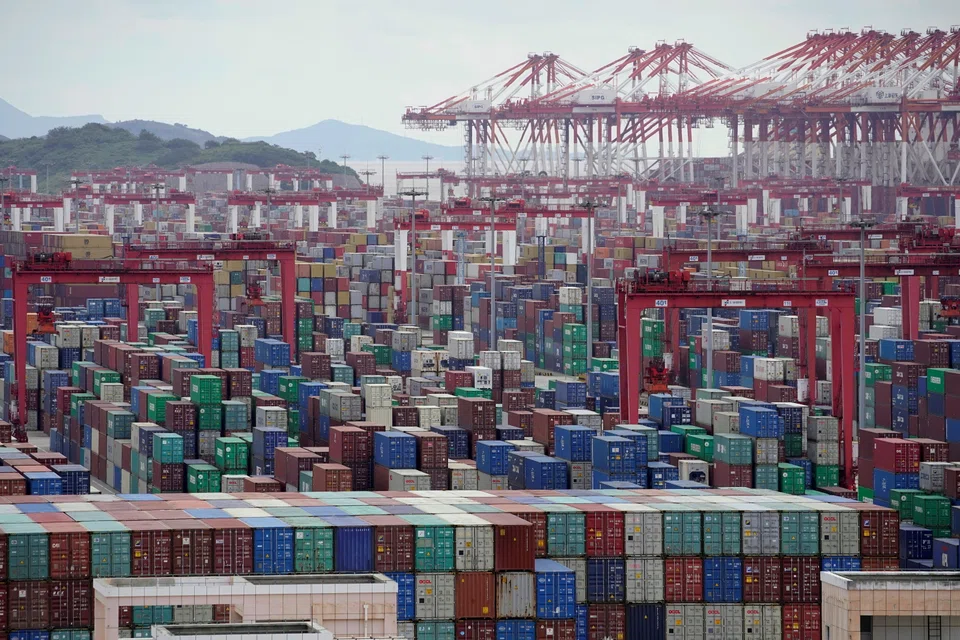
AS Shanghai slowly reopens following a lockdown of almost 2 months, logistics providers are bracing themselves for the prices of containers to spike — a situation that could last up to 8 weeks, with volatile container rates likely to prevail well into next year.
Ken Ngan, honorary treasurer of the Singapore Logistics Association (SLA), said: “Prices are expected to soar immediately for exports once the port resumes full operations as many containers have been waiting ... in Shanghai.
“With alternative port options such as Ningbo, the situation could ease in about 6 to 8 weeks. Nevertheless, prices are expected to remain high, as the reopening coincides with the upcoming peak season and its accompanying surcharges.”
Christian Roeloffs, co-founder and chief executive of Container xChange, said it is hard to project how high container prices could go, but noted that they have skyrocketed by up to 5 times, and as high as 10 times on certain routes in the past 2 years.
“Prices have gone down in China for containers, but they have not crashed because capacity is tied up. If and once the ports and supply chains go back to normal after the lifting of lockdowns in China, there will be a sea of containers filled with cargo headed for the west.
“There will be panic shipping, because everyone wants to ensure that their cargo reaches the west on time. This situation has always led to prices shooting up in the past.”
SLA’s Ngan echoed this view, noting that while peak season typically starts in mid-July, it could kick off earlier this year as businesses seek to avoid delays caused by supply-chain disruptions.
Bloomberg reported that officials from China’s Ministry of Transport have said cargo-handling activity in Shanghai, the world’s busiest container port, has almost fully recovered, rebounding to 95.3 per cent of normal levels.
That said, there is still a backlog to clear. Compounding this are problems that are expected to crop up further inland: A spike in trucking demand, for example, is widely expected. Trucking regulations have not been completely lifted yet, and movement regulations differ from city to city. This, said Ngan, has hindered the pickup and delivery of cargo, and made sourcing for drivers a challenge.
“Businesses are expecting (trucking regulations) to be further lifted in early June. However, it will likely still take weeks before the trucking crisis stabilises,” he said.
The good news is that in the past few years, many manufacturers have already relocated to outside Shanghai, to cities such as Suzhou, Nanjing and Hangzhou. These areas were less badly hit by the lockdown; almost 80-90 per cent of these manufacturers have been able to carry out usual operations.
“Within Shanghai, many production facilities diverted their supply-chain routes to neighbouring port in Ningbo, which will help ease some of Shanghai’s port congestion,” said Ngan.
Toll Group’s managing director Thomas Knudsen expects logistics players to face “challenging conditions” until at least early 2023, as the current situation is being exacerbated by the war in Ukraine and economic factors such as inflation.
Indeed, even as shippers and those in the transport and logistics industry are bracing themselves for an influx of shipping orders, Knudsen said he expects goods to start moving out, but more slowly than in previous years.
“While more factories are opening and more companies are clearing their backlog of shipping goods, the rate at which goods are being shipped out will be comparatively slower. It will take months to re-establish transportation services and while we will see increased air and sea traffic, congestion will risk further slowing down supply chains,” he said.
In an update on Tuesday (May 24), freight forwarding and customs brokerage company Flexport noted that even as the region has gradually allowed more businesses to reopen, production is still turning around only slowly because some prevention and control requirements are still in place.
Shanghai officials announced on May 16 that the city is looking to fully restore normal work and life across the city from June 1, following its lockdown in April.
Yuma Ito, partner of global management consultants Arthur D Little, said he expects prices to continue to fluctuate and that there is a possibility that supply-chain activities may never “normalise”.
In the short term, manufacturers will have to consider multimodal supply chains or alternative procurement sources to ensure that their goods are delivered in a timely fashion, he added. But in the longer term, companies need to think about a future-proof solution for their supply chains.
“There has been one knock too many over the last two and a half years, coupled with regulations and consumer awareness in regard to sustainable sourcing,” he said.
“A more legitimate strategy to adopt would be one of adaptation, where firms adapt to a very complex business environment and react swiftly, and effectively.”
Decoding Asia newsletter: your guide to navigating Asia in a new global order. Sign up here to get Decoding Asia newsletter. Delivered to your inbox. Free.
Copyright SPH Media. All rights reserved.
TRENDING NOW

First Resources blames El Nino, outside fires for Kalimantan hotspots amid haze scrutiny
High Court rules against Julius Baer’s Singapore trust arm in US$50 million family trust dispute
Singapore key exports jump by higher-than-expected 68.4% in September, led by non-electronics

MSCI proposes downgrading Indonesia to standalone market status

