



Shein shares plunge 10% in Hong Kong debut after US$1.7 billion IPO
The offering values it at over US$26 billion, far below its 2022 peak of nearly US$100 billion
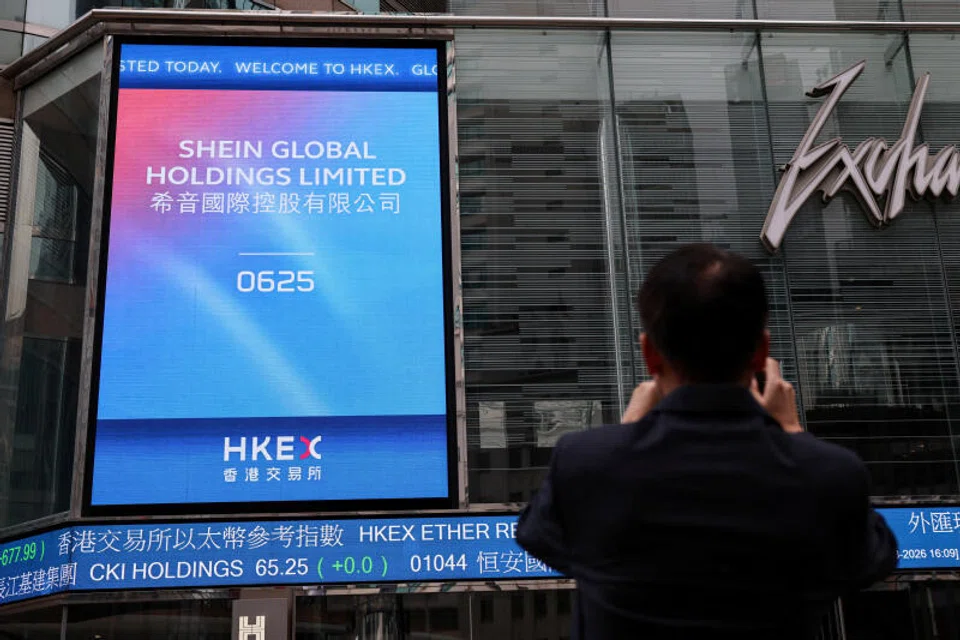
SHEIN shares fell as much as 10 per cent in their Hong Kong debut after a years-long process to an initial public offering that eventually valued the firm at a fraction of what it was once worth and left investors questioning its value.
The shares fell as much as 10 per cent to HK$43.72 in early trading, compared with the IPO price of HK$48.56, before recovering some losses. Shein’s shares saw heavy selling in early trading, with bids hit three times as often as offers were lifted.
The listing is a test of investor appetite for internet retailers, an industry that has struggled recently against the headwinds of inflation, trade disruptions and consumer caution in key markets including China.
It also offers a fresh benchmark for valuing cross-border e-commerce players after years of regulatory scrutiny and enthusiasm shifting towards companies involved in the AI buildout.
“Shein’s many challenges are well-known to investors and likely behind the sharp share price fall on IPO day,” said Vey-Sern Ling, managing director at Union Bancaire Privee.
“Growth is slowing and losses rising amid stiff competition from both e-commerce and fast fashion players. More critically, its business model continues to be disrupted by evolving international regulations.”
Shein raised HK$13.6 billion (US$1.7 billion) in the offering, which gave it a market value of slightly more than US$26 billion, far below its one-time US$100 billion valuation.
It is still one of the world’s largest listed apparel and fashion companies, though still well below Swedish retailer Hennes & Mauritz, which is valued at about US$30 billion.
Mounting challenges
Since its valuation peak, Shein has faced mounting challenges including higher tariffs, growing regulatory scrutiny and intensifying competition from PDD’s Temu and Alibaba’s AliExpress.
SEE ALSO






The IPO valued the company at over 15 times forward earnings, calculations based on Bloomberg Intelligence’s estimates show. That is about double the 7.4 times ratio commanded by PDD and above the 10.7 times multiple for Hong Kong’s benchmark Hang Seng Index.
“With investors favouring AI and technology-related plays in Hong Kong, Shein’s appeal is relatively limited as a traditional e-commerce company that relies heavily on price competition,” said Shen Meng, director at Beijing-based investment bank Chanson & Co.
“Rising costs linked to US-China trade tensions and a less compelling growth story than Alibaba or PDD are likely to keep its valuation at a discount.”
Shein’s first-day struggles fit into a recent trend of sizeable Hong Kong listings limping out of the gate.
While new shares in the city gained a weighted average of about 29 per cent in their debut, Bloomberg-compiled data show, the fashion retailer is on track to be the third consecutive company to open with a loss after raising more than US$1 billion.
Zhongji Innolight fell 2 per cent in July following the city’s largest listing in seven years, while Apple supplier Luxshare Precision Industry closed 1.6 per cent lower on its first day, also in July.
Should the stock close near its session low, it could be the worst debut for a Hong Kong listing that raised at least US$1 billion since brokerage Shenwan Hongyuan Group dropped 11.8 per cent on its first day of trading in 2019, according to data compiled by Bloomberg.
Founded in China and now based in Singapore, Shein has built a global fast fashion giant by using a data-driven supply chain capable of rapidly producing and shipping low-cost apparel directly to consumers.
The company emerged as one of the biggest beneficiaries of the pandemic-era e-commerce boom, with its valuation soaring to nearly US$100 billion in 2022.
But attempts to go public at the time were unsuccessful as regulatory and political hurdles scuttled its plans to sell shares in the US and the UK.
Hong Kong ultimately emerged as the venue for the retailer’s market debut.
Some investors see the potential for further downside for Shein’s valuation.
“The valuation is in the US$26 billion range, that’s actually substantially higher than most apparel retailers,” Sucharita Kodali, an analyst with Forrester Research, said in a Bloomberg TV interview.
“It wouldn’t be surprising if it goes down further, especially if there is no clear plan or no story that they’ve told investors as to what they could do next that’s beyond this ultra-cheap, fast fashion ecosystem that is now being challenged by essentially the imposition of de minimis rules.”
Shein secured support from several cornerstone investors, including Boyu Capital, Tiger Global Management, General Atlantic, Tencent and UBS Asset Management Singapore.
Existing investors in Shein will also join cornerstone backers in pledging not to sell their IPO shares for a period of six months to signal confidence in the company.
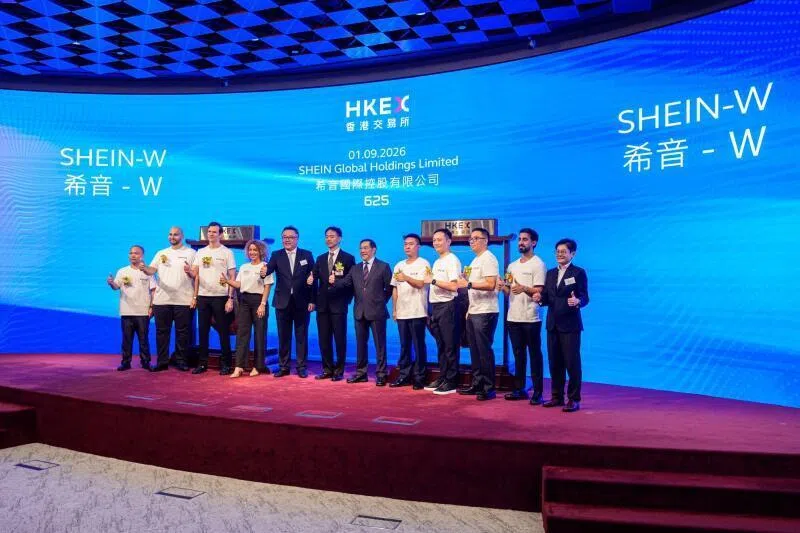
The retail portion of the IPO was 5.6 times subscribed, while institutional investors bid for 2.6 times the shares available, the company said in a filing late on Monday.
The company said it plans to use the IPO proceeds to strengthen its technological capabilities, expand its global brand presence, support corporate responsibility initiatives and for general corporate purposes.
Still, some analysts argue that the IPO’s tightly controlled share sale may limit the extent to which public investors immediately test that valuation.
“With all pre-IPO and cornerstone investors accepting a six-month lockup, the March 2027 lockup expiry will be a more meaningful test of its market value than the listing debut,” Bloomberg Intelligence analyst Catherine Lim said in a note.
Shein’s four founders will keep nearly 60 per cent of the firm and close to 90 per cent of voting rights, locked for 24 months.
Shein’s financial results showed notable swings in 2026. The company posted a loss of US$99 million in the first quarter, compared with a profit of US$395 million a year earlier. Revenue growth has slowed, according to its preliminary prospectus.
Analysts said the retailer faces increasing pressure from changes in global trade policies. US tariff measures have already raised costs, while Europe’s import duty on low-value imports threatens to erode a key advantage for cross-border e-commerce platforms.
Disruptions linked to the conflict in the Middle East have also added to rising logistical expenses.
Shein also continues to face regulatory scrutiny in the US, one of its biggest markets. Bloomberg reported this month that the Committee on Foreign Investment in the US is reviewing Shein’s acquisition of apparel retailer Everlane for potential national security risks related to Americans’ personal data.
While the Everlane acquisition is small compared with Shein’s IPO valuation, the review underscores the geopolitical and regulatory challenges that continue to shadow the retailer’s global expansion.
Investors will be watching whether those risks outweigh the company’s still sizable scale and growth ambitions.
“Uncertainty around global trade policies, rising tariffs, geopolitical tensions and fierce competition in the e-commerce sector are all weighing on its growth prospects,” said Kenny Ng, a strategist at China Everbright Securities International.
“Investors are also concerned that some pre-IPO financing rounds were completed at valuations above the IPO price, which has added to the cautious sentiment surrounding the stock.” BLOOMBERG
Decoding Asia newsletter: your guide to navigating Asia in a new global order. Sign up here to get Decoding Asia newsletter. Delivered to your inbox. Free.
Share with us your feedback on BT's products and services
TRENDING NOW

DBS, OCBC, UOB rout lops billions off STI as inflation, rate concerns spook investors

Grab CEO’s wife Chloe Tong on life with Anthony Tan and finding her purpose

OCBC sheds S$8 billion in value as shares close nearly 6% down; analysts cautious on banks

Deal between tycoon friends sparks scrutiny of Philippine power sector

