



Ship rates spiking 467% marks upended trade across commodities
Freight costs typically dip at year-end due to seasonal weakness in demand
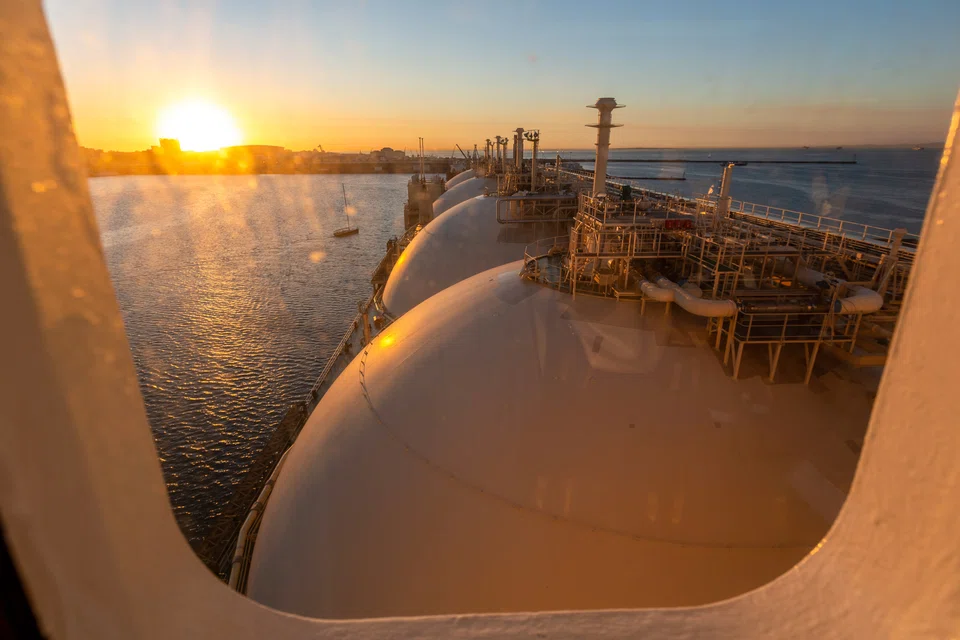
[HONG KONG] Rates to ship commodities from energy to bulk ores across the world’s oceans are heading for a rare year-end surge as conflicts, sanctions, and swelling output upend global supply lines.
Daily earnings to transport crude on key routes have seen the biggest jump this year, up 467 per cent, while rates to ship liquefied natural gas (LNG) and commodities such as iron ore have increased more than fourfold and twofold, respectively. Freight costs typically dip at year-end due to seasonal weakness in demand.
Vessels are spending more time at sea transporting cargo, contributing to the spike, and several shipping executives expect tightness in the broader market to continue at least to early next year.
“We are seeing an old school, extremely tight physical shipping market,” Lars Barstad, the chief executive officer of Frontline Management, which operates a fleet of oil tankers, including very-large crude carriers, said on an earnings call late last month. “We are not seeing any kind of weakness.”
For crude tankers, rates rallied following a ramp-up in Middle Eastern production, along with higher Asian demand for their barrels after US sanctions on two Russian oil giants.
Meanwhile, the cost to ship LNG from the US to Europe recently climbed to the highest level in two years as new projects in North America tied up more vessels to deliver the fuel.
A benchmark measure for ships hauling bulk commodities, including grain and ore, rose to a 20-month high at the end of November as anticipation grew over a major iron ore project in Guinea coming online and weather-related delays off China squeezed supply. More broadly, hostilities around key routes have contributed to an overall increase in costs.
Attacks by Iran-backed Houthis in Yemen on merchant ships in the Red Sea have forced some vessels to transit around Africa, increasing so-called ton-miles, a key metric of demand that multiplies the cargo volume by delivery distances – signalling cargoes are being transported longer than usual.
Freight rates have eased slightly from a peak at the end of November, but elevated costs are reverberating across the shipping market. Buyers of US LNG have contemplated delaying cargo loading, while some owners of oil tankers are seeking to maximise earnings.

In recent weeks, supertanker operators have focused on longer journeys to lock in higher profits, forcing some Indian refiners to use two smaller vessels, rather than the usual one, to get their Middle Eastern crude purchases delivered on time, according to shipbrokers.
However, even as shipping companies enjoy a rare boom after years of bruising earnings, many are cautious about investing in the rejuvenation of fleets, or making big strategic decisions. New ships are expensive, while rates could plunge with more vessels and the potential reopening of the Red Sea.
“If you are a shipowner, you have made money, you are not under distress,” said Jayendu Krishna, a director at Drewry Maritime Services. “But you are not in a great party like mood,” due to the uncertain industry outlook, he added. BLOOMBERG
Decoding Asia newsletter: your guide to navigating Asia in a new global order. Sign up here to get Decoding Asia newsletter. Delivered to your inbox. Free.
Share with us your feedback on BT's products and services
TRENDING NOW

Philippine power giant First Gen rebuffs foreign offers, plans up to US$2.6 billion in expansion

Once staunchly pro-China, Malaysian Chinese businesses are now distancing themselves from Beijing

Nearly half of Singapore workers put in at least six unpaid hours a week: survey

Vietnam’s data-centre investment rush faces reality check on power and site constraints

