



Singapore biotech Mirxes files for Hong Kong IPO after raising US$50 million

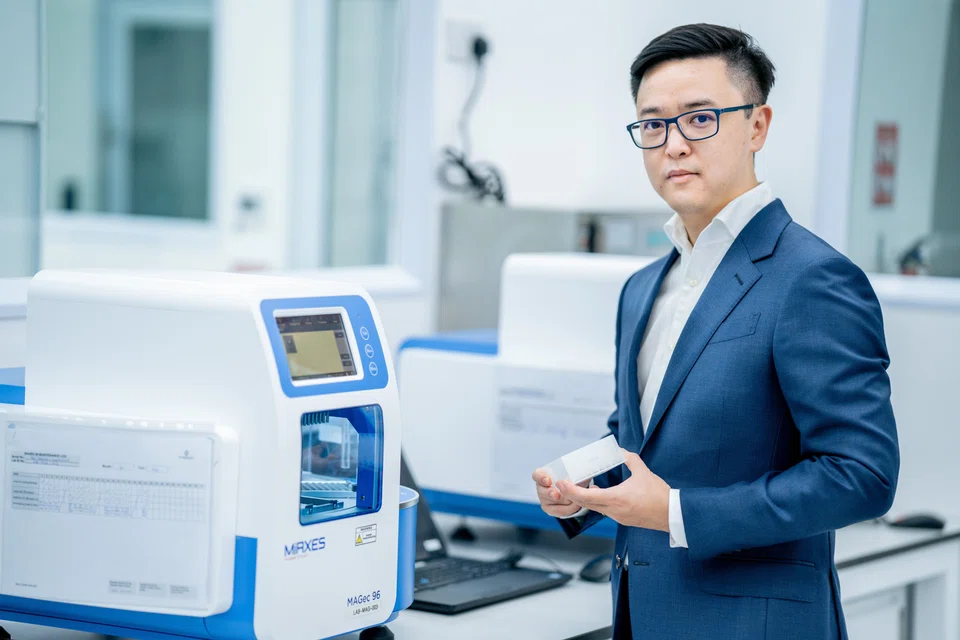
CANCER diagnostics company Mirxes has applied to Hong Kong’s stock exchange for an initial public offering (IPO), potentially becoming the first company based outside of China and Hong Kong to list under a provision that supports biotech IPOs on the bourse.
Mirxes raised US$50 million ahead of its potential listing, the company said on Wednesday (Jul 26). The Series D funding values the company at around US$600 million post-money, The Business Times (BT) understands.
Mirxes’ application comes amid a push by Hong Kong Exchanges and Clearing (HKEX) to attract international listings. In the past year, HKEX has opened its first US office in New York and relaxed rules for some pre-commercial companies.
Until recently, Singapore-based Mirxes was caught between listing locally or overseas. It started a formal application to the Singapore Exchange (SGX) earlier this year for an offering that could value the company at up to US$700 million, BT reported in April.
The company was eyeing a raise of between US$100 million and US$200 million.
The allure of Hong Kong, sources told BT at the time, was the potentially higher valuation of up to US$1 billion floated by bankers who thought the market could better support biotech players.
Mirxes said it filed its listing application under Chapter 18A of HKEX’s listing rules. The initiative, started in 2018, allows pre-revenue biotech companies to list in Hong Kong.
A total of 60 companies, based either in China or Hong Kong, have listed under Chapter 18A, raising HK$119.3 billion (S$20.3 billion).
Chief executive Zhou Lihan did not comment on valuations, but pointed to Hong Kong’s “more mature” ecosystem for biotech listings.

“We hope to tap the specialist healthcare and biotech investor base in Hong Kong and China,” Zhou said.
“The largest future market for our flagship product Gastroclear is the People’s Republic of China, which accounts for 50 per cent of all gastric cancer cases in the world. It also makes sense to tap the investor base who could both support and benefit from our growth.”
Zhou said the company remains open to all funding opportunities in Singapore.
Mirxes’ latest US$50 million funding round drew new international investors, including Chinese state-owned fund Beijing Fupu.
Other new backers included Japanese conglomerate Mitsui and Singapore’s Agency for Science, Technology and Research (A*Star), in a rare pre-IPO investment. Singapore’s state-linked EDBI and NHH Venture Fund were returning investors.
The funds will be used to scale adoption of a flagship stomach cancer blood test, Gastroclear, in South-east Asia, China and Japan. Mirxes was spun off from A*Star in 2014 to develop diagnostic tools based on microRNA detection, and employs about 400 staff today.
The company is also hoping to commercialise a blood-based colorectal cancer screening test. It is concurrently developing a single blood test for early detection of nine high-mortality cancers.
Mirxes had revenue of US$17.8 million for the year ended Dec 31, 2022, and a net loss of US$56.6 million, a draft prospectus lodged with HKEX indicated.
Revenue fell 70.7 per cent from US$60.6 million in 2021, when sales of the company’s Covid-19 diagnostic kits accounted for nearly 90 per cent of topline. The segment drove 42 per cent of revenue in 2022.
For the four months ended April 20, 2023, revenue increased 64.8 per cent to US$5.8 million. Net loss widened to US$21.7 million from US$17 million.
HKEX has been focusing on helping Chinese investors tap investment opportunities among international companies, and vice versa, its chief executive Nicolas Aguzin said in an interview with BT.
The regulator recently introduced changes to allow mainland investors to trade directly in international stocks listed in Hong Kong.
Last year, HKEX hosted 87 IPOs that raised US$15.1 billion. This year, it has seen 39 listings that raised US$3.3 billion.
Mirxes’ peer, Hangzhou-based cancer screening company New Horizon Health, raised US$263 million after going public in February 2021. Its shares rose as much as 200 per cent on the first day of trading, amid pandemic fever.
The stock has since slipped 68 per cent from its debut amid a broader market sell-off. It closed at HK$26.15 on Tuesday, valuing the company at HK$12 billion.
Decoding Asia newsletter: your guide to navigating Asia in a new global order. Sign up here to get Decoding Asia newsletter. Delivered to your inbox. Free.
Copyright SPH Media. All rights reserved.






