Singapore firm anchors West Africa’s mega mine: Inside Winning International’s Simandou play
The company leverages the city-state’s connector strengths to reshape global high-grade iron-ore trade

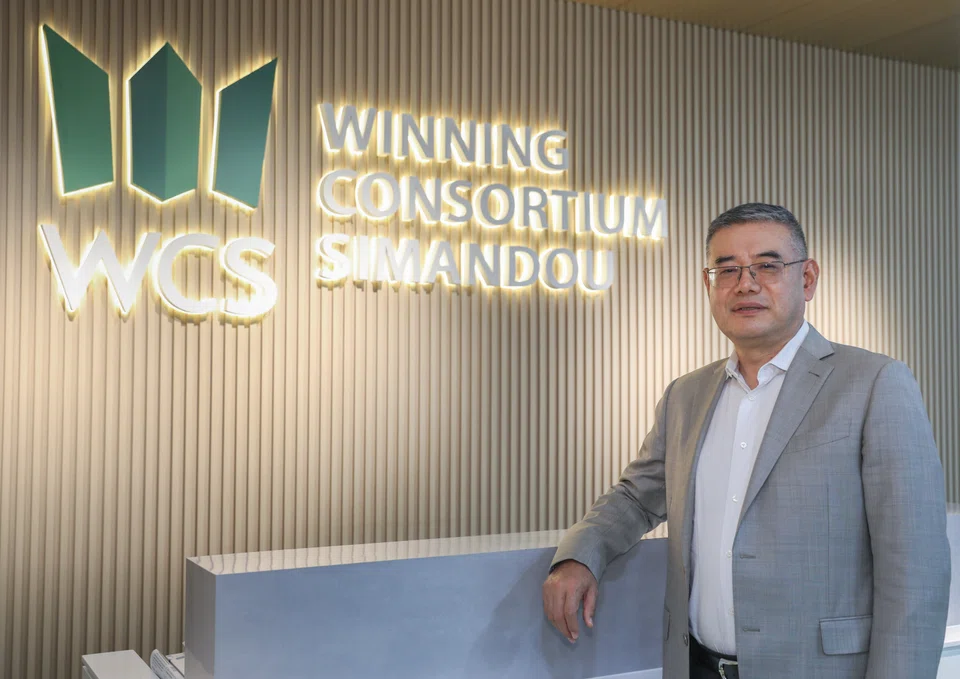
[SINGAPORE] Winning International Group is a case study of how a Singapore company can marshal the city-state’s strengths to do business far beyond South-east Asia. Its Simandou mine in the mountains of Guinea in western Africa is now poised to reshape global iron-ore trade.
Sun Xiushun, founder and chairman of Winning International, told The Business Times in Mandarin that Singapore has served as a “key enabler” in the group’s growth, from its beginnings in shipping to its mining and infrastructure businesses today.
Sun, a former sailor, established a presence in Singapore’s shipping sector in 2006, leveraging the Republic’s finance, maritime and legal infrastructure to stitch together a China-Singapore-Indonesia bauxite corridor.
But when Indonesia curbed bauxite exports in 2013, he had to pivot to upstream operations in bauxite-rich Guinea “for the sake of survival”.
He co-founded SMB-Winning in 2014, which built the 125 km Dapilon-Santou railway connecting the mining zone in Santou to the port in Dapilon. This has enabled Winning International to raise bauxite exports from about one million tonnes to 65 million tonnes a year today.
Meanwhile, the number of vessels that Winning International operates has grown to about 150. This includes some 60 capesize vessels, the largest dry-bulk carriers, which are owned by the company. Its fleet has been moving more than 70 million tonnes of cargo annually.

In 2019, Winning Consortium Simandou (WCS) secured the northern concession (Blocks 1 and 2) of the Simandou mine. With the first iron-ore shipments on track for delivery in November, Sun noted that the company’s evolution – from shipping and logistics into an integrated mine-to-market developer – shows how a Singapore base has helped it credibly utilise Africa’s resource corridors. This is a progression well-suited to the Republic’s port, bunkering and ship-finance strengths.
“Our management – project management and standards management – are done from here,” he said of Singapore’s hub role, adding that it acts as a bridge between continents, allowing him to take infrastructure capabilities and talent from China to Guinea.
Africa’s opportunities for Singapore companies
Sun sees African economies with young populations and abundant resources as promising markets for Singapore companies to expand beyond the Asean region.
SEE ALSO
“We hope that our experience in Guinea can encourage more Singaporean companies to go there, so they don’t just see it as a place full of risks.”
Keen to contribute further to Guinea’s industrialisation, the chairman said that Winning International aims to promote closer economic and trade ties between Singapore and the West African nation.
He added: “African countries, with political stability, have great potential for future development… Singapore can provide more support in national governance, economy and technology, and Guinea can also leverage Singapore’s trade and finance platforms.”
He noted that the company will continue to act as a collaborator, forming consortiums or joint ventures across sectors from mining to manufacturing.
“It’s impossible for Winning (International) to do everything itself… We can share investment risks and mitigate risks with our technical and managerial experience… I might just be a participant or someone who introduces them to Guinea.”
One sector with growth potential is electricity, pointed out Sun. “I believe that, in the future, Africa’s electricity supply should be a hybrid, integrated model combining clean energy, such as hydro and solar, with thermal power.”
Mega greenfield
WCS leads Blocks 1 and 2 of the Simandou mine alongside China Baowu Steel Group. The southern concession (Blocks 3 and 4) is controlled by Rio Tinto, Chalco Iron Ore Holdings and the government of Guinea.
Simandou’s ore has an average of about 65.8 per cent iron content with low impurities, which would be highly sought by steelmakers looking for higher-grade feedstock to cut emissions.
When both sites are fully online, combined output is projected at up to about 120 million tonnes per annum (mtpa), enough to lift the share of premium ore in seaborne trade.
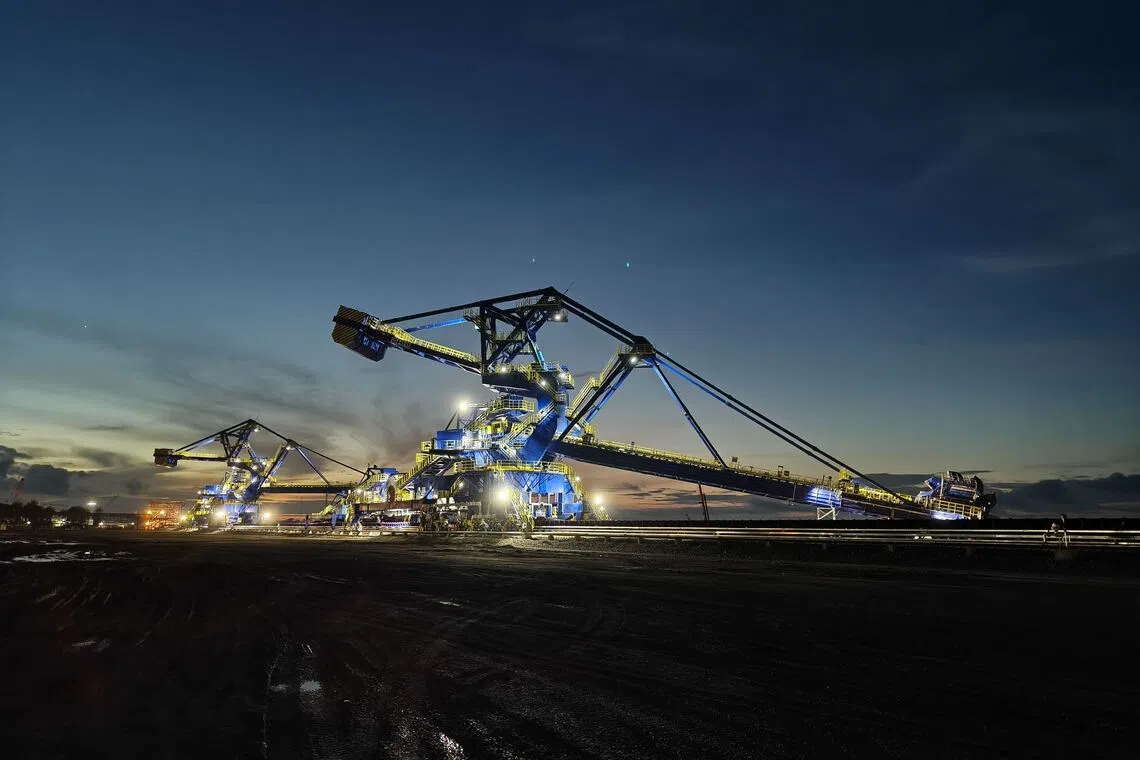
For Sun, the biggest obstacle went well beyond a mine. Simandou required an entirely new logistics spine – a 600 km heavy-haul railway line connecting Guinea from east to west and a greenfield coastal port.
“What changed Simandou’s fate was that they saw our capability and strength to build Simandou after we constructed the Dapilon-Santou railway.”
It was also why the Guinean authorities were prepared to back Winning International in its bid for the project.
“After we built the Dapilon-Santou railway… the Guinean government saw that, as if we could build an over-100 km (railway line), we could also build one that is more than 600 km long.”
Both the northern and southern mines are now connected via spurs to the main line, creating Guinea’s longest modern railway.
At the coast, a transhipment terminal and a barge facility, each sized to handle about 60 mtpa of iron ore, will enable capesize flows into China and other key markets.
Beyond the mine
WCS’ interests in Guinea extend beyond the mine-rail-port spine to the broader social and industrial ecosystem as well.
Alongside heavy-haul assets, the consortium has funded and delivered community infrastructure such as two hospitals and local roads.
It has also rolled out training and scholarship programmes, including skills-development initiatives with Singapore partners.
The goal is to expand the “social value” from a single-commodity project, Sun said. He noted that his vision is to build more schools and hospitals in Guinea. This will help boost healthcare access, education, employment and enterprise-creation in line with the ramp-up of iron-ore volumes.
Industry estimates suggest that, when fully operational by 2030, Simandou’s 120 mtpa would represent 4.8 per cent of the global supply and close to a tenth of China’s current import needs.
Such an influx of high-grade material is expected to push the seaborne market towards surplus from the middle of the decade, intensifying pressure on lower-grade, high-cost producers, indicated S&P Global Market Intelligence.
Decoding Asia newsletter: your guide to navigating Asia in a new global order. Sign up here to get Decoding Asia newsletter. Delivered to your inbox. Free.
Copyright SPH Media. All rights reserved.