


Singapore firms stick to their guns as they continue to eye China for growth
POOR domestic demand and weak cost conditions, which recently saw China’s inflation turn negative, are posing a headache for Singapore companies in the consumer sector there.
Denise Cheok, a Moody’s Analytics economist, noted: “Households are still wary of spending, especially on discretionary goods, and retailers are slashing prices in response.”
Yet Singapore businesses that have ventured into China are sticking to their guns.
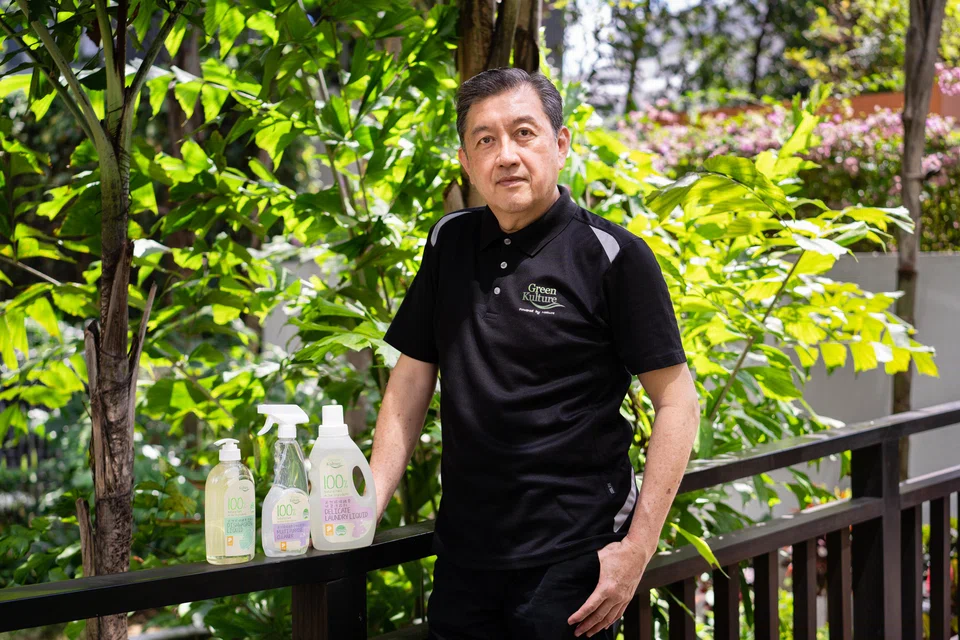
Entrepreneur Roy Kee called the currency rate the “biggest problem”, as the pricing model for his products – which target affluent consumers, especially in the mother-and-baby segment – was based on expectations of a Singapore dollar/renminbi exchange rate of 4.85, which was what it was a year ago.
Kee is the founder and managing director of household cleaning product company JRW International, where the Chinese market now makes up about one-third of sales.
To protect the brand’s image, however, he has ruled out cutting the cost of its goods.
“It may not make business sense to raise prices, which may erode the margins for our channel partners,” added Kee. His company plans to reprice products at end-2023 – when it launches a new range with different packaging – at today’s Singapore dollar/renminbi rate of roughly 5.4.
For now, he is taking advantage of the lower cost of doing business as the yuan slump continues. While his products are made in Singapore, he shifted bottling operations to Shenzhen in 2022, and plans to expand that set-up. But Kee told The Business Times (BT) that his strategy in the longer run is to find ways to boost the volume of sales, given how it is not possible to do much about the economic situation.
JRW was among the dozen-odd Singapore businesses that inked pacts with Chinese partners on the sidelines of the recent Singapore-Zhejiang Economic and Trade Council meeting in August.
The deal will put JRW’s products, which are now available in China on e-commerce platforms, on brick-and-mortar shelves as well. With more distribution channels open, Kee’s target is to scale up sales by three to four times by 2026.
Industry groups in Singapore, meanwhile, say they continue to bank on China despite the worsening business conditions there.
August also saw trade body Enterprise Singapore and the Singapore Chinese Chamber of Commerce and Industry launch a GlobalConnect@SCCCI initiative that will provide Singapore businesses with market support for expansion into the Chinese market.
Annie Wang, an executive director at the Singapore Business Federation (SBF), told BT that while the economic situation in China “puts a dampener on business sentiments”, Singapore companies remain optimistic overall about the long-term prospects.
The apex business chamber is also pressing on with plans to lead delegations to major trade and investment events such as the China-Asean Expo (in Nanning in September) and the China International Import Expo (in Shanghai in November), she noted.
“SBF will continue strengthening Singapore-China business ties by facilitating more agile partnership models and supporting Singapore companies as they explore new business areas, such as in green industries and healthcare for the ageing population,” said Wang.
Tan Teck Long, head of global wholesale banking at OCBC, told BT that “we remain confident of China’s growth prospects for the medium to long term”. He added that Chinese companies are also expected to continue investing in Asean, in areas such as renewable energy, electric vehicles, cloud software and e-commerce.
Decoding Asia newsletter: your guide to navigating Asia in a new global order. Sign up here to get Decoding Asia newsletter. Delivered to your inbox. Free.
Share with us your feedback on BT's products and services
TRENDING NOW

ComfortDelGro appoints two new independent directors

Once staunchly pro-China, Malaysian Chinese businesses are now distancing themselves from Beijing

NoonTalk needs continued financial support from CEO Dasmond Koh, auditors warn

DP Architects sets the benchmark for sustainability disclosure and design

