



Singapore lags as Asia-Pacific travel in year-end peak period shows uneven recovery

Tay Peck Gek
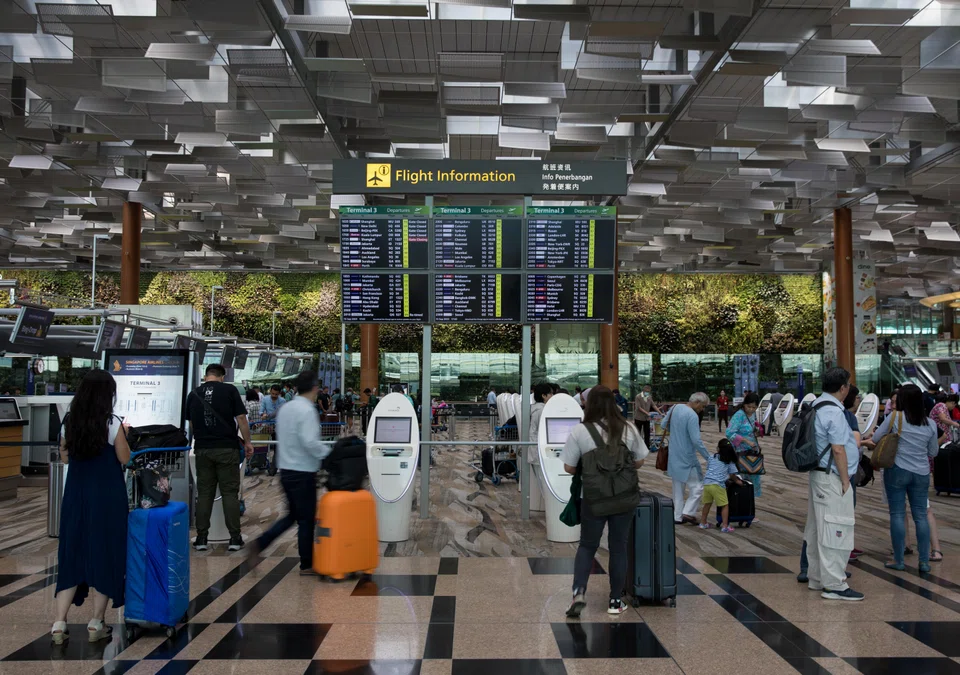
AIR ticket bookings for travel to Asia-Pacific between October and December have recovered to 90 per cent of pre-pandemic levels, although the rebound is uneven across the region.
Japan, India and South Korea are among the regional destinations that have outperformed pre-pandemic levels for the year-end peak period, according to data from ForwardKeys as at Sep 15. The global air travel analytics company obtains its data from major online travel agencies and airlines.
Singapore, however, is still lagging its regional peers.
The corresponding data for travel into Singapore for the fourth quarter showed that it was 28 per cent below pre-pandemic levels, with four of the top five source markets – Australia, the United Kingdom, the United States and India – still underperforming.
Only South Korea, at the fifth position, managed to exceed pre-pandemic levels, at 13 per cent higher. China – traditionally one of Singapore’s top source markets – was not among the top five.
From October to December 2019, Singapore’s top five source markets were Indonesia (858,220 arrivals), mainland China (779,990), India (345,090), Malaysia (342,130) and Australia (303,940), data from the Singapore Tourism Board showed.
ForwardKeys noted the pre-pandemic visitor arrivals were historical numbers, whereas the data for October to December 2023 is based on current booking trends. The results are influenced by booking patterns from various source markets. For instance, travellers from Australia tend to book their trips further in advance compared with those from India.
Chinese travel recovery remains muted
Kee Bing Han, vice-president of sales for Asia-Pacific at ForwardKeys, pointed out that November and December are typically quieter months for Chinese outbound travel.
Hence, Kee expects Chinese outbound travel to Asia-Pacific to be at only 52 per cent of pre-pandemic levels between October and December. For outbound travel to Europe, this is expected to be at 56 per cent.

Chen Yong, an associate professor at EHL Hospitality Business School in Switzerland, said that the expected recovery has not yet come, despite it being almost one year since China lifted its Covid policy.
“It is perhaps more depressing that Chinese outbound tourism in the Asia-Pacific region is only 50 per cent of the pre-Covid level. This is also far below the expectation of many observers who believe that short-haul travel could substitute for long-haul for Chinese outbound tourists,” said Dr Chen, a lecturer in marketing and economics of tourism and hospitality.
Meanwhile, the academic said he was “perplexed” by Thailand’s underperformance as a destination market. “I would believe the country may achieve similar growth as Japan and South Korea did,” he said.
Some market watchers have pointed the finger at Chinese blockbuster movie No More Bets for creating a perception among many Chinese that the South-east Asian kingdom is now one of the dangerous hotspots for scam compounds.
Julia Simpson, World Travel & Tourism Council’s chief executive officer, expects the Asia-Pacific travel and tourism sector to fully recover and outperform pre-pandemic levels by 2024. However, the exact timeline can vary by country and region within Asia-Pacific, she said.
Some major markets in Asia-Pacific, including China, have retained restrictions on international and domestic travel throughout 2022, which slowed down the region’s overall travel and tourism sector recovery.
South Korea relies more heavily on international tourism, and its recovery is closely tied to global travel conditions. In contrast, China has a substantial domestic travel market, which has contributed to its relative resilience even though international travel has lagged.
“While 2023 is expected to be more positive as China reopens and Covid-19 hesitancy wanes, there are still concerns. These include potential bottlenecks like passport issuance and renewal in China, and the need for improved intra-regional and cross-regional connectivity,” Simpson said.
“Failure to address these risks adequately could slow down the overall rate of recovery in the Asia-Pacific travel sector.”
Capacity for growth
The Pacific Asia Travel Association told The Business Times that Asia-Pacific visitor arrivals are forecast to recover as early as this year, but the rebound to pre-pandemic levels could come as late as 2025.
Mainland China is the strongest of the source markets, and is projected to account for between 14 per cent and 20 per cent of all international visitor numbers into and across Asia-Pacific from 2023 to 2025, said Paul Pruangkarn, chief of staff at the Pacific Asia Travel Association. The Bangkok-headquartered association promotes the development of travel and tourism to, from and within the region.
The industry body noted that flight frequency, connectivity and capacity have not returned to pre-pandemic numbers, with each destination at various levels in each of these factors.
Compared against Japan, South Korea, Thailand and China, India has seen the fastest recovery of its international capacity in the October to December period, at 97 per cent of pre-pandemic levels, data from OAG Aviation showed.
Mayur Patel, head of Asia at OAG Aviation, explained that India has a large diaspora traffic and pent-up demand to the country. In contrast, the usual popular destinations that had large mainland Chinese tourist arrivals have seen slower international capacity growth, due to the North Asian nation’s late reopening of borders and slower capacity reinstatement.
Mainland China’s international flight capacity is between 59 per cent and 65 per cent of pre-pandemic levels in October to December. The corresponding figures for Japan stand at 81 per cent, South Korea at 85 per cent and Thailand at 67 per cent.
Singapore has held steady at 89 per cent of capacity recovery. Patel noted that the “major hurdle to recovery” has been the Singapore Airlines (SIA) group’s capacity into mainland China.
For the present winter schedule as at Oct 8, the destinations that the group operates to is down to 18, compared with 26 pre-pandemic.
This can be attributed to the SIA group struggling in the past few months to secure Chinese regulatory approvals to transfer routes and slots from SilkAir (which has folded into SIA) to its low-cost carrier Scoot, Patel said.
OAG Aviation expects airfare pressure to stay elevated for some routes, such as some direct flights to or from China, as these would see reduced capacity for some time. It, however, sees some normalisation on other routes such as Singapore-Japan and Singapore-South Korea.
The global travel data provider expects a full recovery of capacity by end-2024 to pre-pandemic levels.
Patel noted that faster capacity reinstatement over the coming years is needed to make up for the lost time during the pandemic years. However, constraints across supply chain, labour shortage and a global economic slowdown could contribute to slower overall recovery ahead.
Decoding Asia newsletter: your guide to navigating Asia in a new global order. Sign up here to get Decoding Asia newsletter. Delivered to your inbox. Free.
Copyright SPH Media. All rights reserved.






