



Singapore, Tg Pelepas, Port Klang could face congestion from Middle East-bound boxships; capacity shortage feared
Bottlenecks will worsen if Strait of Hormuz closure persists, with Colombo likely to be the worst hit

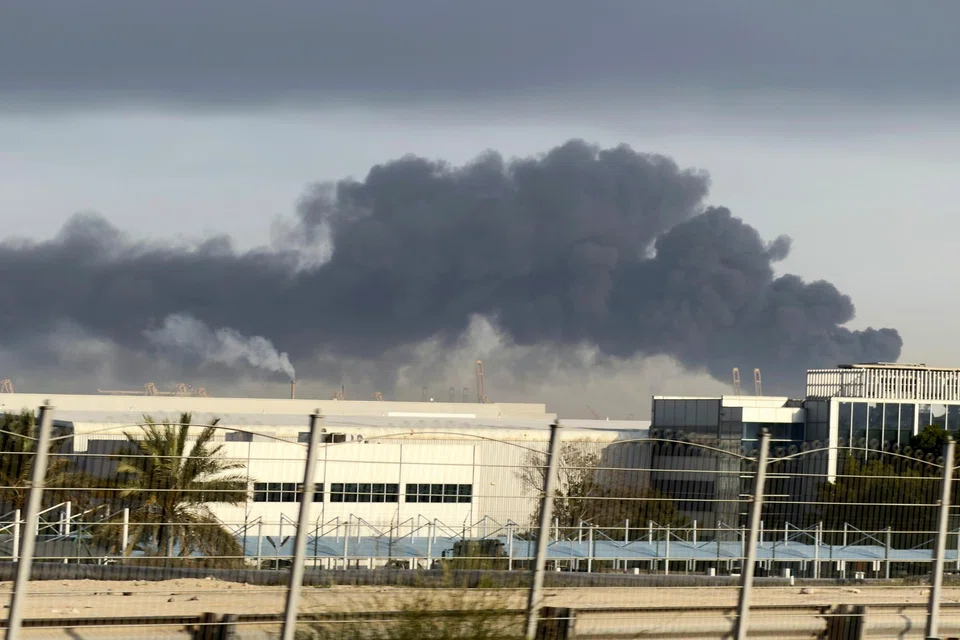
[SINGAPORE] Port congestion in Asia’s key transhipment hubs stemming from the Middle East conflicts is expected.
Some shipping lines have already made requests to Singapore to stage some of their Middle East-bound containers in the Republic, The Business Times has learnt, as the shipments cannot be transported directly to the war zone.
This comes as industry watchers said the military conflicts could cause port congestion in Asian transhipment hubs, such as Singapore and Malaysia’s Tanjung Pelepas and Port Klang.
Lars Jensen, chief executive officer of Vespucci Maritime, noted in a social media post that these operational disruptions will likely lead to congestion in many container hubs in Asia if they last more than a few days.
The crisis could lead to a situation similar to that which followed Yemeni Houthi militant attacks on merchant ships in 2023. Cargo suddenly could not be shipped to their destinations in the aftermath.
“Add to this the fleet now trapped inside the Gulf, and we are facing tactical capacity shortages,” Jensen added.
“We risk seeing Singapore, Tanjung Pelepas and Port Klang become transhipment bottlenecks for cargo which otherwise would be sent directly to the Gulf.”
Tan Hua Joo, an analyst at container shipping intelligence provider Linerlytica, told BT that port congestion at key Asian hubs will worsen if the Strait of Hormuz closure persists.
Colombo will likely be the worst hit, as the Sri Lankan port is the closest hub away from the conflict zone, together with the secondary port of Hambantota.
He noted that there are 132 active container ships, with a combined capacity of 458,000 20-foot equivalent units (TEUs), that are trapped in the Persian Gulf, accounting for 1.4 per cent of the global fleet.
They also make up part of the 3.4 million TEUs in total capacity that operate on the routes through the Strait of Hormuz, or 10 per cent of the worldwide fleet that passes through the strait.
If the Hormuz closure is prolonged, it would lead to a reconfiguration of services and a short-term tightening in vessel supply and box equipment, as well as increased congestion at Asian ports, said Tan.
Singapore as workaround
BT has heard that some container shipping lines are considering tapping Singapore, the world’s largest transhipment hub, as a workaround for not being able to call at Middle Eastern ports.
During the Covid pandemic, container shipping companies used the city-state to catch up with their upended schedules in the wake of sudden port closures to keep out the virus.
German global logistics provider Kuehne+Nagel highlighted in its updates to customers that freight is expected to be delayed due to restricted passage and vessel diversions, congestion at key transhipment hubs, disrupted schedules, as well as potential equipment shortages.
PSA Singapore, meanwhile, is engaging its shipping line customers to pre-empt and address their evolving operational requirements, a spokesperson for the port operator said, in response to queries on the measures being taken in anticipation of diverted vessels.
“Our priority remains to maintain reliability, operational efficiency and seamless connectivity for all shipping lines calling at PSA,” the spokesperson added.
A spokesperson for Westports, the main operator of Port Klang, said that it is “too early to tell... we are monitoring ongoing developments”.
Large container carriers and other types of vessels are rerouting ships to avoid the Persian Gulf, after the US and Israel launched attacks on Iran on Saturday (Feb 28). Teheran has retaliated by targeting US interests in the region, including the United Arab Emirates, Qatar and Bahrain.
Higher costs on the cards
A host of freight costs and surcharges might rise or be imposed in this situation, including insurance premiums in the form of war risk cover – if vessels do get covered.
The International Union of Marine Insurance told BT that war cover for the Persian Gulf and Red Sea will likely be granted only under specific agreements on a single-voyage basis, as long as navigation is authorised by governments and flag states.
“In the current fast-paced situation, insurers will regularly re-examine their ability and willingness to provide that cover,” said the organisation, which represents national and global marine insurers and reinsurers.
Stephen Rudman, head of marine for Asia at professional services firm Aon, noted that additional premiums for vessels transiting high-risk waters are rising sharply and may continue to fluctuate in the short term.
Cargo war risk is available, but rates are increasing and quotations are being reviewed on a voyage-by-voyage basis, particularly for energy and bulk commodity trades, he added.
“Should the situation escalate materially (for example, sustained state conflict or significant vessel loss), further rate correction is likely.”
Jensen of Vespucci said that spot cargo rates to the Gulf area will rocket, but shippers should prepare for a ripple effect with rising spot rates on other major deep-sea trades as well.
Maritime consultancy Drewry said rising oil prices will also add to shipping costs through higher bunker surcharges, which could be passed downstream to manufacturers and consumers. This could dent demand for containerised goods worldwide.
Decoding Asia newsletter: your guide to navigating Asia in a new global order. Sign up here to get Decoding Asia newsletter. Delivered to your inbox. Free.
Copyright SPH Media. All rights reserved.






