



Slump in commodities rattles global markets
Losses spill into equity markets as investors ditch other assets to cover precious metals losses
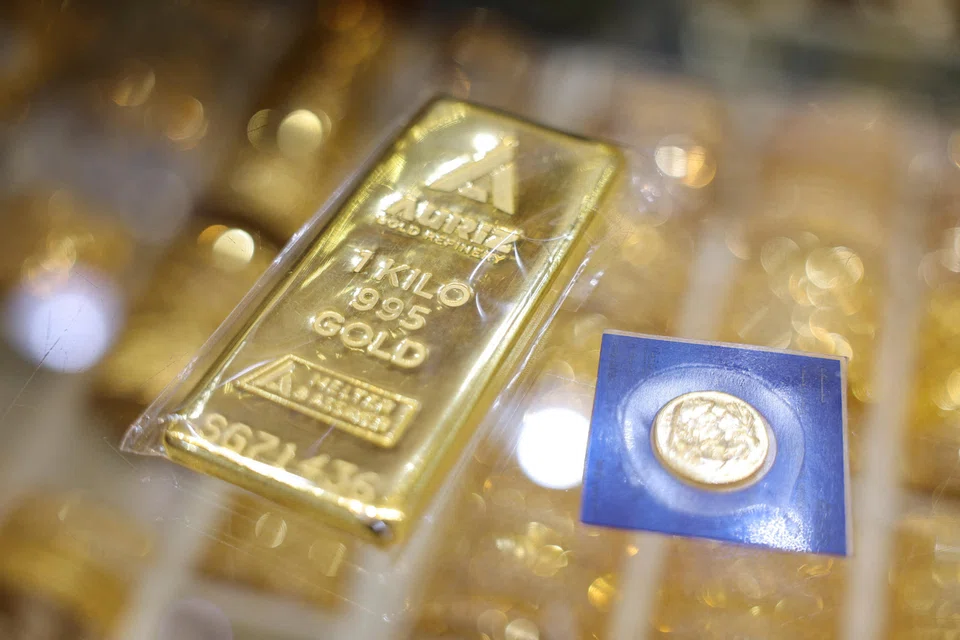
[SINGAPORE] Commodities markets slumped on Monday (Feb 2), led by deep losses in gold, silver, oil and industrial metals, as a sell-off unleashed by US President Donald Trump’s choice of Kevin Warsh for the next Fed chair sent precious metals tumbling for a second session.
Losses spilt over into equity markets as investors ditched other assets to cover any precious metals losses. Global stocks fell for a third straight day, led by steep declines across Asia and in Europe, where basic resources stocks came under heavy fire.
MSCI’s All-World index was down 0.5 per cent on the day, having fallen 1.5 per cent since Jan 27’s record high.
Investor nervousness was also reflected in a renewed rise in the VIX volatility index, which nudged at the 20-level that many view as a sign of heightened market tensions.
Gold slid 5 per cent to its lowest in more than two weeks, while silver fell more than 7 per cent. Both metals hit records last week.
Oil dropped nearly 5 per cent, easing from multi-month highs, and London Metal Exchange copper fell 3 per cent.
On Friday, Trump named Warsh, a former governor of the Federal Reserve, to succeed Jerome Powell as head of the central bank in May. The choice sparked selling across financial markets.
Wall Street’s main indices closed lower on Friday. The Dow Jones Industrial Average fell 0.36 per cent, the S&P 500 0.43 per cent and the Nasdaq Composite 0.94 per cent.
Trump’s choice of Warsh upended the idea that Powell’s replacement would push for aggressive monetary easing and lifted the US dollar, which, when it rises, makes commodities more expensive for holders of other currencies, hitting demand.
SEE ALSO





Though he now advocates for rates to be lowered, Warsh had a reputation as an inflation hawk in his earlier stint at the Fed.
“The decision by markets to sell precious metals alongside US equities suggests investors view Warsh as more hawkish,” said Vivek Dhar, a commodities strategist at Commonwealth Bank of Australia (CBA).
A hawkish Fed signals interest rates will stay higher for longer, supporting the US dollar and raising the opportunity cost of holding gold and silver, dimming their appeal.
“A stronger US dollar is also adding pressure on precious metals and other commodities, including oil and base metals,” added Dhar, who is sticking with a gold price forecast of US$6,000 in the fourth quarter, however.
Precious metals selling accelerates on margin hikes
The decline began on Friday, with the steepest one-day drop in spot gold since 1983, for a fall of more than 9 per cent, while silver plunged 27 per cent in its largest daily decline on record.
Selling in precious metals accelerated as CME Group hiked margins on its metal futures, with effect from Monday’s market close.
An increase in margin requirements is generally negative for affected contracts, as the higher capital outlay can dampen speculative participation, reduce liquidity, and push traders to unwind positions.
“The scale of the unwind unfolding in gold today is something I haven’t witnessed since the dark days of the 2008 global financial crisis,” said IG market analyst Tony Sycamore.
Prices in energy markets, meanwhile, came under pressure on Monday from signs of de-escalation in US-Iran tension after Trump’s weekend comments that Iran was “seriously talking” with Washington, easing fears of conflict with the Opec member.
Those comments, along with reports that the naval forces of Iran’s Revolutionary Guards have no plans for live-fire exercises in the Strait of Hormuz, are signs of de-escalation, Sycamore added.
Copper and iron ore markets faced headwinds amid worries over high inventories and subdued demand in the run-up to this month’s Chinese New Year break in China, the world’s biggest buyer of industrial and bulk metals.
The end-user demand and transactions are expected to be sluggish before the holiday, which starts on Feb 15, analysts said.
In other commodities, Tokyo rubber fell nearly 3 per cent while Chicago wheat and soybeans were down about 1 per cent.
“The key question is whether this marks the start of a structural downturn in commodity prices or merely a correction,” said CBA’s Dhar.
“We see it as a correction and a buying opportunity rather than a fundamental shift.” REUTERS
Decoding Asia newsletter: your guide to navigating Asia in a new global order. Sign up here to get Decoding Asia newsletter. Delivered to your inbox. Free.
Share with us your feedback on BT's products and services
TRENDING NOW

LTA proposes combining car COE categories, adding rebate-surcharge system

StarHub to acquire MyRepublic’s mobile business amid ongoing telco consolidation

DBS, OCBC, UOB rout lops billions off STI as inflation, rate concerns spook investors

Grab CEO’s wife Chloe Tong on life with Anthony Tan and finding her purpose

