The sooner Hong Kong moves to ‘0+0’, the more it can serve as gateway to China

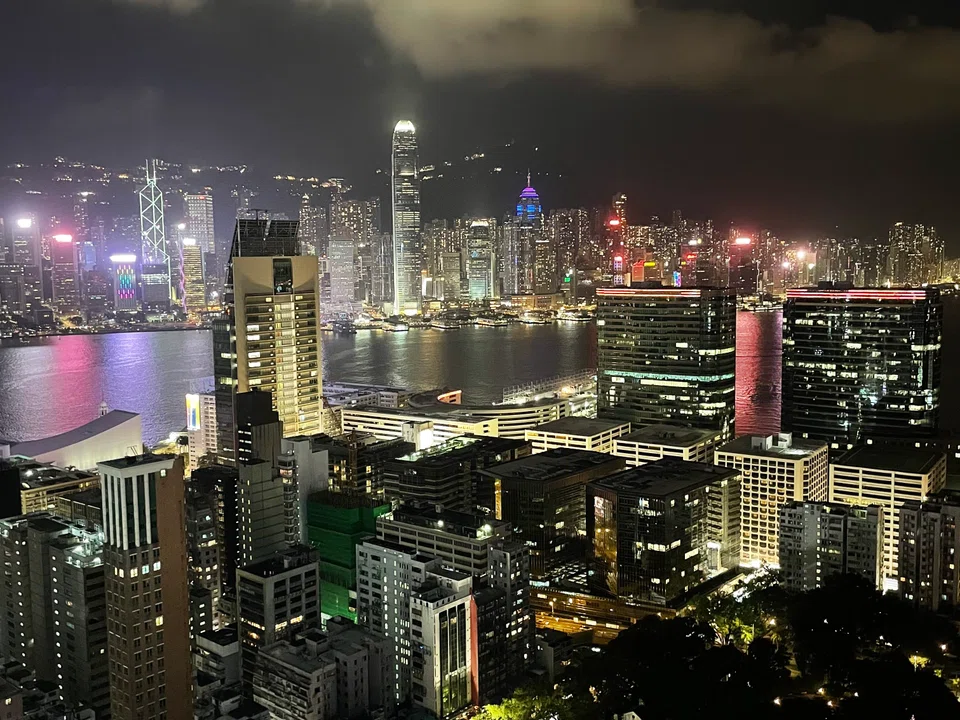
WHILE I’ve done my fair share of revenge travel since Singapore reopened its borders in April, no other destination has evoked as strong a sense of surreality as Hong Kong.
For the last two-and-a-half years, Hong Kong has been steadfast in adhering to some of the strictest Covid-19 restrictions in the world, and its punishingly long quarantines – up to 21 days at one point – have made the once easily accessible Asian financial hub feel much like a “forbidden city”.
As I stepped into Hong Kong International Airport recently, the sight of airport staff donned in full personal protective equipment jolted me into a grim reminder that the Covid-19 pandemic, which had felt largely like a thing of the past in Singapore, was far from over.
Here was a city still living very much in “crisis mode”, and the extremely well-oiled procedure of testing every visitor before bussing us off to our quarantine hotels felt equal parts impressive, bizarre and anachronistic.
I served my mandatory quarantine for three days in a hotel, which fortunately for me, was as comfortable as a staycation – just that I was not allowed to step out of my room.
Hong Kong still had a “3+4” approach to its quarantine regime when I arrived, which meant that I was subjected to four more days of “medical surveillance” upon exiting my quarantine.
During medical surveillance, my Vaccine Pass, which can be accessed through the LeaveHomeSafe app, showed an “amber code”, and it only turned blue after I had taken four polymerase chain reaction (PCR) tests that had turned up negative.
The “amber code” brings with it a slew of restrictions, and I was not able to enter venues with mask-off activities. This also meant I could not dine out until my Vaccine Pass showed a “blue code” on the eighth day since my arrival.
I also had to head to a community testing centre three times to get a PCR test. In total, I took five such tests over 10 days, and that’s not including a pre-departure PCR test in Singapore.
While this was likely not the intention of the “amber code”, I could not help but feel unwelcomed as a visitor, as I became painfully aware that I was not quite allowed to enjoy much of what the city had to offer – especially its famous cuisine.
Curiously, the four days felt more of a downer than the earlier three I’d spent in the hotel. It involved many rounds of takeaways and food delivery orders, which felt like a major throwback to when Singapore was going through its “Heightened Alert” phase last year, when eateries could offer only takeaways.
But at the same time, it was clear even to this visitor that a deep soul-searching appeared to be pervading Hong Kong, with many within the elite circles wondering aloud if the city is now paying too steep a price for keeping some of the world’s longest-running Covid-19 measures.
Last month, Leung Pak-yin, the former chief executive of the Hospital Authority, publicly criticised the authorities’ slow pace of reopening, despite improving immunity levels, accusing “someone” of misjudgment and dragging the city behind.
Health Secretary Lo Chung-mau shot back, saying Covid-19 was not the flu, and that Leung’s method of calculating death rates from May constituted a “serious selective bias” that ignored the misfortune of thousands of Covid-19 deaths.
A few days later, Finance Secretary Paul Chan warned of a fiscal deficit of over HK$100 billion (S$18.13 billion) in financial year 2022/2023, nearly double the initial forecast made earlier this year. And this comes after the government in August downgraded – again – its full-year growth outlook to -0.5 to 0.5 per cent, from a May forecast of 1 to 2 per cent.
Meanwhile, in local TV and newspapers, variations of one particular story made its appearance almost every other day. Essentially, comparisons between Hong Kong and Singapore now appear to be all the more stark, six months after the latter’s reopening.
One commentator on TV noted that while both cities are experiencing a labour crunch, Singapore’s is led by an increase in vacancies, while Hong Kong’s is caused by a shortage of talent.
The exodus of foreign talent, companies and wealth notwithstanding, Singapore in September also hosted a series of high-profile international conferences and events, including the return of the Formula One night race, which drew the largest crowd in the event’s 14-year history.
Events that had always been held in Hong Kong, such as SuperReturn Asia and Token2049, made their first appearances in Singapore this year.
Ahead of mega events such as the Hong Kong Banking Summit and the Hong Kong Rugby Sevens, the city’s chief executive John Lee on Sep 23 made the long-awaited announcement – that Hong Kong will scrap its hotel quarantine programme in favour of a “0+3” model (three days of medical surveillance), beating market expectations of a “0+7”.
While the news was music to the ears of many residents who have not travelled for over two years, it’s hard to imagine the policy moving the needle significantly where tourism and business travel, which are what will help spur Hong Kong’s economic revival, are concerned.
The inconvenience of repeated PCR tests – there are still four tests needed in the new model – as well as the inability to dine out is likely to continue deterring visitors, including business travellers, from entering the city.
It’s why business groups and other lobbies almost immediately began calling for the government to move towards “0+0” – a complete relaxation of border restrictions
Lo, the Health Secretary, told Bloomberg in an interview that China’s Covid-19 policy is one consideration for Hong Kong’s reopening plans, alongside the policies of others in the region. Japan and Taiwan, for example, have recently announced plans to reopen.
Yet, one could argue it is precisely at this juncture that Hong Kong should strike, as its full reopening would put paid to its fears of permanently losing out to regional rivals, while helping to keep the mainland plugged to the rest of the world.
This is because Hong Kong remains the best and most effective conduit for businesses eager to enter the Chinese market, and this is a unique advantage that the city will not lose even as the rest of the region reopens.
In fact, Hong Kong’s raison d’etre would be further accentuated for as long as China remains closed, with the city serving as an important “halfway house” while the mainland forges its way forward. This perhaps rings especially true with China’s zero-Covid policy looking to stay for now as Chinese President Xi Jinping heads into his third term.
Lo said that he is not “the one who’s against opening up”, and that he would like to as well. “I’m a Hong Kong citizen as well, and I know Hong Kong is a very international city. It’s particularly important that we are the gateway for our motherland,” he said in the Bloomberg interview.
Emphasising the importance of data and the need to reopen “cautiously, safely and smoothly”, he added: “If it’s possible today, I won’t wait till tomorrow.”
Decoding Asia newsletter: your guide to navigating Asia in a new global order. Sign up here to get Decoding Asia newsletter. Delivered to your inbox. Free.
Copyright SPH Media. All rights reserved.
TRENDING NOW
‘My grandfather’s legacy’: Sherman Kwek lays out three-year plan for CDL to drive returns
From Haidilao to Oriental Kopi: How some of Asia’s favourite F&B players are faring in 2026
MAS allocates S$1.45 billion to five asset managers in third EQDP batch: Chee Hong Tat
Built on trust since 1964: How this award-winning finance company has grown with its SME customers